In the heart of the West Sumatran highlands lies a volcanic lake named Lake Maninjau, a caldera whose beauty has inspired generations, offering breathtaking panoramas to anyone descending the 44 sharp hairpin turns at its edge. For decades, this lake has been a source of life and the pulse of freshwater fisheries in the region.
But beneath its calm surface, Lake Maninjau holds a heartbreaking paradox: the lake is "sick." Report after report, including from the Ministry of Maritime Affairs and Fisheries (KKP), highlights the severe pollution of the lake's water. The main culprit is the thousands of Floating Net Cages (KJA) that, ironically, have long been the backbone of the local economy. Massive feed waste from the cultivation of tilapia and carp has accumulated, causing severe eutrophication that can trigger routine ecological disasters, such as mass fish kills.
This ecological crisis has rapidly morphed into a social-economic one. For the communities on the lake's shores whose livelihoods depend on fishing, this situation is a catastrophe. Their incomes have plummeted, and many local youths have been forced to migrate (merantau), leaving their hometowns to seek a living elsewhere.
It is amidst this challenging landscape that one young man took an unusual step. At 23, Defrizal, a millennial from Agam Regency, decided to establish Blaster Farm, an aquaculture venture for a species one would never expect to find in the highlands: freshwater lobster.
The move was as surprising as it was promising, attracting the attention of West Sumatra's Deputy Governor, Audy Joinaldy, who, as quoted by JPNN, expressed astonishment at Blaster Farm's courage and vision. At a time when the regional government was actively pushing for a transition away from the lake-damaging KJA toward more controlled land-based systems, Blaster Farm had already begun.
Interestingly, Blaster Farm does not reject the floating net cages entirely. Instead, it implements a smart transition model, adopting controlled land-based pond systems while still utilizing existing KJA assets. It represents a bridge between old aquaculture practices and a more sustainable aquaculture future.
A look inside the Blaster Farm engine
Blaster Farm's success is no accident; it is the result of sound technical understanding and precise cultivation management. Behind its harvest of 200 kilograms (approx. 441 pounds) of freshwater lobster per month lies a carefully crafted secret.
The primary species cultivated at Blaster Farm is the red claw crayfish, known scientifically as Cherax quadricarinatus. This fauna is native to Australia and Papua. So, what was the reason for choosing this "imported" species? The answer lies in its biological advantages.
Cherax quadricarinatus is known for its strong endurance and relatively fast growth. Furthermore, the species is a source of premium animal protein that is also relatively pocket-friendly. Scientific analysis shows that the protein content in the body of Cherax quadricarinatus can reach 80 to 83 percent, making it a high-nutrition food commodity.
From broodstock to business
Blaster Farm manages the entire lobster life cycle, which is divided into several crucial stages:
1. Hatchery (Spawning)
Everything begins with the selection of quality broodstock. Strict criteria are applied: broodstock must be at least 6 months old with a body length of at least 10 centimeters (approx. 4 inches). These male and female broodstock are then placed in a special spawning pond. After the mating process, the female lobster will "carry" hundreds of eggs under her abdomen. At this point, technical vigilance is vital. These egg-carrying females must be immediately moved to a separate hatching pond—often an aquarium or fiberglass tank—to protect the eggs from stress, predators, and cannibalism from other broodstock.
2. Nursery
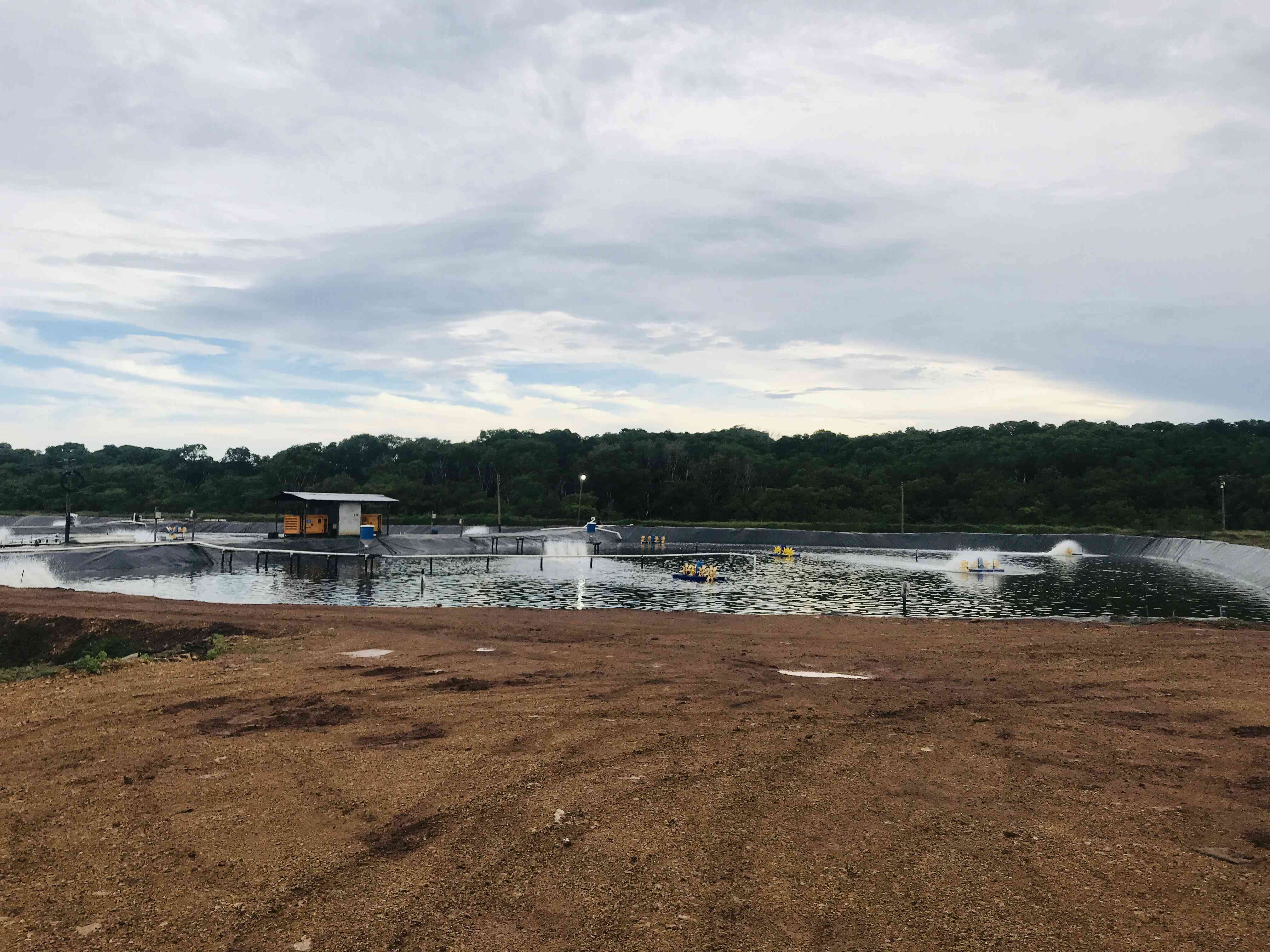
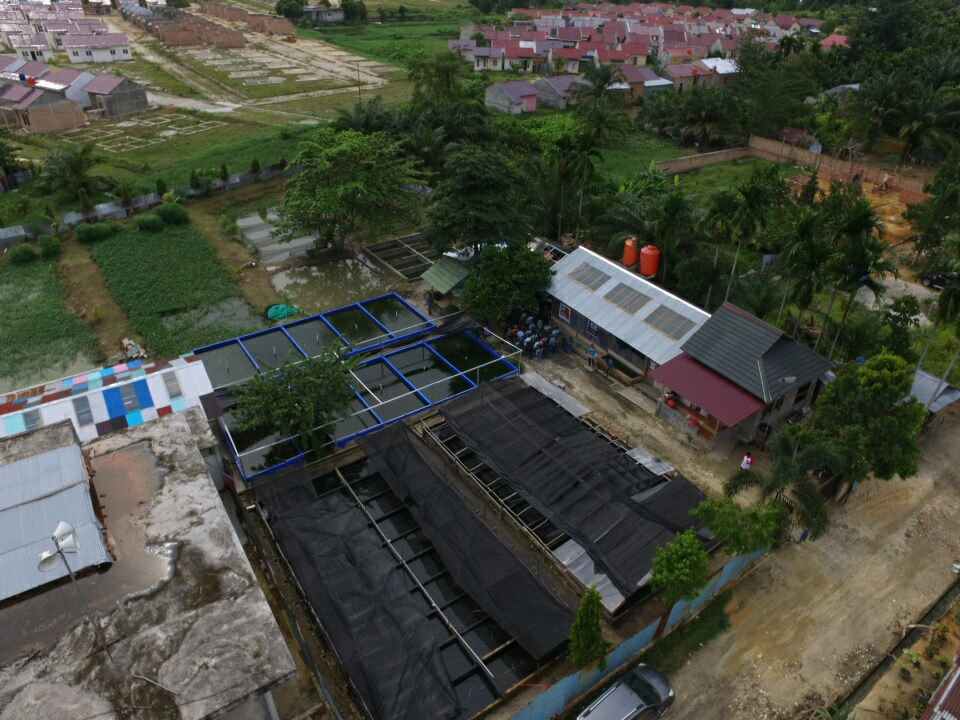
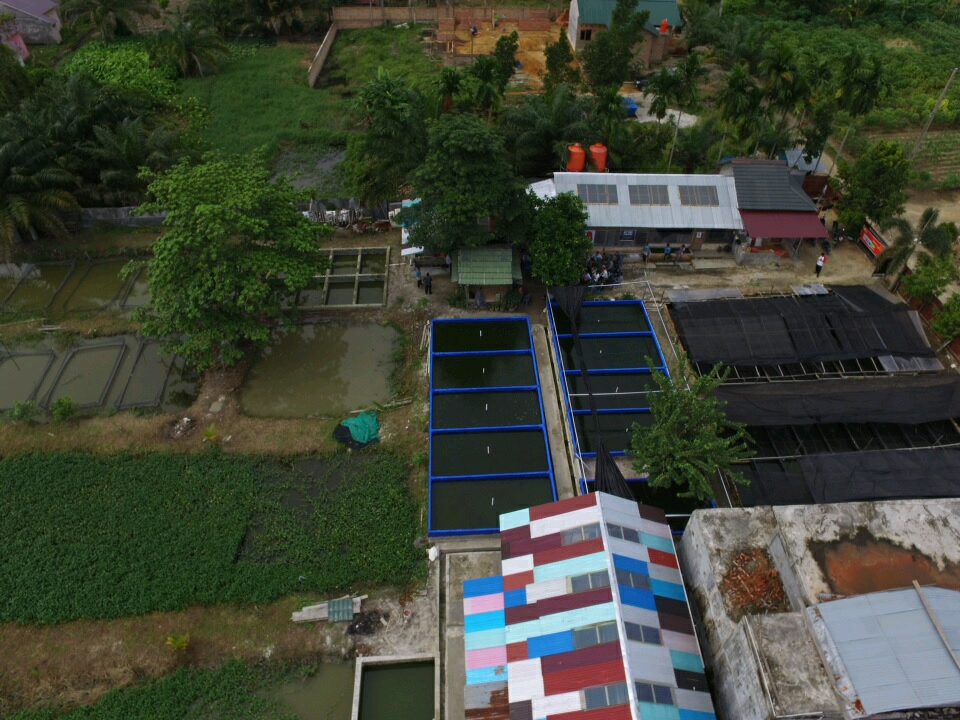
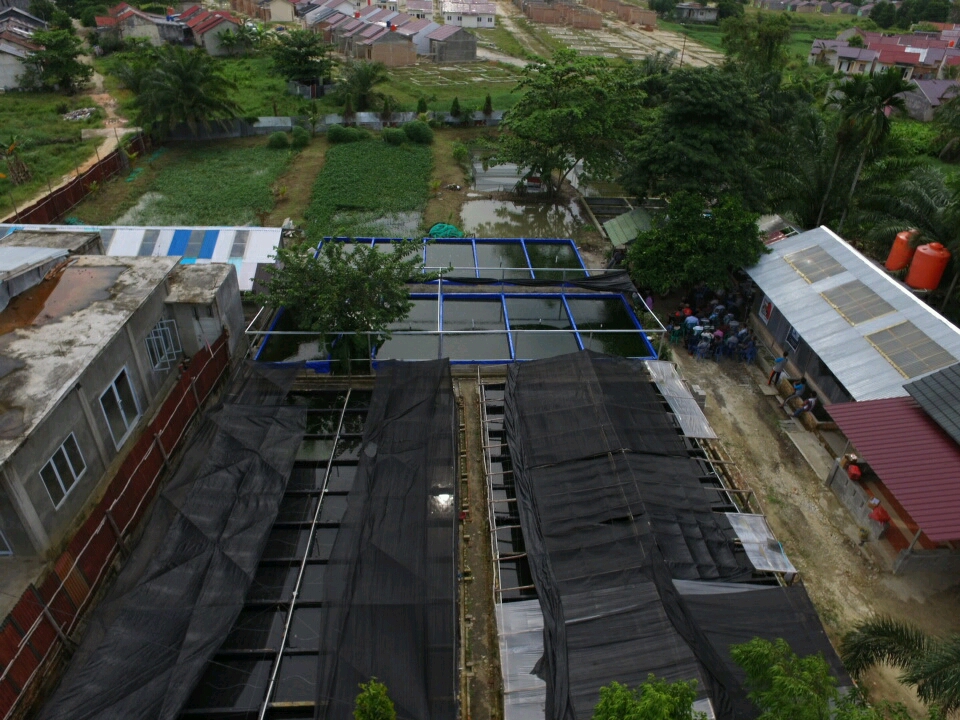
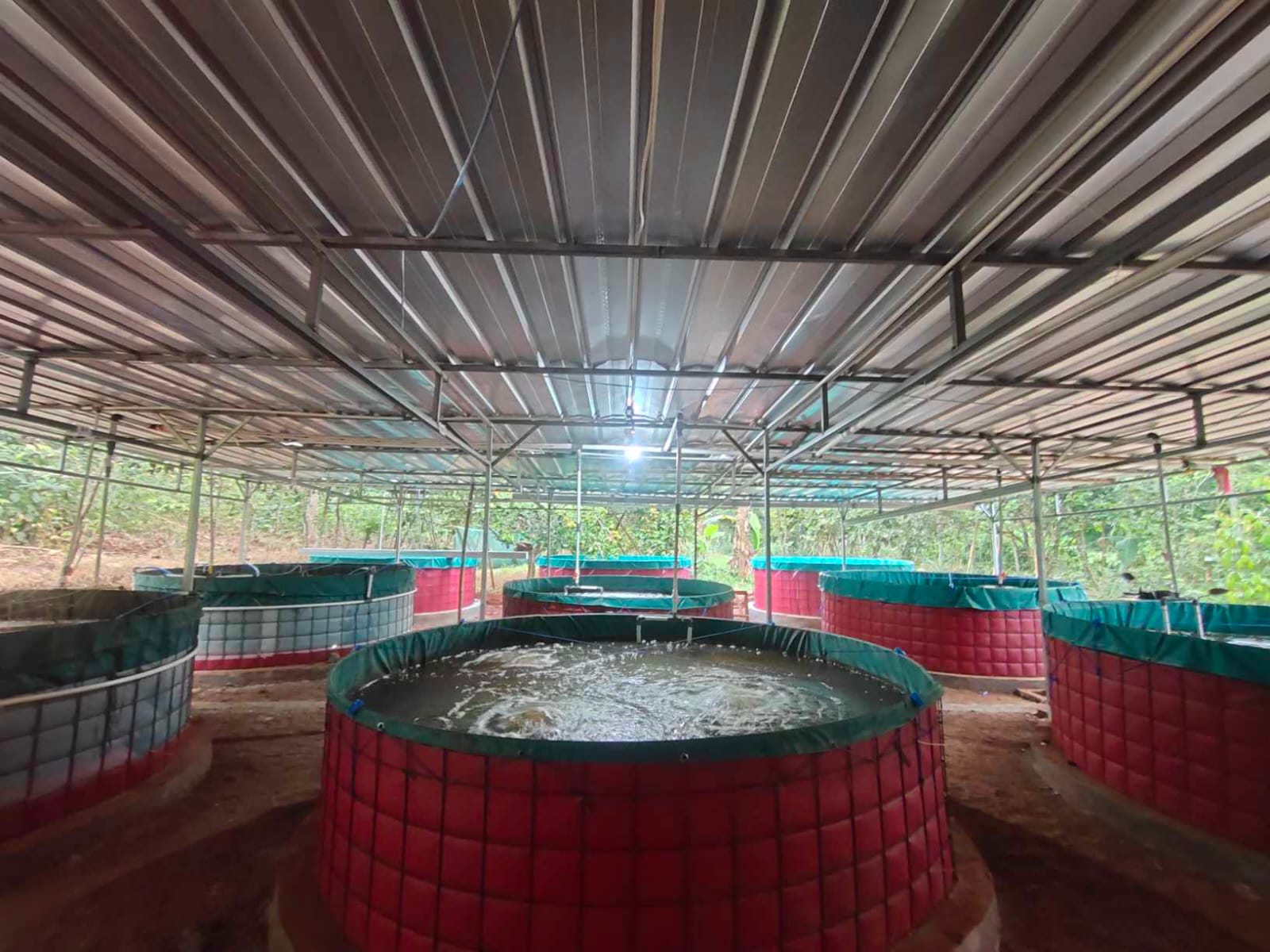
After the eggs hatch, the still-vulnerable fry are moved to nursery ponds. This is where land-based systems, whether cement or tarpaulin, play a key role. Using smaller ponds (e.g., 1x1 meter, or approx. 10.8 square feet), Blaster Farm can apply intensive control over water quality and feeding. The stocking density in this phase is very high, reaching 100 fry per square meter.
3. Grow-Out
Once the fry reach a safe size (around 5 cm, or 2 inches), the Cherax quadricarinatus are ready for the grow-out phase. They are moved to larger ponds, and the stocking density is drastically reduced to around 10 per square meter to provide space for maximum growth. It is here that Blaster Farm implements its innovative dual system: some lobsters are raised in land-based ponds (concrete/tarpaulin), while others utilize the floating net cages (KJA) in Lake Maninjau.
4. Feed and Harvest Management
Freshwater lobsters are omnivores, which provides a distinct advantage. Blaster Farm can press feed costs by providing natural feed that is cheap and readily available around Lake Maninjau, such as vegetables, worms, and rice-field snails (known scientifically as Filopaludina javanica). From fry to the ideal consumption size (around 100 grams, or 3.5 ounces, per lobster), this entire cycle takes between 6 and 7 months.

Freshwater lobster harvest at Blaster Farm: Luhkan Kab. Agam/Hilda Darwin
Challenges and adaptations specific to Lake Maninjau
Cultivation in the highlands, like at Lake Maninjau, presents its own unique challenges. The primary constraint is the fluctuation in water temperature. Freshwater lobsters are cold-blooded animals whose metabolism is highly dependent on the ambient temperature. Water that is too cold can drastically slow their growth, thereby extending the harvest cycle. Additionally, the risks of disease and market price fluctuations remain operational challenges that must be managed.
One of the most important adaptations is how Blaster Farm manages ecological risk. In other regions, such as Gayo, the cultivation of Cherax quadricarinatus is specifically banned in lakes because of its status as a non-native, potentially invasive species.
At Lake Maninjau, Blaster Farm mitigates this risk through its dual system. The use of land-based ponds (tarpaulin/concrete), which are closed systems, eliminates the possibility of lobsters escaping into the lake's ecosystem. This hybrid model, combining the security of land-based ponds with the spatial efficiency of the KJA, is the core of Blaster Farm's technical innovation.
A vision for downstream processing and market penetration
If technical expertise is the engine, entrepreneurial vision is the steering wheel. Blaster Farm is not satisfied with being just a "cultivator." From the beginning, the farm understood that selling raw commodities in the local market is a trap that limits aquaculture profits.
The primary strategy is market penetration outside of West Sumatra. With a harvest of 200 kilograms (approx. 441 pounds) per month, Blaster Farm does not sell its lobsters retail in the Maninjau market. Instead, it has established itself as a consistent B2B (Business-to-Business) supplier for distributors and restaurants in major cities, where the market is far "hungrier" and willing to pay a premium. Data records Blaster Farm's success in breaking into competitive regional markets such as Batam (receiving 20-80 kg/month, or approx. 44-176 lbs/month), Medan (20-50 kg/month, or approx. 44-110 lbs/month), and Pekanbaru.
How did a young man from Maninjau penetrate the Medan and Batam markets? Not with expensive advertising, but with a low-cost, high-impact strategy typical of millennials. Blaster Farm's marketing management relies on two main pillars: social media for promotion and building brand awareness, and word of mouth.
Lobster diplomacy
The Blaster Farm story does not end at the domestic market. The innovation born on the shores of Lake Maninjau has attracted attention on the global stage, indirectly turning the freshwater lobster into a tool for diplomacy and knowledge exchange.
The catalyst is Banglele Indonesia, an aquaculture consulting firm that is the architect behind an innovative concept called "Aquatourism." As defined by Banglele Indonesia, Aquatourism is not just ordinary marine tourism. It is a strategic platform designed for applied education, cultural diplomacy, and an accelerator for the blue economy. It is a study tour that combines field visits, practical workshops, and authentic cultural exchange.
The visit of the CaPFish Cambodia Team in June 2025
In June 2025, Banglele Indonesia organized an 8-day program (June 1-8) designed specifically for a high-level delegation from Cambodia, "The CaPFish team." The program's route covered two key provinces in Sumatra: Riau, with a focus on its "Patin Village," and West Sumatra.
"The CaPFish team" represents a high-profile fisheries development program in Cambodia. The program is funded by the European Union (EU) and implemented by the United Nations Industrial Development Organization (UNIDO). The primary mission of the CaPFish program is highly specific: to upgrade Cambodia's fishery sector, particularly its post-harvest segment, to meet international food safety standards (such as HACCP). The goal is to enable Cambodian fishery products to penetrate the world's strictest global markets, such as that of the European Union.
When the CaPFish team delegation arrived in West Sumatra, one of its main destinations was Lake Maninjau. What were they looking for at a lake facing such ecological problems? The answer lies in the Banglele Indonesia Aquatourism program agenda, which brought them there to study "integrated value chain models."

CaPFish Team at Lake Maninjau: Banglele Indonesia
This is where Blaster Farm became a central case study. The CaPFish team did not come to Maninjau to see the polluting KJA used for tilapia cultivation; they already have similar problems in their own country. They came to see the solution to this problem. Blaster Farm was the embodiment of the "integrated value chain model" they were seeking.
Through this "lobster diplomacy," Indonesia, via Blaster Farm, is no longer just a recipient of aid. It has evolved into an exporter of knowledge and innovation in the world of aquaculture.