Vannamei shrimp cultivation is an activity commonly carried out in many places, including hatchery activities and maintenance. Internal factors such as the origin and quality of shrimp fry, or post-larvae (PL), as well as external factors such as aquaculture water quality, feed, technology, and pest and disease control, are very influential in producing high quality shrimp.
One of the main causes of failure in vannamei shrimp production, especially in intensive ponds, is poor water quality during cultivation. High density and feeding are the main factors that can reduce water quality conditions. Shrimp absorb feed protein in the range of 16.3-40.87 percent, while the rest is excreted as feed residue and feces. Therefore, maintaining water quality during the maintenance process is very important. Water quality parameters that are often measured and influence shrimp growth include dissolved oxygen (DO), temperature, pH, salinity, ammonia and alkalinity.
Vannamei shrimp cultivation also requires an adequate water supply due to the high rate of water turnover in each cycle. Discharged water carries waste that is harmful to the surrounding environment. Thus, the most effective and efficient solution to this problem is to implement an aquaculture recirculation system (RAS) in the process of cultivating vannamei shrimp.
RAS is a pond water circulation system that reuses water to cultivate aquatic habitats, reducing the use of water from outside the system. Pond water that has been used for shrimp cultivation and has experienced a decline in quality can be reused after undergoing a filtering process. RAS is a relatively new and unique aquaculture technique in the fishing industry and is an attractive alternative to extensive systems, suitable for use in areas with limited land and water. This system is divided into two types; reclosed circulation, where the water is 100% recycled by the system, and semi-closed recirculation, where only part of the waste is recycled and additional water is required from outside.
1. Basic components of RAS
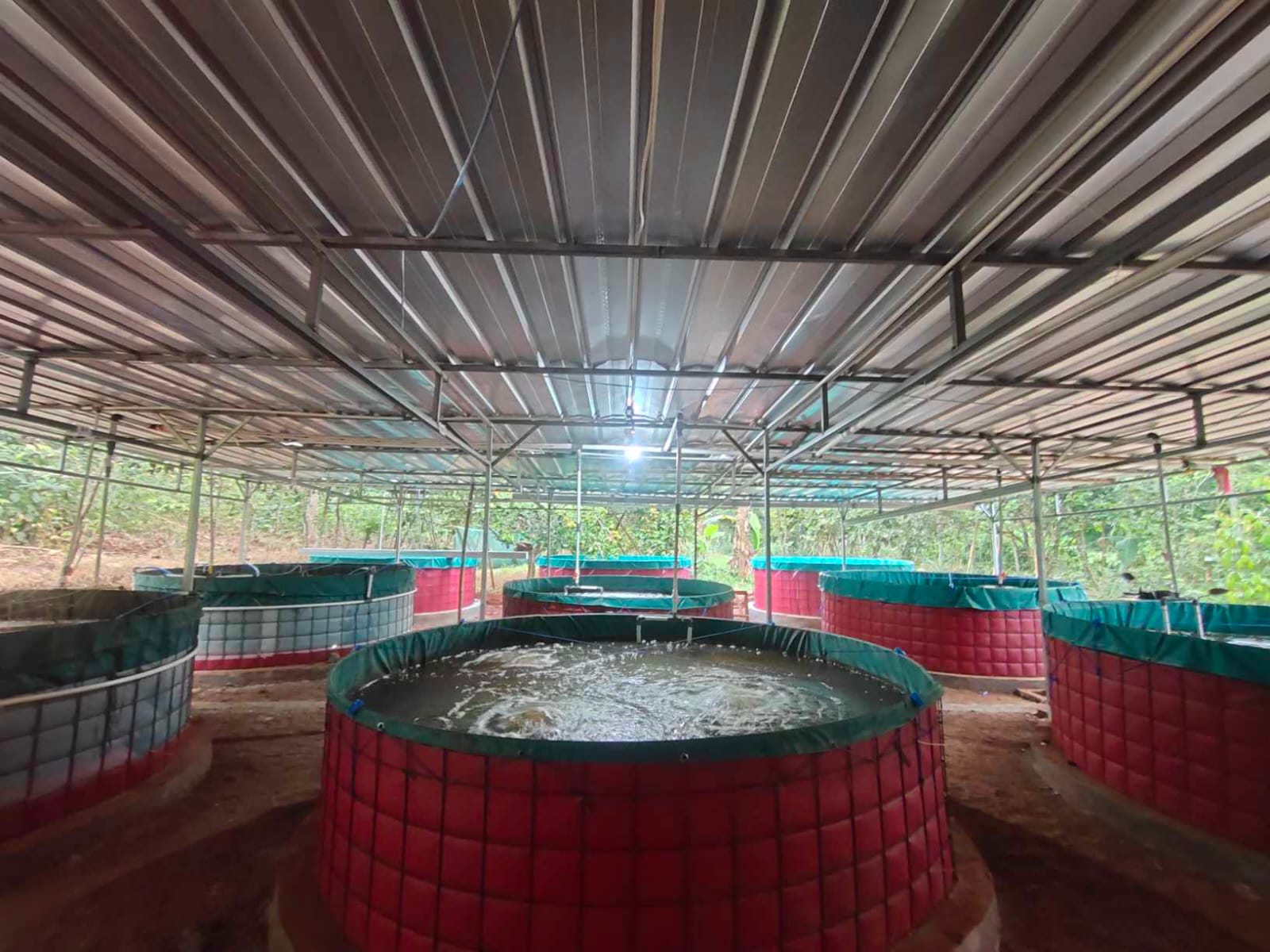
One of the important components in RAS is the cultivation unit (culture pond). This unit is usually a cultivation or growth tank which is the main container for shrimp cultivation. Size of the cultivation unit must be adjusted to the number of shrimp to be cultivated in order to provide a suitable environment for their growth and development.
This cultivation tank is a place where vannamei shrimp will live and grow during the cultivation process. In this tank, various environmental parameters such as water temperature, salinity, and other water qualities can be controlled to suit the shrimp's needs. Apart from that, the cultivation tank must also be designed to allow efficient water circulation so that the shrimp get an adequate oxygen supply and waste can be removed properly.
Next, the particulate filter unit, or what is often referred to as particulate sump, is one of the key components in RAS. Its main task is to filter dissolved solids in water to prevent blockages in the biofilter and reduce excess oxygen consumption which can disrupt the environmental balance in the system.
Particulate sumps typically consist of various types of filter media such as sponge, gravel, or activated charcoal positioned in a specially designed container. When water flows through a particulate sump, this filter media works to capture and filter solid particles dissolved in the water. These particles can come from a variety of sources, including leftover feed, shrimp waste, or other residues present in the system.
By removing solid particles from water, particulate sumps help prevent clogging of the biofilter, which is an important component in the water purification process in a RAS system. Blockages in the biofilter can interfere with the ability of nitrifying bacteria to convert ammonia into compounds that are safer for shrimp, such as nitrites and nitrates. In addition, blockages in the biofilter can also disrupt water flow and oxygen distribution in the system, which can have a negative impact on shrimp health and growth.
Apart from preventing blockages in biofilters, particulate sumps also help reduce excess oxygen consumption in the system. Solid particles dissolved in water can bind oxygen, thereby reducing the availability of oxygen for shrimp and bacteria that decompose organic waste. By filtering out these solid particles, particulate sumps help maintain sufficient oxygen in the water to support shrimp life and the biological processes in the system.
Biofiltration unit is a very vital component in RAS. This unit is a central part of the circulation system because this is where the biofilter is located and the nitrification process occurs. This nitrification process is very important in maintaining water quality and shrimp health in the cultivation system.
Biofilter in the biofiltration unit is a place for bacterial colonies that are responsible for carrying out the nitrification process. Nitrification is a biochemical process in which bacteria convert ammonia produced by shrimp waste into safer nitrogen compounds, such as nitrites and nitrates. This process occurs in two distinct stages. The first stage involves Nitrosomonas bacteria, which convert ammonia to nitrite. Meanwhile, the second stage involves Nitrobacter bacteria, which convert nitrite into nitrate.
This nitrification process is very important because ammonia is one of the main wastes produced by shrimp through their metabolic processes. Ammonia is a compound that is very toxic to shrimp if allowed to accumulate in water. This can disrupt the shrimp's respiratory system and immune system, and can cause stress, disease, and even death in shrimp if the concentration is too high.

RAS system units and equipment located at Aqua Integrated Company, Kuwait
The circulation pump is one of the key components of the RAS. The main task is to direct, elevate and regulate water flow according to system needs. This pump plays a very important role in maintaining an even distribution of water throughout the system, thereby ensuring that the shrimp receive optimal environmental conditions for their growth and well-being.
Circulation pumps work by pumping water from one part of the system to another, such as from the cultivation tank to the filter unit, or from the filter unit to the sterilization tank. Properly regulated and pumped water flow ensures that water circulates efficiently throughout the system, thereby allowing sufficient distribution of oxygen and nutrients to all farmed shrimp.
Apart from that, the circulation pump is also responsible for increasing the oxygenation level in the water. Shrimp require sufficient oxygen availability for their respiratory process, and the circulation pump ensures that dissolved oxygen is distributed evenly throughout the system. Thus, shrimp can breathe easily and get enough oxygen for their growth and activities.
Circulation pumps also help in reducing the potential for dead or stagnant zones to form within the system. These zones can become places for dirt and waste to accumulate, which can compromise water quality and shrimp health.
2. RAS performance
After understanding the definition of RAS along with its important units and components, it is important for us to evaluate the performance of this system in order to gain a deeper understanding and be able to apply it effectively in vannamei shrimp cultivation ponds.
RAS performance can be described as follows:
This system begins with the flow of water from the cultivation tank, which contains various pollutants due to shrimp metabolism and feed, by gravity flowing to the filter tank through a connected pipe. This stage marks the start of the biofilter process in the filter tank, which is the core of this aquaculture system. Filter tanks are designed with several types of filtration, including mechanical, biological, chemical, and sterilization.
At the top of the filter tank, there is a mechanical filter which functions using a sponge to filter large solid substances such as fish waste. The main function of this mechanical filter is to remove large particles that can pollute the water and harm the health of the shrimp. Meanwhile, at the bottom of the filter tank, there are freshwater mussel shells or other alternatives such as charcoal or large gravel which are used to help purify the water. This material acts as an additional filter medium that helps remove small particles and improves water quality.
Next, the water is passed through a biological filter where there are freshwater mussel shells in the first part and smaller pebbles or fibers in the next part are used to expand the surface. This increased surface area allows nitrifying bacteria, such as Nitrosomonas, attaches to and processes waste from shrimp digestion, which is generally in the form of ammonia, into safer compounds such as nitrites. This process is an important part of the nitrogen cycle in aquaculture, where toxic ammonia is converted into compounds that are less harmful to shrimp.
Then, bacteria Nitrobacter present to consume nitrites and convert them into nitrates, which have the ability to neutralize the ammonia content in water. This nitrate is safer for shrimp and is not toxic like ammonia. This nitrification process is key in maintaining optimal water quality in an aquaculture system, thereby providing a healthy environment and supporting good shrimp growth.
In the final stage of RAS, the water that has gone through the filtering and processing process goes to the sterilization tank. In the sterilization tank, ultraviolet (UV) lights are used to kill parasites or bacteria that may be present in the water. This process aims to maintain water cleanliness and prevent infections that can harm farmed fish or shrimp.
Ultraviolet (UV) lamps work by producing UV radiation which has a sterilizing effect on microorganisms such as bacteria, viruses and parasites. This UV radiation damages the DNA of microorganisms so that they cannot reproduce or cause infections in fish or shrimp. After the sterilization process is complete, the water that has been treated and cleaned is pumped back from the sterilization tank and distributed to the cultivation tank for the next cycle. Water that has gone through the RAS filter system returns to the cultivation tank in a cleaner and safer condition for the fish or shrimp being cultivated.

Overview of RAS system performance
3. Tips for beginner cultivators cultivating vannamei shrimp to start cultivating using the RAS system
Before implementing RAS, the first step that must be taken is to understand in depth its mechanism or working principle as previously explained. After understanding the basic concepts, the next step is to prepare the tools and materials needed to build the RAS system. This includes selecting special tools to carry out the filter tank drilling process, depending on the type of tank material used, which will later assist in installing pipes into the holes created.
In the next stage, pipes are installed sequentially to connect the cultivation tank with the filter tank, according to the previously planned water flow path. This is done so that the water can flow sequentially through physical, biological and chemical filter tanks, before finally ending up in a sterilization tank using UV. The pipe size is adjusted to the system needs so that water distribution can run smoothly.
The filter tank is then filled with materials following a predetermined filtration concept, thus ensuring that the water passing through the tank will undergo an effective filtering process. After all preparations are complete, a water filling test is carried out to ensure there are no leaks in the filter tank or pipe, while ensuring that the filter can work stably and optimally. During this experiment, no shrimp were present in the culture tank to avoid the risk of damage or stress to the shrimp.
Once it is confirmed that no problems arise during the experiment, cultivation with the RAS system can be implemented. However, regular monitoring is still necessary to ensure that the system is running well and water quality is maintained.