Often called the "black gold" of mangrove ecosystems, the mud crab (Scylla sp.) is one of the most valuable fishery commodities on the global market. With steadily increasing demand, it has become an economic pillar for many coastal nations. Indonesia, a tropical archipelago with the world's second-longest coastline and vast mangrove forests, is strategically positioned to dominate this industry. The crab’s natural habitat, stretching from Sumatra to Papua, makes the country a potential powerhouse for both genetic diversity and production.
This economic potential is far from theoretical. The global market for crabs is experiencing rapid growth, with the value of world imports soaring from $3.83 billion in 2017 to $6.09 billion in 2023, an average annual growth of 11.13 percent. Indonesia is a significant player in this landscape, ranking as the world's seventh-largest crab exporter in 2023 with a value of $0.11 billion. In 2021, the combined export value of its swimming and mud crabs reached an all-time high of $613.24 million.
Yet, this success is not uniform across all species. For the premium giant mud crab, Scylla serrata—a species prized for its size, which can reach 2-3 kilograms (4.4-6.6 pounds) per crab, and its higher market value—Indonesia lags significantly behind its neighbors. The nation's production of S. serrata stands at just 18,232 tons, approximately 14 percent of the global total. This figure is dwarfed by Vietnam, which produces 81,144 tons (63 percent), and the Philippines, with 27,507 tons (21 percent). This gap reveals a "strategic ceiling" that is preventing Indonesia from maximizing its economic potential in the premium crab market. The root of the problem appears to be a deep-seated reliance on conventional farming methods, which are ill-suited for producing larger, more aggressive species.
The country's inability to dominate the S. serrata market stems from fundamental challenges inherent in traditional pond-based aquaculture. While long-practiced, this method suffers from critical weaknesses that limit both productivity and sustainability. The extensive land required for coastal ponds often leads to conflicts over land use and encourages the conversion of vital mangrove forests, degrading critical ecosystems.
Compounding these issues is the crab's own aggressive nature. Cannibalism is rampant, especially during the vulnerable molting phase when a crab's shell is soft. In a communal pond, these freshly molted crabs are easy prey for their hard-shelled counterparts, a biological reality that frequently causes survival rates to plummet below 50 percent.
Vertical innovation: vertical crab house technology and the RAS system
In response to these challenges, a disruptive innovation has emerged and is gaining traction in Indonesia: the Vertical Crab House (VCH), popularly known as the "crab apartment." This technology offers a new paradigm, shifting the perspective on crab farming from a land-based system to a precise, controlled, volume-based one.
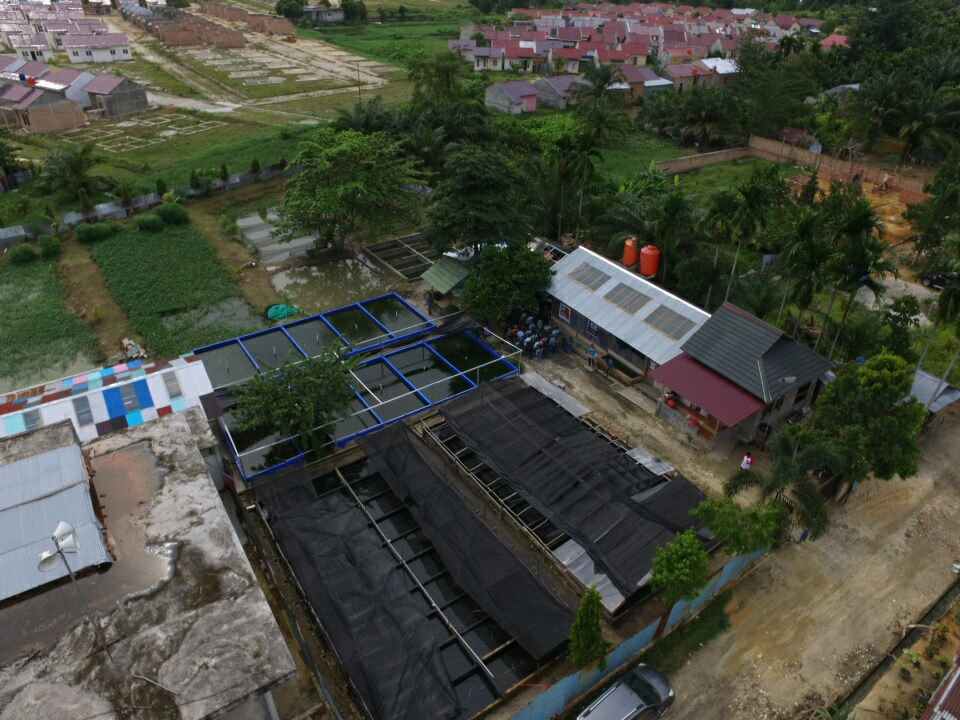
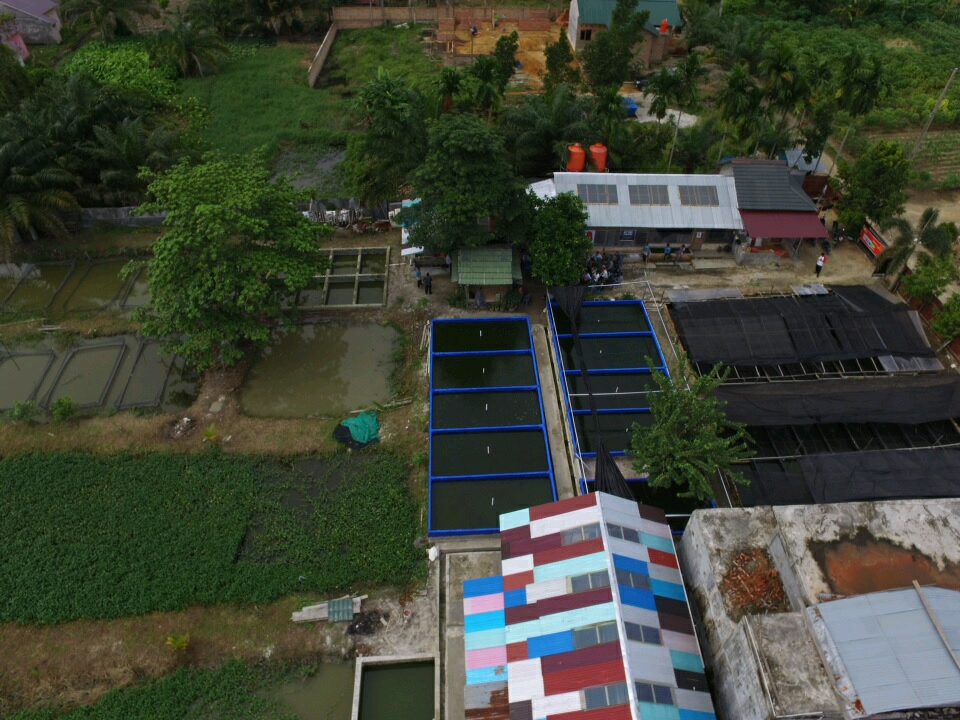
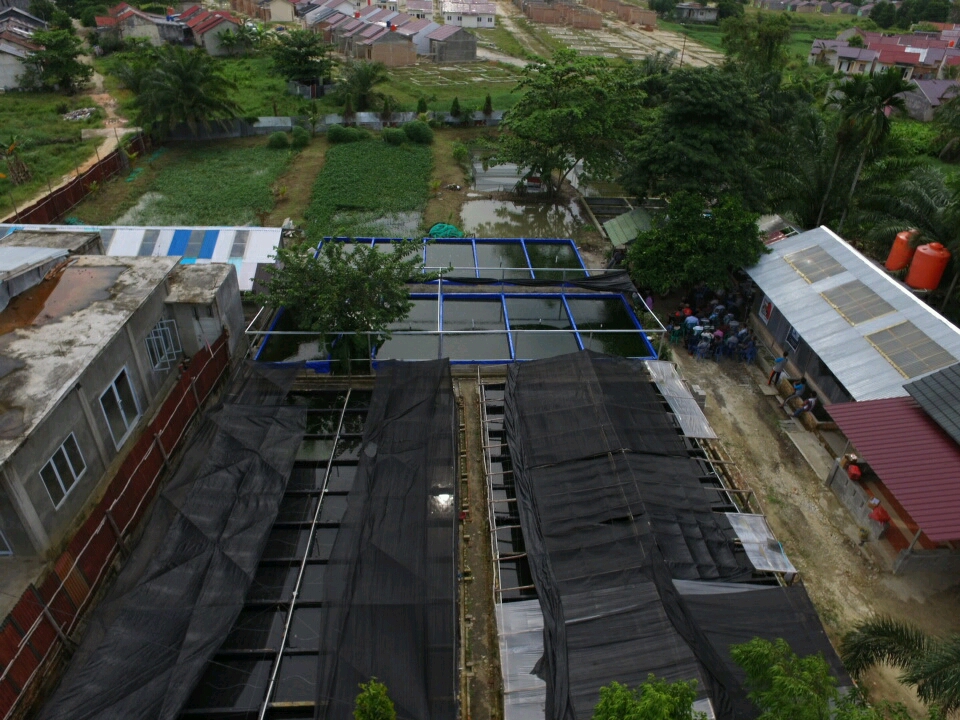
A Vertical Crab House is an intensive aquaculture system that uses individual containers, or boxes, stacked vertically in racks. Each box is designed to house a single crab—a simple but revolutionary design principle. The foundation of the VCH is individual isolation. By giving each crab its own space, the system instantly eliminates the core problems of conventional farming, such as cannibalism and competition for food. Every crab can grow without threat, particularly during its vulnerable molting periods.
The vertical design also radically addresses the problem of land scarcity. By stacking the boxes upward, a VCH allows for far higher stocking densities per square meter than a traditional pond. A single VCH system can reportedly accommodate up to 80 crabs per square meter, a capacity nearly four times greater than a horizontal pond system. This means a farmer can achieve the same, or even greater, production volume using only a fraction of the land required for conventional ponds.

Crab boxes stacked in apartment system for fattening mud crabs: Luhkan Bengkayang/Radianus Aden
Such a dense, closed system would be impossible to operate without a sophisticated life-support system. This is where the Recirculating Aquaculture System (RAS) plays its role as the heart of the entire VCH operation. An RAS is a closed-loop water treatment technology that continuously filters, purifies, and returns water to the culture system. This approach drastically reduces water consumption and the discharge of farm waste into the environment, making it a sustainable model suitable for various locations, including urban areas far from natural sources of brackish water.
The RAS process for mud crab farming begins with mechanical filtration. Effluent water from the crab boxes, containing uneaten feed and feces, first passes through an initial filter, such as dacron foam or a drum filter. This component captures solid particles, preventing them from settling and decomposing within the system. This step is crucial for preventing the formation of excess ammonia, which is toxic to the crabs, and avoiding clogs in subsequent filtration stages.
The second stage is biological filtration, the true "heart" of the RAS. After solid waste is removed, the water is channeled into a biofilter filled with media that has a large surface area, such as bioballs or kaldnes media. It is here that colonies of nitrifying bacteria grow and perform their vital function. First, Nitrosomonas bacteria convert toxic ammonia into nitrite. Then, Nitrobacter bacteria convert the nitrite into nitrate, a compound that is relatively harmless to the crabs. This biological process maintains stable water quality, supporting the health of the crabs in the closed-loop system.
The third and final stage is water refinement through chemical filtration, sterilization, and oxygenation. Media like zeolite or activated carbon absorb dissolved pollutants, while devices such as protein skimmers and ultraviolet (UV) sterilizers remove organic compounds and kill harmful pathogens. Before the purified water is returned to the crab boxes, an aeration or oxygenation system ensures that dissolved oxygen levels are optimal for the crabs' respiration and metabolism.
This transition from conventional ponds to the VCH system represents a paradigm shift in crab aquaculture. It transforms the business model from extensive, land-based agriculture into intensive, volume-based manufacturing. Operating in a controlled, closed environment, the VCH utilizes standardized modular components and precise operational procedures to deliver a consistent and measurable output. With lower environmental risk and higher efficiency, the VCH system opens greater opportunities for farmers and investors to develop the crab business in a more stable and sustainable manner.
Advantages of the VCH system in mud crab aquaculture
The combination of the VCH and RAS technologies represents a major leap forward in mud crab aquaculture. One of its primary advantages is its remarkable space efficiency. Unlike conventional ponds that demand large tracts of coastal land, this system enables commercial-scale production in limited areas, even in urban centers or locations close to markets. The vertical structure allows stocking density to be increased significantly without elevating the risk of stress or competition among the crabs.
Beyond space efficiency, the system drastically improves the survival rate. The individual design of the culture boxes eliminates the possibility of cannibalism, especially during the critical molting phase. In a fully controlled environment, the survival rate is expected to reach 80 percent or higher. The precise control over water quality parameters—such as temperature, salinity, pH, and dissolved oxygen—creates stable conditions that promote optimal growth and reduce stress on the animals.
Further advantages lie in feed efficiency and ease of management. Because crabs are raised individually, feed can be administered with greater precision, minimizing waste and leading to a better food conversion ratio (FCR). The integrated RAS can also conserve over 90 percent of the water used compared to traditional flow-through systems, making it a far more sustainable technology. Furthermore, the system facilitates selective harvesting. Crabs can be harvested one by one as they reach market size or enter the soft-shell phase, without disturbing the others. This simplifies management and enhances production flexibility.
Mud crab aquaculture in three segments through VCH
The flexibility of the VCH-RAS technology frees farmers from being locked into a single business model. The system opens up opportunities to target three distinct segments of the mud crab market, each with its own characteristics, target consumers, and production cycles. This approach allows producers to tailor their strategy to market conditions, the availability of juvenile crabs, and their operational capacity.
The first model is grow-out, the process of raising crabs from the juvenile stage to a marketable consumption size. While the production cycle is longer, the initial input costs are lower due to the cheaper price of juvenile crabs, or "seed." The primary advantage of this model is the high value-add, as the farmer transforms low-cost seed into a high-value final product. This strategy is well-suited for those with moderate working capital and a long-term business plan.

Juvenile size crab: BBPBAP Jepara
The second model is fattening, which focuses on market-size crabs that are "kopong"—a local term for crabs that are light or have low meat density, typically after molting or spawning. These crabs are sourced from fishermen or other farms and are raised intensively in the VCH system for about one month to increase their weight and meat content. This model is highly attractive due to its rapid capital turnover and high profit margins, making it ideal for producers seeking quick returns.
The third segment is the production of soft-shell crabs, a premium market with the highest sale value. Soft-shell crabs are harvested immediately after molting, while their exoskeletons are still soft and entirely edible. The VCH system enables the close monitoring of each individual crab, allowing for harvest within the "golden time"—a window of no more than two hours after molting. Once harvested, the crabs are immediately submerged in ice water and frozen to preserve their quality.
export potential and competitiveness in the global market
Increased production through the "crab apartment" system does not just have a local impact; it unlocks significant opportunities in the global seafood market. The system is capable of producing crabs of high quality, with a stable supply and uniform size—three factors that are essential requirements for export markets. Through precise environmental control, farmers can maintain consistent production standards year-round, a feat that is difficult to achieve in conventional pond systems.
Indonesia's crab export market is already well-established. In 2023, China was the top destination for Indonesian crabs, with exports valued at $51.12 million. It was followed by Malaysia ($22.53 million), Japan ($14.57 million), the United States ($12.4 million), and Singapore ($6.22 million). These figures demonstrate the strong global demand for crabs from Indonesia, particularly for live or fresh products.
With the production advantages offered by VCH, Indonesian farmers have a clear opportunity to enter and compete in these high-value global segments. A premium product with guaranteed quality not only commands a better price but also opens the door to long-term contracts with major importers. Consistency of supply is key in this regard, and the VCH system is poised to deliver that consistency through its efficient, low-risk cultivation controls.
If the adoption of VCH technology becomes more widespread, Indonesia's competitiveness in the global market is expected to increase significantly. Classic challenges such as high mortality and unstable production can be overcome, positioning the country to better compete with major mud crab producers like Vietnam and the Philippines. This technological advantage would strengthen Indonesia's role as a key player in the global crab trade, especially for high-value premium species like Scylla serrata.