The aquaculture sector plays a strategic role in the economy of Brunei Darussalam, particularly in efforts to diversify beyond oil and gas. With an extensive coastline spanning 161 kilometers and favorable environmental conditions, the country possesses significant potential for aquaculture development. The Sultanate of Brunei Darussalam has demonstrated a strong commitment to supporting this industry through policies that promote the growth of fisheries production and expansion into international markets.
As part of the Brunei Vision 2035 plan, the government aims to increase fisheries production to ensure national food security, create employment opportunities, and enhance the contribution of the non-oil and gas sector to the country’s Gross Domestic Product (GDP). Furthermore, the development of aquaculture is expected to generate broad economic benefits for local communities while maintaining environmental sustainability.
The Sultanate of Brunei Darussalam's policy on aquaculture development
1. Government regulations and policies
The Sultanate of Brunei Darussalam, through the Ministry of Primary Resources and Tourism, has implemented a series of strategic policies to drive the growth of the aquaculture sector. One of the key initiatives involves the allocation of designated aquatic zones and the development of adequate infrastructure to support fish farming. The government has set aside specific marine areas for fish and shrimp cultivation, while also investing in essential facilities such as hatcheries, research centers, and logistical support systems to enhance productivity and improve the quality of aquaculture yields.
To attract greater investment in this sector, the government offers various incentives, including tax relief and technical assistance. These measures are designed to encourage both local and foreign investors to participate in the development of Brunei Darussalam’s aquaculture industry. By providing such incentives, businesses have the opportunity to expand their operations at more competitive costs, thereby strengthening the competitiveness of Brunei’s aquaculture products in both domestic and international markets.
In addition to investment support, the government has streamlined the licensing process for aquaculture businesses. Simplified and more efficient procedures enable more individuals and enterprises to engage in fish farming activities without facing excessive bureaucratic hurdles.
Beyond promoting industry growth, Brunei Darussalam also enforces strict environmental protection and sustainability regulations. These policies ensure that aquaculture practices remain environmentally responsible and do not harm aquatic ecosystems. The regulations include the adoption of eco-friendly technologies, stringent waste management practices, and measures to conserve marine resources.
2. Infrastructure investment and development
The government of Brunei Darussalam has allocated a substantial budget to support the development of aquaculture infrastructure as part of its long-term strategy to strengthen the fisheries sector. This investment is directed towards key projects aimed at enhancing the productivity, efficiency, and competitiveness of Brunei's aquaculture industry, both domestically and internationally.
One of the flagship projects implemented is the establishment of the Aquatic Animal Health Services Centre (AAHSC), a research and development facility operating under the Department of Fisheries, Ministry of Primary Resources and Tourism. AAHSC plays a crucial role in applying advanced technologies for fish and shrimp farming. Additionally, it serves as a research hub for fisheries experts and academics to explore more sustainable, environmentally friendly, and health-conscious aquaculture methods. The presence of AAHSC is expected to provide local aquaculturists with access to the latest innovations in the field.
To ensure the availability of high-quality fish fry and shrimp larvae, the government has also constructed several modern hatcheries capable of producing millions of juveniles annually. One of the largest hatcheries is located in Tutong, with an annual production capacity of approximately five million grouper fry and whiteleg shrimp larvae. These facilities enable aquaculturists to obtain healthy, high-quality seed stock, thereby improving survival rates and optimizing harvest yields. A stable supply of fry and larvae is a key factor in ensuring the sustainable growth of the aquaculture sector.
Beyond hatchery development, the government is also supporting the construction of processing and distribution facilities to ensure that aquaculture products meet international export standards. For instance, at Muara Port, a processing center equipped with a cooling system compliant with Hazard Analysis and Critical Control Points (HACCP) standards enables Brunei's seafood products to gain access to global markets, including Japan, China, and the European Union.
3. Increased production and national targets
The government of Brunei Darussalam has set an ambitious target to enhance domestic fisheries production, following a steady increase in recent years. According to data published by CEIC Data in 2023, the country's total fisheries production reached 21,080 metric tons, up from 20,062.92 metric tons in the previous year. Of this total, aquaculture production contributed approximately 5,018.43 metric tons, marking a significant growth in the industry, especially considering that aquaculture output in Brunei Darussalam was minimal in previous years.
As part of efforts to achieve the Brunei Vision 2035 goals, the government aims to increase fisheries production to 45,000 metric tons annually. Additionally, data cited from Media Permata projects that the export value of fisheries products will reach USD 324 million per year by 2032, with key export markets including Malaysia, Singapore, and China.

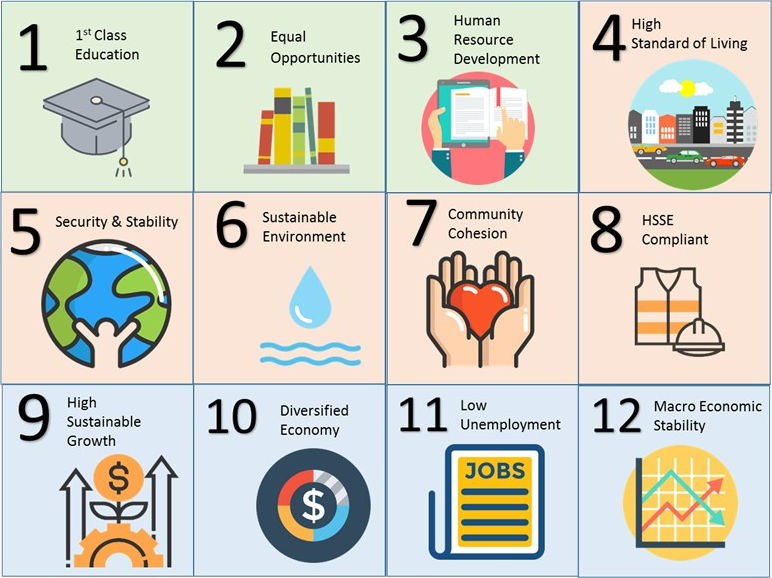
The primary objective of Brunei's national development strategy, Wawasan Brunei 2035: wawasanbrunei.gov.bn
Equitable and sustainable business diversification
To ensure that the aquaculture industry provides equitable benefits to society, the government of Brunei Darussalam has launched various programs aimed at enhancing the capacity of small-scale fish farmers and fishermen. These initiatives include technical training, financial support, and the strengthening of strategic partnerships to enable small enterprises to grow and compete in broader markets.
One of the key measures implemented is technical training and business management education for fish farmers and small-scale fishermen. The government, through the Department of Fisheries under the Ministry of Primary Resources and Tourism, regularly conducts training programs at fisheries research centers. These sessions cover various aspects of aquaculture, ranging from efficient fish and shrimp farming techniques and water quality management to the application of modern aquaculture technology. Additionally, participants gain insights into marketing strategies and business management to ensure the sustainability of their ventures. To date, more than 500 fish farmers and small-scale fishermen have participated in these training programs, with an annual target to increase the number of trainees.
Beyond training, the government also provides financial assistance and subsidies to small-scale fish farmers to help them establish or expand their aquaculture businesses. Through a special financing scheme provided by the Autoriti Monetari Brunei Darussalam (AMBD), fish farmers can access low-interest loans and receive initial capital assistance. Furthermore, the government offers subsidies for the purchase of fish seed, feed, and aquaculture equipment to alleviate operational costs for small enterprises. In recent years, over 5 million BND has been allocated as financial aid for the aquaculture sector, with priority given to farmers who adopt environmentally friendly and sustainable practices.
The government is actively promoting strategic core-plasma partnerships between small-scale aquaculture farmers and large corporations to expand market access and enhance the competitiveness of local products. Through this partnership model, major companies in the aquaculture sector serve as both mentors and buyers of produce from small-scale farmers. One notable success story of this initiative is the collaboration between Golden Corporation Sdn Bhd, one of Brunei Darussalam’s largest fisheries companies, and local shrimp farming groups. This company not only purchases the harvest from small-scale farmers but also provides technical assistance and access to export markets.
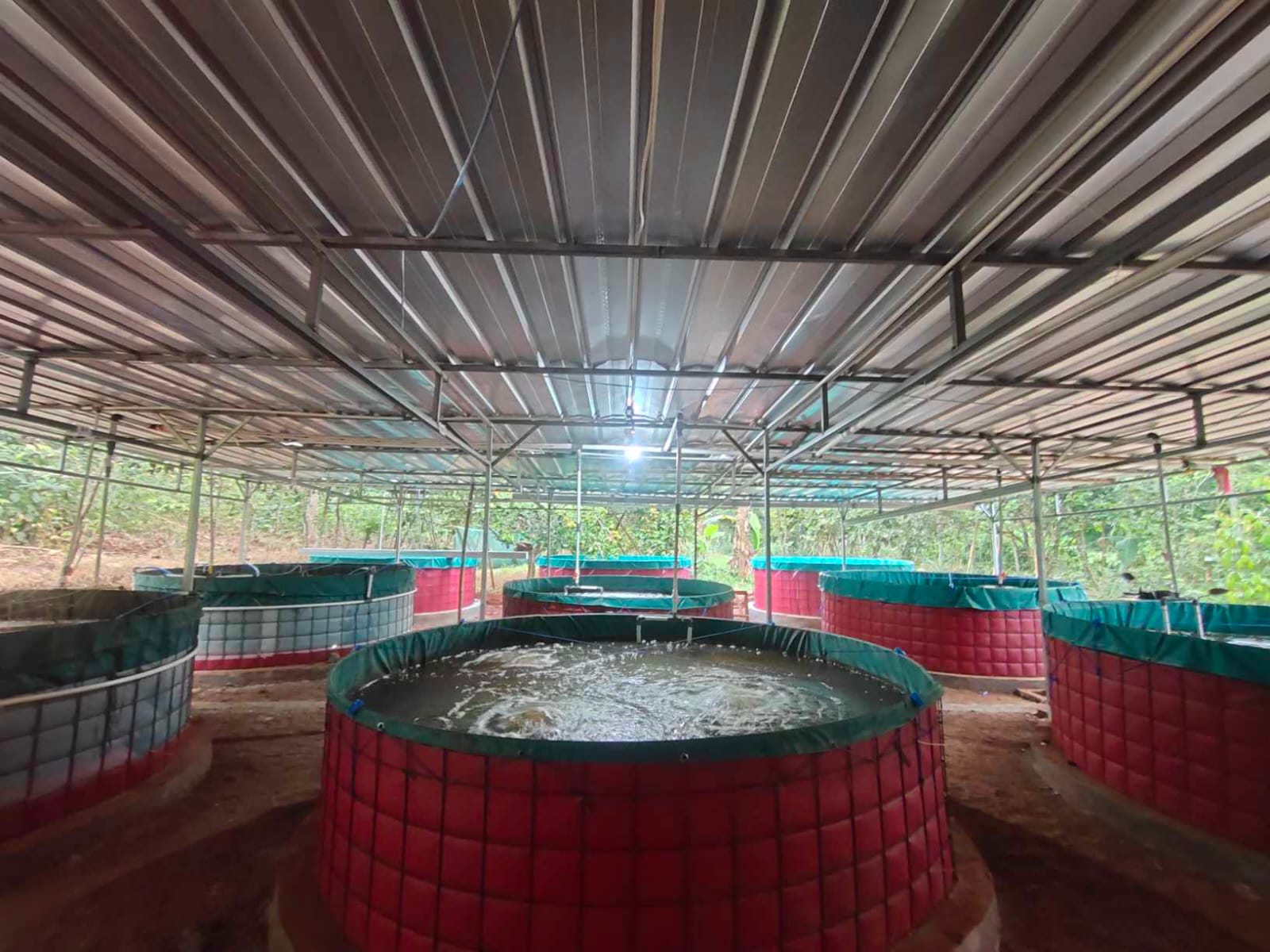
Sustainability remains a key focus in the development of Brunei Darussalam’s aquaculture sector. One of the technologies being implemented is the Biofloc System, which enables more efficient organic waste management. This system utilizes microorganisms to recycle uneaten feed and fish waste into additional nutrients, thereby reducing dependency on commercial feed. By adopting this method, farmers can enhance production efficiency while maintaining water quality, minimizing pollution, and lowering operational costs.
Additionally, several fisheries companies in Brunei Darussalam have begun adopting the Recirculating Aquaculture System (RAS), a technology designed to optimize water use through filtration and recycling. RAS significantly reduces freshwater consumption and minimizes waste discharge into the environment, making it particularly suitable for regions with limited water resources. Several modern aquaculture facilities in Brunei Darussalam have incorporated this system, especially for cultivating high-value fish species such as grouper and snapper, which are widely exported to international markets.
Export-oriented and global market potential
As Brunei Darussalam aims to expand its aquaculture production targets, the country is also focusing on penetrating international markets to enhance the added value of its fisheries sector. Brunei seeks to establish aquaculture products as a leading export commodity by maintaining high-quality standards. Currently, the country exports a variety of seafood, including vannamei shrimp, grouper, and snapper, to key international markets with strong demand for premium fishery products.
Malaysia and Singapore are among the primary markets for Brunei’s seafood exports, given their rapidly growing seafood industries and high demand for quality seafood. The geographical proximity of these countries provides logistical advantages, ensuring efficient transportation and fresh product delivery. According to data from Trade Economy, Brunei’s seafood exports to Malaysia and Singapore have increased by 15% over the past five years, reflecting growing market confidence in Brunei’s fishery products.

Tuna is recognized as a key export commodity within Brunei Darussalam's fisheries sector: Luhkan Kota Mataram/Zainal Abidin
Additionally, China represents a strategic export destination, as it is the world’s largest seafood consumer, with an annual consumption exceeding 65 million tons. Brunei Darussalam aims to penetrate the Chinese market with premium products such as live grouper and high-value shrimp. To strengthen its position in this market, the Brunei government has established trade partnerships with major importers in China and is enhancing its production capacity to meet export standards.
Brunei Darussalam is actively working to penetrate the European and United States markets, both of which are known for their stringent standards on sustainability and food safety. To enhance the competitiveness of its products, the Brunei government has implemented various international standards, including the Hazard Analysis and Critical Control Point (HACCP) system. This ensures food safety at every stage of production and distribution.
In addition, Brunei Darussalam has begun adopting Aquaculture Stewardship Council (ASC) certification to guarantee that its aquaculture practices align with sustainability principles and environmental responsibility—key requirements for accessing European and American markets.
As a country with a predominantly Muslim population, Brunei Darussalam also prioritizes Halal certification for its seafood products to appeal to consumers in Islamic markets, particularly in the Middle East and South Asia. Halal-certified seafood from Brunei is gaining traction due to its high standards of cleanliness and quality. The government continues to expand access to the global halal market, which is valued at over USD 2 trillion.