Global trade dynamics are often determined by the degree to which a nation opens its doors to products from abroad. For the Indonesian fishing industry, the door to the Japanese market is now not merely open; it is as if it has been taken off its hinges. The elimination of export tariffs for processed tuna, skipjack, and mackerel (TTC) under the framework of the amendment to the Indonesia-Japan Economic Partnership Agreement (IJEPA) marks a fresh breath of air for fishermen and fish processing entrepreneurs across the archipelago. Japan, renowned as one of the world's largest consumers of seafood and famous for maintaining stringent quality standards in the sector, has signaled that Indonesian products now stand in a fiscally equal bargaining position with regional competitors.
Behind the jubilation over the zero percent tariff figure, however, a fundamental question arises regarding the sustainability of the nation's maritime economy: is this the moment for Indonesian tuna to truly ascend in class within the global market, or will the country merely remain a spectator at the feast of consumption in Japan due to constraints in quality and consistency upstream? This strategic momentum is not merely about removing the previous entry cost burden of 9.6 percent; rather, it is about how the entire national fishery ecosystem—from small-scale fishermen in remote Maluku to giant processing factories in Bitung—can transform into a trusted, sustainable global protein provider equipped with capable digital traceability.
IJEPA and the new era of zero percent tariffs
Indonesia’s diplomatic economic journey to reach this point was not a brief process. The amendment to the IJEPA, the protocol for which was signed on August 8, 2024, by the Indonesian Minister of Trade and the Japanese Minister of Foreign Affairs, is the result of long negotiations that placed the fisheries sector as a top priority of national interest. Before this agreement came into effect, exports of processed tuna and skipjack products from Indonesia had to shoulder an entry tariff burden of 9.6 percent at Japanese ports. This figure often served as a barrier, preventing Indonesian fishery products from competing on price with similar goods from countries that had already secured preferential agreements with Japan.

Indonesian Minister of Trade Zulkifli Hasan (center) after signing the Protocol Amending the Indonesia-Japan Economic Partnership Agreement (IJEPA) in Jakarta on Thursday (August 8, 2024): KKP
The primary focus of this amendment is the elimination of tariffs on four specific tariff posts (HS Codes) covering processed tuna and skipjack products, whether in airtight packaging or other processed forms. This change directly impacts the cost structure of Indonesian exporters, providing a wider margin that can be allocated toward improving product quality.
For industry players, this zero percent figure is a "fresh breath" that has long been awaited. Machmud, the Acting Director General of Strengthening the Competitiveness of Marine and Fishery Products (PDSPKP), emphasized the optimism surrounding this change. He stated that with a 0 percent tariff, exports of Indonesian tuna and skipjack will possess significantly higher competitiveness in the Japanese market. This optimism is not without basis; the elimination of the tariff is expected to lift Indonesia’s position from third place to become the number one supplier in the Japanese market, displacing the dominance largely held by Thailand and the Philippines.
The elimination of this tariff is not only about facilitating the flow of goods; it also represents Japan's recognition of the food safety systems and fisheries management in Indonesia. In a macroeconomic context, tuna and skipjack are the second leading commodities for Indonesian fishery exports, with a market share reaching 17 percent of total national seafood exports. In 2024 alone, the value of Indonesian tuna exports (including skipjack and mackerel) globally was recorded at 927.2 million USD. With the opening of Japanese market access free of import duties, the potential for growth in this export value is estimated to accelerate significantly in the coming years, provided that the supply of raw materials remains maintained and sustainable.
Indonesia's position on the map of Japanese market competition
To understand the magnitude of the impact of this zero percent tariff policy, one must examine Indonesia's relative position in the arena of competition in Japan. Thus far, Indonesia has been a key player, yet it remains under the shadow of the efficiency of Thailand's processing industry. Based on the latest data from Asian Today, canned tuna products and other processed goods from Indonesia occupy the rank of the third-largest exporter to Japan, with a value reaching 30.28 million USD.
Although Indonesia still ranks third in terms of volume and total value, growth indicators show a very promising trend. Indonesia recorded a Compound Annual Growth Rate (CAGR) that is higher compared to its main competitors in Southeast Asia. This may indicate that market interest in Japan toward Indonesian products continues to increase consistently.
Indonesia’s CAGR advantage of 13.82 percent demonstrates an industry dynamic that is more agile and an ability to absorb market demand better than Thailand, at 12.12 percent, and the Philippines, at 6.31 percent. Economic analysis suggests that this rapid growth is driven by the availability of raw material resources, which are more abundant in Indonesian waters compared to neighboring countries that are beginning to experience stock limitations in their own territorial waters. However, Thailand remains a formidable challenge because it possesses advantages in processing technology, logistics cost efficiency, and a very established global distribution network.
It is crucial to remember that the Japanese market is one that highly values premium quality and freshness. Tuna consumption in Japan is an integral part of a culinary culture rooted in sushi and sashimi. In 2024, the annual per capita consumption of fishery products in Japan reached 46 kilograms. Although canned tuna remains popular for practical household consumption, there is a shifting trend toward non-canned processed products that have high added value (value-added products), such as frozen tuna loins, vacuum-packed loins, and ready-to-eat cuts that maintain texture and taste akin to fresh fish.
Indonesia's readiness and zero tariff facilitation mechanisms
The government, through the Ministry of Marine Affairs and Fisheries (KKP), realizes that an agreement on paper means nothing without efficient technical implementation in the field. Therefore, the KKP has prepared concrete steps to facilitate Fish Processing Units (UPI) so they can immediately utilize the zero percent tariff facility. These steps include the preparation of derivative regulations in the form of a Circular Letter from the Minister of Marine Affairs and Fisheries, which will serve as an operational guide for business actors.
In accordance with the IJEPA protocol, only UPIs that are officially registered at the KKP and have received notification from the Japanese side are entitled to enjoy the 0 percent preference tariff. This registration process is designed to ensure that every fish sent to Japan comes from facilities that meet international quality standards and whose sources can be traced.
The registration process for Fish Processing Units (UPI) begins with the submission of administrative documents. Business actors are required to submit an application form, a Business Identification Number (NIB), standard certificates, a Certificate of Processing Feasibility (SKP), and Hazard Analysis Critical Control Points (HACCP) certificates as proof that the facility has met basic food safety requirements.
Furthermore, the UPI must demonstrate a commitment to quality assurance and product traceability. This is evidenced through the submission of Standard Operating Procedures (SOP) for raw material sorting, traceability documents, and an integrity pact stating compliance with all applicable fishery regulations.
Once the documents are complete, the Directorate General of PDSPKP performs administrative verification and an inspection of the UPI location. This examination can be carried out directly or online to accelerate the process without reducing the quality of supervision.

Laboratory analysts conduct Escherichia coli testing on tuna loin samples: BPPMHKP Ternate
If the UPI is declared to fulfill all requirements, the KKP will then convey the list of said UPIs to the Ministry of Agriculture, Forestry and Fisheries (MAFF) of Japan through an official diplomatic note as the final stage of registration.
One of the important prerequisites in exporting tuna to Japan, especially for non-canned processed products, is the certainty that the fish is caught legally and meets certain size criteria. Japan requires that raw materials for several types of processed products must have a minimum length of 30 cm. To meet these technical requirements, Indonesia relies on the Fish Catch Certificate (SHTI), which has been harmonized with the Japan Catch Documentation Scheme (JCDS). The synergy between SHTI and JCDS is concrete proof of Indonesia's commitment to combating Illegal, Unreported, and Unregulated (IUU) Fishing, while simultaneously serving as a "passport" for Indonesian fishery products to enter a global market that is increasingly selective.
Great opportunities for large-scale industries and MSMEs
The elimination of export tariffs is not only a victory for giant fish processing companies. This policy is designed to create a multiplier effect that reaches all layers of the supply chain, including small fishermen and actors within Micro, Small, and Medium Enterprises (MSMEs).
For large-scale UPIs, a zero percent tariff translates to cost efficiency that can be allocated for production capacity expansion. The reduction in entry costs of 9.6 percent provides room for the industry to invest in the latest freezing technology or the expansion of cold storage facilities. This investment, in turn, will increase labor absorption in fishery industry centers such as Bitung, Kendari, Ambon, and Banyuwangi.
In addition, the increase in demand from Japan will trigger a greater demand for raw materials at the upstream level. This provides market certainty for fishermen who catch tuna and skipjack. When the processing industry grows stably, supporting sectors—such as cold chain logistics, packaging providers, and sea transportation service providers—will also feel the positive impact. This synergy is expected to strengthen the economic resilience of Indonesia's coastal regions.
One of the most compelling aspects of this policy is the opening of opportunities for MSMEs to become part of the global export supply chain. Although direct export to Japan might still be difficult for MSMEs to perform independently due to volume constraints and strict technical standards, they can play a role as suppliers of raw materials or perform initial processing for exporter UPIs.
The KKP continues to encourage fish processing MSMEs to improve their competence through quality certification facilitation programs such as SKP and HACCP. By possessing these certifications, products from MSMEs can be accepted by large export-oriented UPIs. Furthermore, "one-by-one" fishing methods, such as handline and pole-and-line, which are widely practiced by small-scale fishermen in Eastern Indonesia, are now becoming a prima donna in the international market because they are considered more environmentally friendly and sustainable. Tuna products resulting from the catches of small fishermen, if managed with the correct quality standards, are expected to possess a higher selling value in the premium Japanese market, which cares deeply about sustainability issues.
Challenges of quality, sustainability, and competition
Optimism regarding the zero percent tariff must be accompanied by critical vigilance toward the structural challenges that still haunt the nation's fishery industry. Without improvements on the upstream to downstream sides, the elimination of tariffs will only become a wasted opportunity.
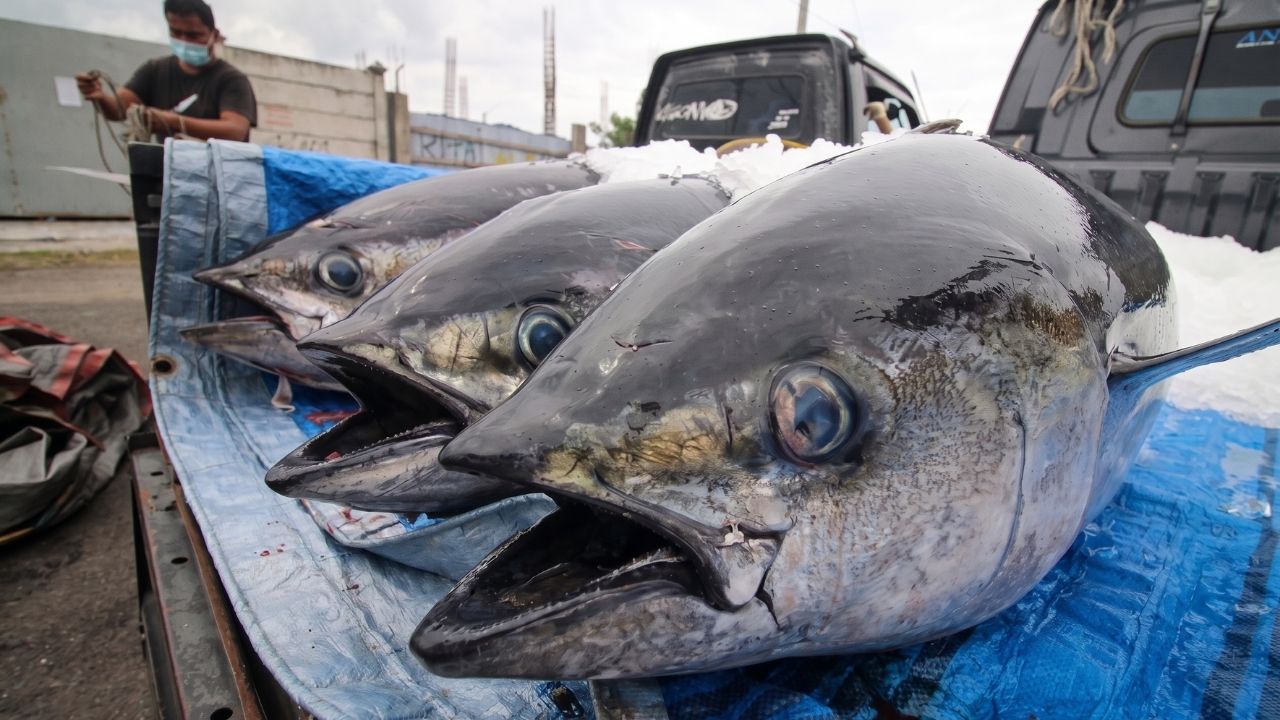
The main problem that often hinders Indonesian fishery exports is not a lack of fish in the sea, but rather the decline in fish quality from the time it is on the boat until it arrives on land. Fish is a product that is very easily damaged (perishable). Failure to maintain low temperatures continuously—known as the cold chain system—can drastically lower fish quality in a matter of hours.

Tuna processing training attended by the local community to maintain the quality of tuna catches obtained by fishermen: BPPMHKP Ternate
The government and business actors must realize that the Japanese market will not tolerate products with high histamine levels or flesh texture that has begun to degrade, even if the price is cheap due to the zero percent tariff.
The issue of sustainability is also increasingly important. In the modern era, global consumers do not only ask "is this fish tasty?" but also "was this fish caught in a way that damages the environment?". Issues of overfishing and the decline of tuna populations have become serious concerns at the international level. Japan, as a member of regional fisheries management organizations (RFMO) such as the Western and Central Pacific Fisheries Commission (WCPFC), pays close attention to catch quotas and the sustainability of fish habitats in the sea.
Indonesia has taken a step forward by obtaining Marine Stewardship Council (MSC) certification for 11,000 tons of small-scale tuna fisheries, specifically for yellowfin tuna and skipjack. This certification is proof that fish stocks are managed well and environmental impacts are minimized. However, maintaining this certification status requires high discipline from fishermen and strict supervision from the government. If Indonesia fails in maintaining stock sustainability, then the competitiveness of Indonesian fishery products in the future will be eroded by trade bans or international consumer boycotts, regardless of existing export tariffs.
Indonesia does not play alone in the Japanese market. Thailand, although it does not possess waters as vast as Indonesia, has long positioned itself as a global processing hub and is known as the world's "king of canned tuna." They excel in terms of factory efficiency, product standardization, packaging innovation, and strong global brands. Meanwhile, the Philippines also possesses strong market access and geographic proximity, which provides an advantage in delivery time.
Indonesia must be able to create a unique value proposition that distinguishes its products from those of Thailand and the Philippines. One of the ways is by highlighting the aspects of "full traceability" and "social sustainability" of tuna caught by local Indonesian fishermen.