
The Congo Basin is one of the planet’s most geographically defining landscapes, spanning more than 4 million square kilometers across much of Central Africa. Its vast terrain forms the world’s second-largest green lung, sustained by the Congo River and its tributaries, which together constitute the continent’s hydrological lifeline. Each year, the basin receives and channels an estimated 1.3 billion cubic meters of renewable freshwater about 30 percent of Africa’s total. At major confluences such as Brazzaville, the river records an average discharge of 41,000 cubic meters per second. or the roughly 77 million people living along the basin, these waters are not merely a geographical feature but the historic foundation of daily survival and economic activity.
Yet this water-rich landscape holds a structural paradox: the abundance of ancient inland waters has not translated into food security. In the Central African Republic, for example, more than 68 percent of the population lives below the poverty line, and about 31 percent faces acute food insecurity. Rural communities have traditionally met their calorie and protein needs through small-scale capture fisheries operating along the rivers. Fishermen in the region typically use 50-meter nets alongside simple hooks, then preserve their catch by smoking it over wood fires for 6 days before distributing it to local markets ahead of the planting season. This subsistence fishing has sustained basic protein needs for centuries, but its capacity is nearing its limits.

River-caught carp preserved through drying and smoking in the Central African Republic serves as a primary distribution method to sustain animal protein supplies in local markets: Wikimedia Commons/Lucia236 (Modified)
Reports from various global food and agriculture institutions indicate that inland fish catches in the Congo Basin are difficult to calculate accurately because of gaps in historical data. Yet field indications point to stagnating yields amid demographic pressure. In the Democratic Republic of the Congo, the national fish supply for consumption is reported to be just 4.9 kilograms per capita annually, a measure that places the country behind global standards for protein intake. Continued exploitation of river fisheries without measurable stock management, combined with traditional fishing methods, means capture fisheries can no longer keep pace with surging food demand. The stunted development of the food industry in this region is not simply the result of a lack of natural resources; it reflects structural barriers rooted in political geography and logistical isolation that keep inland areas cut off from modern supply chains.
Geographic isolation and the logistical challenges of the hinterland
Understanding Central Africa’s economic impasse requires examining the infrastructure realities that constrain landlocked countries such as the Central African Republic and Chad, as well as the inland regions of the Democratic Republic of the Congo. Without direct access to seaports, these countries depend heavily on cross-border transit corridors to bring in essential goods, from staple foods to agricultural machinery. The Central African Republic’s main logistics artery is the Douala–Bangui corridor, an overland route of approximately 1,425 kilometers linking Cameroon’s seaport to the capital, Bangui. This strategic corridor carries about 80 percent of all consumer goods entering the Central African Republic.
Physical conditions and bureaucracy along the corridor create a high-cost economy that undermines the competitiveness of local agribusiness. Under normal conditions, transporting goods from the ports of Douala or Kribi to Bangui takes an average of 9 to 12 days. The journey is made more costly by a burdensome transport tariff, with shipping costs reaching US$270 per ton. These high charges are not simply a consequence of distance or roads in need of rehabilitation; they are also shaped by informal levies. Field surveys record that commercial truck drivers crossing the corridor must pay between 64,000 and 255,000 CFA francs on average at various border checkpoints and local security posts. The cumulative effect of bureaucratic and infrastructure inefficiencies directly inflates the final price of every form of aquaculture technology input commercial feed, aerators and water pumps, for example before it reaches farmers in the interior.
Unfortunately, alternative distribution by river offers no greater predictability, since it depends heavily on equatorial climate fluctuations. The Ubangi River, which forms a natural boundary between the Central African Republic and the Democratic Republic of the Congo, is a secondary transport route linking Bangui to seaports via Brazzaville and Kinshasa. During the rainy season, from July to December, its flow surges to 57,670 cubic meters per second, allowing heavily loaded barges to dock and deliver fuel and construction materials. But when the dry season peaks in March and April, the flow falls to nearly 32,000 cubic meters per second, causing the river’s water level to drop by as much as 5 meters. The retreating water exposes sandbars that bring cargo navigation to a complete halt, effectively cutting Bangui off from maritime routes for months and paralyzing the cold chain.
The infrastructure isolation is compounded by a primary energy crisis. Electricity supplies across the region are far from adequate to support the industrialization of food production. In Chad, the electrification rate is just 11 percent, a stark disparity with the sub-Saharan African regional average of 48 percent. Power supplies in the Central African Republic and the interior of the Democratic Republic of the Congo also frequently suffer rolling outages, making machinery-dependent agribusiness operations financially risky. The absence of reliable, affordable electricity, combined with soaring transport costs driven by the geography of the hinterland, has become a decisive barrier to the introduction of conventional food-production technologies from developed countries.
From the wilderness to food security
Limited supplies of commercial food products and the high price of meat from domestically raised livestock force Central Africans to maintain their historical consumption patterns, which rely on wild meat, or bushmeat. For communities living around the Congo Basin’s forests, hunting wildlife is not merely a cultural practice inherited from the past; it is a food-security buffer that supplies essential nutrients. Across the region, wild-meat extraction is estimated at between 1 million and 6 million metric tons a year a vast volume whose calories and protein are equivalent to those obtained by slaughtering nearly 4 million head of cattle.

A herd of African forest elephants in the Dzanga-Sangha reserve, Central African Republic, represents the rich biodiversity of the Congo Basin whose conservation requires shifting food production from wildlife hunting to sustainable aquaculture: Wikimedia Commons/Daphne Carlson Bremer (USFWS) | CC BY 2.0 (Modified)
Dependence on bushmeat cuts across demographic groups, shaping an ingrained food culture that extends from riverside villages to urban centers. Rural residents of the Congo Basin consume an average of about 51 kilograms of wild meat per capita each year. Overall, hunting supplies between 30 and 80 percent of the animal protein needs of families living in the forest belt. Surveys of daily food intake in rural and urban areas of the Democratic Republic of the Congo show that small and medium-sized species, including duikers, red river hogs (Potamochoerus porcus) and brush-tailed porcupines, dominate local diets. In urban areas, this meat is usually eaten smoked, while rural communities are more likely to consume it fresh.
Although this subsistence economy has persisted for generations, its ecological balance is beginning to collapse under the pressures of modernity. Conservation biology analyses indicate that current rates of wildlife exploitation have significantly exceeded the production and reproductive capacity of forest mammals. The extraction-to-production ratio (E:P ratio) in countries such as the Democratic Republic of the Congo and Cameroon has risen above 1. Steady human population growth across the region, combined with land clearing that reduces forest cover, has accelerated habitat loss. Extrapolation models predict that, unless current hunting patterns and population growth rates are addressed, the daily protein supply from wildlife in Congo Basin countries will plunge by as much as 81 percent over the next 50 years.
This sharp decline presents the prospect of a dual crisis: the mass extinction of endemic rainforest biodiversity and a surge in structural malnutrition among human populations. With domestic protein sources other than bushmeat in extremely short supply, and import logistics chains uncompetitive, a transition to a new protein-production system is the only viable safeguard. Given the abundance of wetlands and river waters, developing a land-based aquaculture industry to raise fish species that are both nutritionally valuable and adaptable, such as Nile tilapia (Oreochromis niloticus) and African catfish (Clarias gariepinus), is emerging as a strategic response. Aquaculture offers a production method that can be measured and quality-controlled, while gradually reducing human pressure on ancient wilderness ecosystems.
Pragmatic technological adaptation
The imperative to shift to aquaculture presents stakeholders with a methodological dilemma: how can fish be produced at scale in a region plagued by high logistics tariffs and an unreliable electricity supply? Forcing the introduction of hyper-intensive technologies designed in developed countries, such as Recirculating Aquaculture Systems (RAS), is incompatible with Central Africa’s physical realities. RAS requires substantial upfront capital, depends entirely on a reliable 24-hour electricity supply for high-capacity filtration and aeration pumps, and needs manufactured feed whose price rises sharply by the time it reaches Bangui. This approach has repeatedly suffered operational failures, turning high-value pilot projects into abandoned facilities once subsidies end.
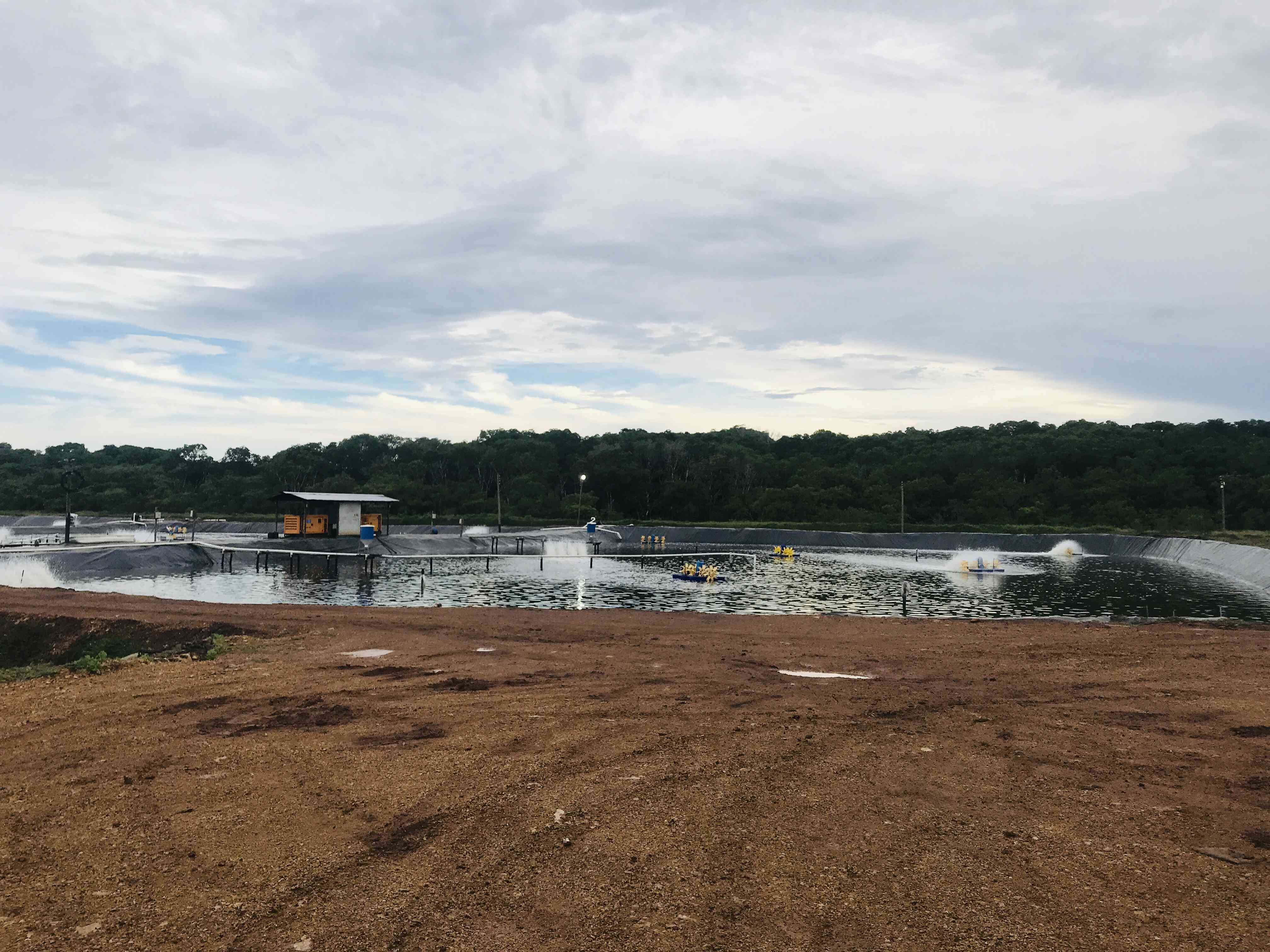
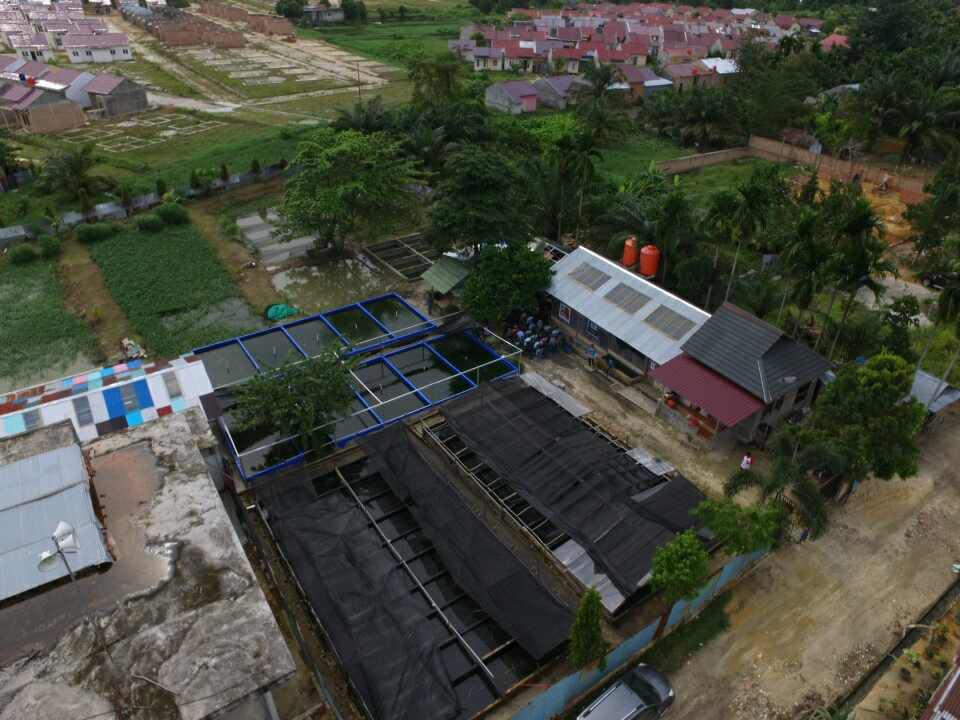
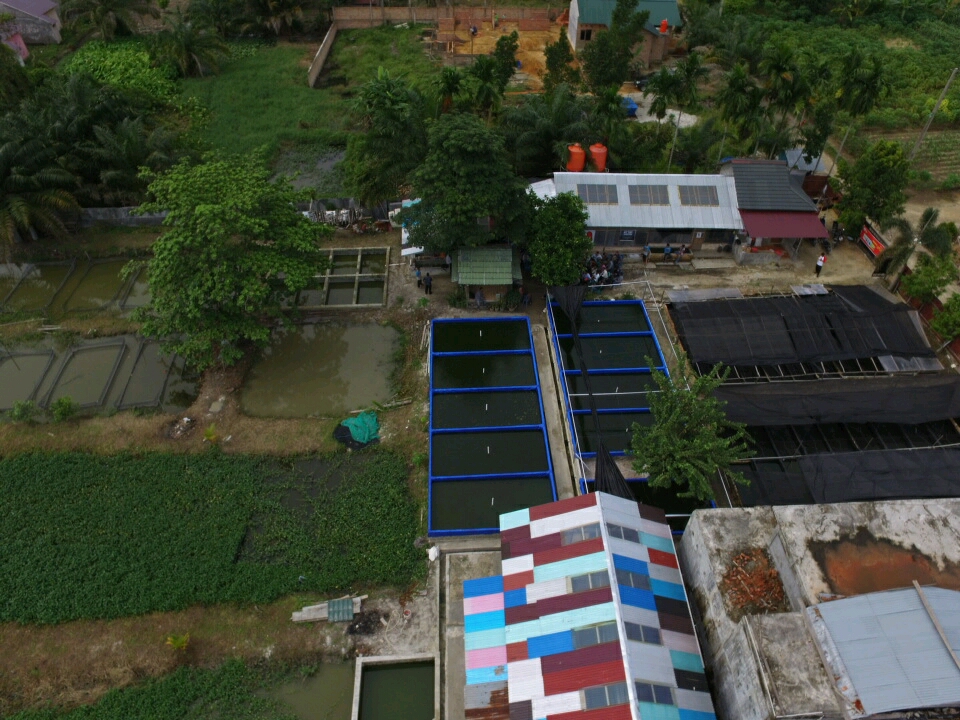
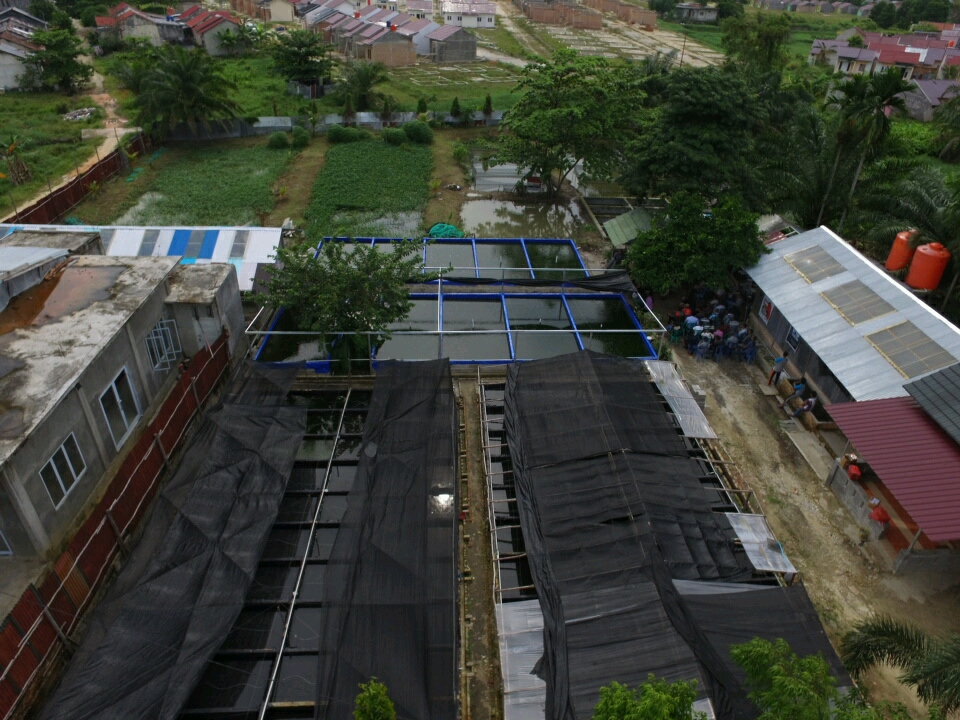
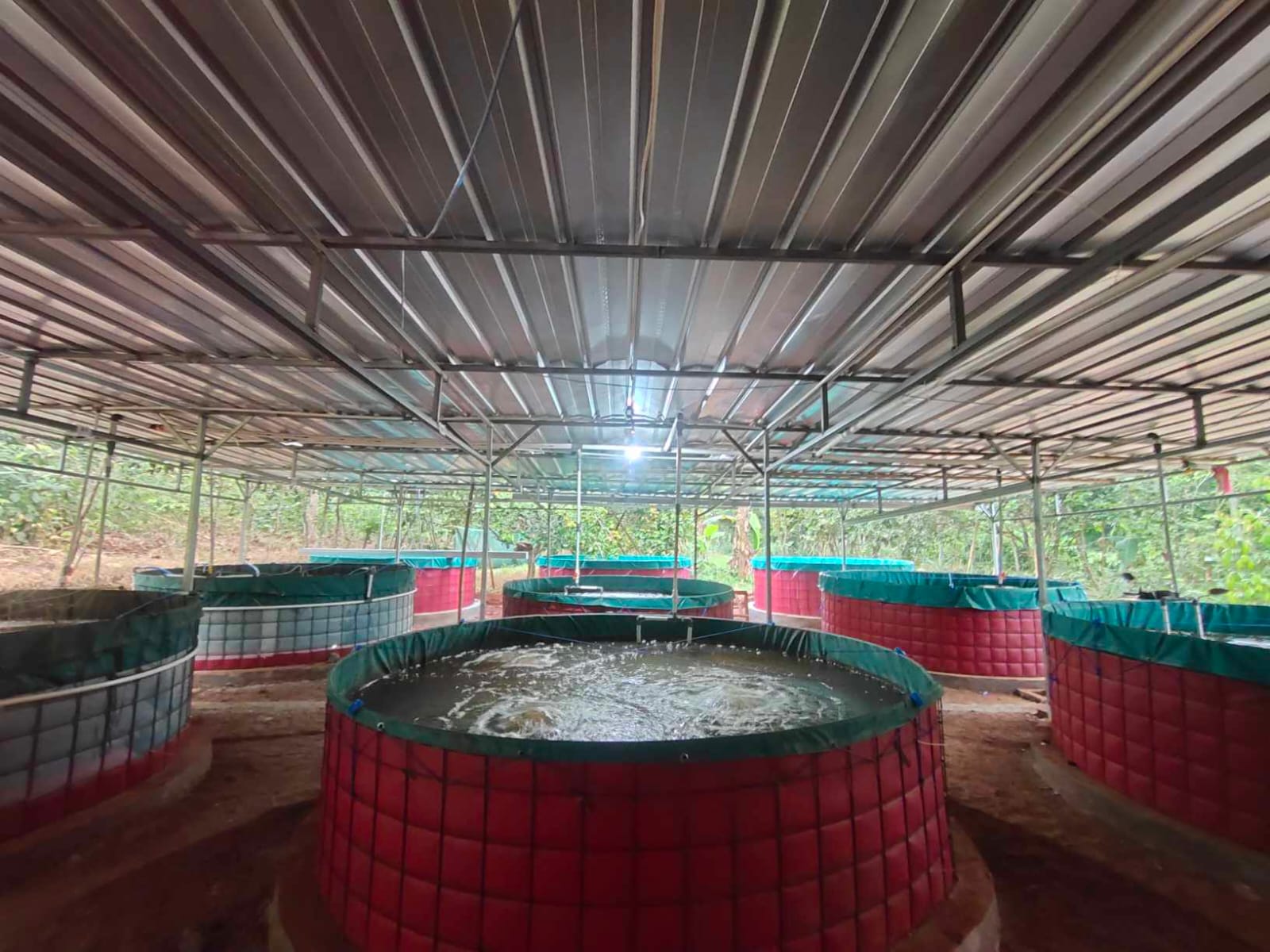
The answer to these geographical constraints lies in pragmatic technological adaptation, using methods whose success has been tested in the Southern Hemisphere, including by agribusiness operators and analysts in Indonesia: semi-intensive biofloc systems in earthen ponds. At its core, biofloc technology shifts the focus away from costly mechanical filtration toward low-cost microbiological filtration management. The biological process depends on manipulating the ratio of carbon to nitrogen (C:N) in the culture water. In conventional fish farming, accumulated feed residues and waste produce inorganic ammonia, which poisons the aquatic environment. Under the biofloc principle, farmers add carbohydrate-based carbon sources to the water to stimulate populations of heterotrophic bacteria. These bacteria absorb the ammonia and convert it into microbial cellular biomass. The bacterial cells then bind together with microalgae and organic detritus to form suspended flocs, which the farmed fish naturally consume as a highly nutritious feed source.
As an economic intervention, the system cuts aquaculture’s 2 largest operating costs at once: water management and commercial feed. To bring the C:N ratio to the optimal level, generally recommended at between 15:1 and 20:1, farmers do not need to import expensive chemicals. They can instead use abundant local agricultural byproducts found in tropical regions, such as molasses, cassava flour (tapioca) or rice bran. Empirical research has shown that Nile tilapia and African catfish raised in water using cassava- or molasses-based carbon sources exhibit optimal growth, while water quality remains stable without the need for constant water exchange. With bacterial flocs available as a secondary feed source in the pond, the feed conversion ratio (FCR) can be reduced, lowering the volume of commercial feed that must be imported through the Douala–Bangui corridor.
Applying the biofloc principle in ordinary excavated earthen ponds makes the system even more pragmatic. Rather than building concrete tanks or installing geomembrane liners that must be brought in from abroad, using earthen ponds can substantially reduce capital expenditure (Capex). Earthen ponds also serve as natural ecological buffers against fluctuations in water-quality parameters, making pond ecosystems more resilient to day-to-day climate changes. Moreover, because the system operates at a semi-intensive level, its need for artificial oxygenation is less demanding than in an RAS. Water can be aerated with paddlewheel aerators operated periodically and powered by small-scale solar panels or fuel-efficient generators. This allows farmers along the banks of the Ubangi River and in remote inland areas to operate regardless of the reliability of the national power grid.
Food sovereignty at the heart of the continent
Assessing Central Africa’s future requires a view that balances its natural potential against its material constraints. The Congo Basin’s 1.3 billion cubic meters of freshwater represent merely latent potential unless it is matched with production infrastructure that makes economic sense. Physical barriers including journey times measured in weeks, costly logistics corridors, seasonal declines in river flow and limited electricity supplies draw a clear boundary around the agribusiness models capable of surviving in the region.

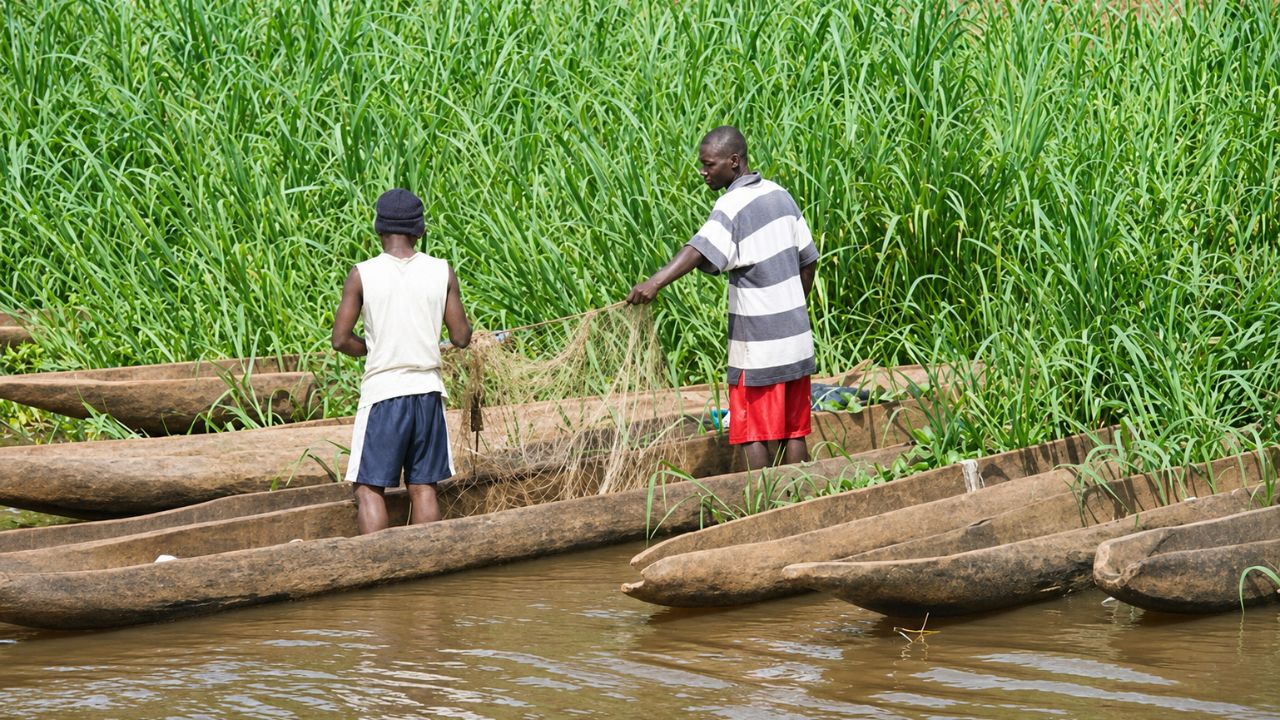
Traditional fishermen casting a net from a wooden dugout canoe on the Ubangi River in the Central African Republic reflect local reliance on subsistence river fisheries amid inland infrastructure constraints: Wikimedia Commons/Rapetou33 | CC BY-SA 4.0 (Modified)
Shifting consumption away from wildlife hunting, which threatens biodiversity, and toward a land-based aquaculture industry is not merely a development project. It is an urgent means of mitigating a humanitarian and ecological crisis. The success of this transition depends on a willingness to abandon elitist technological approaches and replace them with pragmatic agribusiness practices. Semi-intensive biofloc systems in earthen ponds, using local carbon sources such as cassava, demonstrate how infrastructure constraints can be addressed through an understanding of microbiology and the efficient use of local materials.
Through the spirit of South-South regional partnership, expertise in resilient freshwater aquaculture from places such as Indonesia can be applied with specific adjustments to Africa’s equatorial realities, giving the region a clear road map. The combination of the Congo Basin’s abundant water resources and grounded farming methods can, gradually but measurably, lay the foundations for nutritional self-reliance, restore the ecological balance of the forest and ultimately build genuine food sovereignty in the heart of the African continent.