
In the evolution of global climate policy architecture, the world’s vast ocean territories have for decades been frequently reduced to mere geographical entities acting as the tragic victims of a warming planet—plagued by ocean acidification, severe coral bleaching, and a relentless sea-level rise that fundamentally threatens the very existence of coastal nations. Today, however, a profound and fundamental paradigm shift is steadily unfolding across the complex stage of international diplomacy. The oceans have now been firmly recognized, both scientifically and politically, as the undeniable epicenter of solutions to the global ecological crisis.
Within this increasingly dynamic constellation of international climate governance, Indonesia’s strategic steps stand firmly at the vanguard, driven by proactive policy maneuvers that position blue carbon ecosystems as a principal pillar and a powerful catalyst in the ongoing national climate transition. This sweeping momentum entered its absolute peak phase following the Indonesian Government’s official submission of the Second Nationally Determined Contribution (Second NDC) document to the Secretariat of the United Nations Framework Convention on Climate Change (UNFCCC) at the end of the year 2025. By establishing an unconditional and absolute commitment to achieve peak national emissions by the year 2030, while simultaneously pioneering a decisive trajectory toward attaining Net Zero Emission (NZE) status no later than the year 2060, Indonesia has aggressively begun to reformulate the foundational tenets of its blue economy. This sweeping policy maneuver is explicitly designed as a vital geopolitical instrument ahead of the 31st United Nations Climate Change Conference (COP31), which is scheduled to be held in Antalya, Turkey, in November 2026.
The deliberate shifting of overarching emphasis from traditional terrestrial-based mitigation toward innovative ocean-based mitigation within this national climate strategy carries a profoundly strong rationality. By explicitly integrating the marine sector into the formal NDC agenda, Indonesia has fundamentally locked in a steadfast political commitment to bring the archipelago’s vast maritime potential into the equilibrium of global carbon markets and multilateral climate diplomacy. This powerful dynamic heralds the dawn of a new era—one in which precise marine science, highly innovative sustainable financing instruments, and robust spatial planning regulations converge harmoniously to create a novel balance between the immense potential for economic growth and the unyielding moral obligation to preserve the biosphere.
National and Global strategic context; the significance of the NDC's absolute decarbonization
Indonesia’s Second NDC document, submitted as an enduring mandate of its Paris Agreement commitments, represents a measured, radical, and remarkably bold leap forward in climate ambition. Through the submission of this pivotal strategic document, the government has independently (unconditionally) established a target to reduce the nation's greenhouse gas emissions by 31.89 percent. Furthermore, this ambitious target can be conditionally expanded up to 43.2 percent, contingent upon the critical prerequisites of securing adequate financial support, substantive technology transfer, and comprehensive capacity building provided by the international community. However, the most fundamentally transformative policy architecture breakthrough contained within this Second NDC is its formal transition away from antiquated calculation methods. Indonesia has officially abandoned the historic Business-as-Usual (BAU) baseline scenario—which has frequently been regarded as possessing projection bias—and has pivoted definitively toward an absolute emissions level target that is rigidly pegged to the established emission inventory baseline of the year 2019.
This critical methodological transition serves as a profound declaration of international transparency. Based upon the economic growth scenario projections embedded directly within the document, Indonesia’s national emissions are targeted to reach their absolute peak in the year 2030. Once that critical threshold is surpassed, the overarching emissions trajectory is projected to gradually plateau and steadily decline, ultimately settling within the highly specific range of 1.26 to 1.49 gigatons of carbon dioxide equivalent (GtCO₂e) by the designated target year of 2035. The achievement of these precise numerical figures is mathematically simulated through the lens of two distinct macroeconomic scenarios. The first is the Low Carbon Compatible with Paris-Low (LCCP-L) scenario, which operates on the assumption of gradual, stabilized economic growth. The second is the high-growth Low Carbon Compatible with Paris-High (LCCP-H) scenario, which boldly projects a highly aggressive economic acceleration reaching up to 8.3 percent in the year 2035.
The methodological inclusion of the marine sector into the national greenhouse gas inventory system drastically and permanently alters the landscape of Indonesia's climate mitigation roadmap. Over the course of the past several decades, the Forestry and Other Land Use (FOLU) sector—representing terrestrial forestry—alongside the complex sector of fossil-fuel energy transition, have consistently and overwhelmingly dominated the constellation of national climate mitigation discourse. However, the harsh reality of slowing decarbonization within the electricity sector—driven primarily by deep entanglements with coal-related stranded assets and the prohibitively high capital expenditures (CAPEX) required to execute a pure energy transition—has effectively rendered Nature-based Solutions, particularly those rooted in coastal ecosystems, as the most economically rational mitigation lever currently available to national policymakers.
As a foundational pillar nation situated in the highly strategic Indo-Pacific region, holding the ultimate key to the preservation of the vibrant Coral Triangle and the vast equatorial blue carbon belt, Indonesia possesses both the undisputed moral legitimacy and the undeniable ecological capacity to actively lead the "Blue South" narrative. This concept envisions a formidable strategic alliance comprised exclusively of developing nations uniquely characterized by their coastal and archipelagic geographies. Assuming this vital leadership role will not only massively fortify the overarching architecture of Indonesia’s maritime diplomacy, but it will also guarantee that multinational climate financing schemes earmarked for adaptation and for Loss and Damage provisions can flow directly into vulnerable coastal states in a manner that is both strictly fair and highly proportional.
Indonesia's giant blue carbon potential
Indonesia's unique geographical configuration as the world's absolute largest archipelagic state, woven intricately together by 17,504 distinct islands, bestows a massive endowment of natural resources while simultaneously demanding a profound degree of responsibility in the vigilant eyes of the international community. Considering that nearly 75 percent of the nation's total sovereign territorial area consists of sweeping expanses of marine and coastal waters, the historically rigid land-based orientation of its national development policies is currently undergoing a massive and necessary disruption. Beneath the rolling surface of the waves that blanket the vast archipelago’s seascape lies hidden a powerful natural infrastructure that is scientifically proven to be one of the most effective weapons on planet Earth for mitigating global warming anomalies: the blue carbon ecosystem.
Indonesia is universally and unanimously acknowledged as the natural home to approximately 17 percent of the total remaining blue carbon ecosystems functioning in the world today. This unparalleled coastal green defense belt is heavily dominated by 3.4 million hectares (8.4 million acres) of intensely dense mangrove forests—a staggering figure representing 20 percent of the total global mangrove area—operating alongside millions of hectares of sprawling seagrass meadows and highly productive salt marshes. These crucial ecological habitats stretch endlessly from the eastern coast of the island of Sumatra all the way to the deeply secluded bays nestled within the territorial waters of Papua. Exhaustive scientific literature reviews definitively affirm that these seagrass meadows and mangrove forests possess an operational carbon sequestration (the active absorption and long-term storage) capacity efficiency that is up to 35 times more aggressive and permanent compared to traditional terrestrial tropical rainforests per unit hectare of area. This exceptional, world-class capability stems fundamentally from the unique mechanics of anaerobic sedimentary soils found in coastal regions, which are remarkably capable of locking away massive accumulations of organic carbon for thousands of years without ever releasing them back into the atmosphere, provided that the underlying ecosystem is strictly protected and not subjected to land reclamation or artificial drainage.
The rigorous valuation of these profound ecological assets yields astoundingly massive figures when analyzed within a broad macroeconomic framework. Based strictly on preliminary calculations compiled by authorized government agencies, Indonesia’s sprawling mangrove ecosystems are projected to have the monumental capability to store massive carbon emission reserves reaching up to 11 billion metric tons. If carefully capitalized through modern carbon economic instruments, this total value is estimated to comfortably breach a figure equivalent to 66 billion USD. On the other hand, the vast 1.8 million hectares (4.4 million acres) of rich seagrass meadows—which for many decades frequently escaped the radar of strategic national policymaking and were merely regarded as standard foraging grounds for the endangered dugong—are now aggressively projected to possess a tremendous emissions absorption capacity totaling 790 million metric tons of carbon, carrying an estimated monetary valuation reaching a remarkable 35 billion USD.
These deeply vital greenhouse gas-absorbing ecosystems can effortlessly act in a dual capacity: continuously serving as an impenetrable green infrastructure for natural coastal defense designed to organically dampen the kinetic energy of violent ocean waves and fundamentally prevent catastrophic coastal abrasion caused directly by naturally rising sea levels, while simultaneously functioning as essential biological nursery grounds. These nursery grounds are strictly critical in ensuring long-term national food security by securely underpinning the expansive capture fisheries sector. Analyzed from a holistic macroeconomic perspective, the combined potential for comprehensive spatial expansion and the aggressive capitalization of marine resources through a deeply sustainable blue economy approach is estimated to be worth approximately 1.3 trillion USD to the rapidly evolving Indonesian economy.
Orchestrating policy through the Ocean Climate Dialogue 2026 and toward the Ocean Impact Summit
The rapidly growing global awareness regarding the sheer, unparalleled magnitude of this marine potential has triggered an exceptionally urgent bureaucratic need to rapidly align disjointed narratives, entirely eliminate institutional double standards, and decisively dismantle the entrenched sectoral egos historically existing among key stakeholders at the ministerial and institutional levels. As a direct, tactical response aimed at effectively bridging the deep historical chasm between pure marine science and the practical execution of high-level policy governance, the Ministry of Marine Affairs and Fisheries (KKP) took a highly proactive initiative. They partnered directly with the independent policy think tank, the Climateworks Centre, as well as the specialized scientific media platform, The Conversation Indonesia, to jointly organize and host the Ocean Climate Dialogue (OCD) 2026 symposium during mid-February in the capital city of Jakarta.

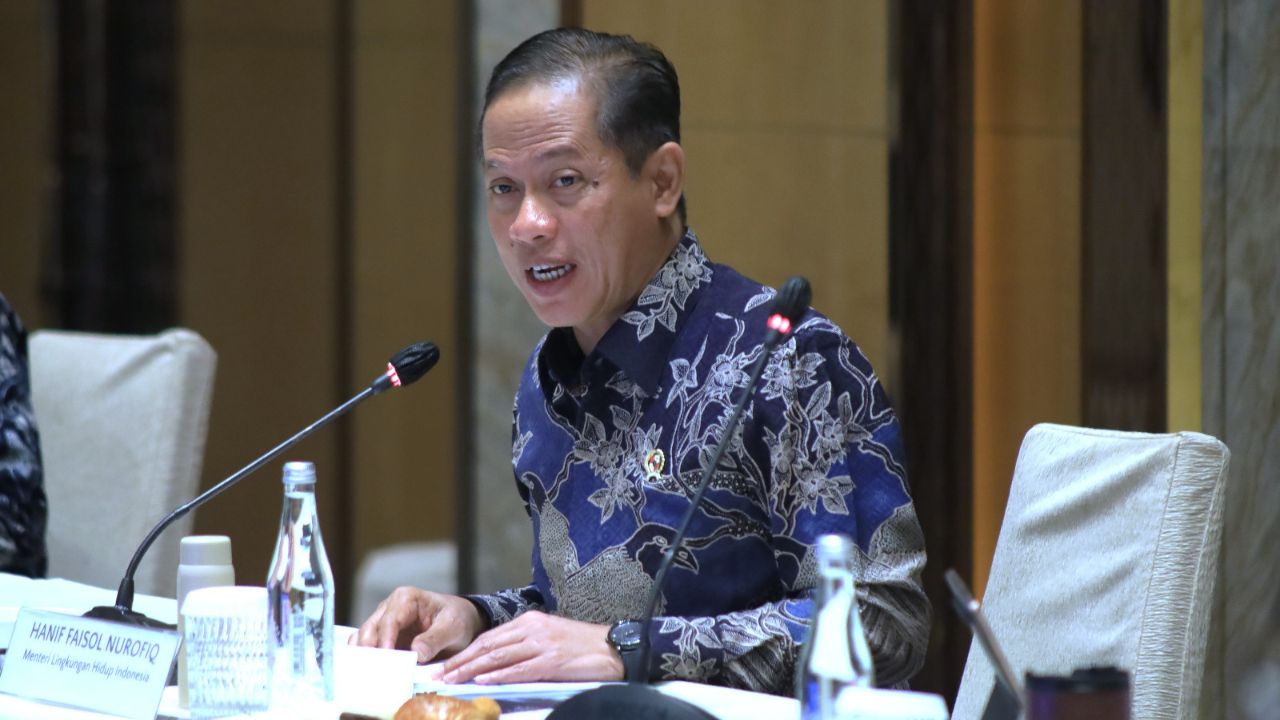
Dr. Luky Adrianto, chair of the Indonesian stakeholder steering committee for Climateworks' Southeast Asia Framework for Ocean Action in Mitigation (SEAFOAM), leads a discussion on 'bridging science, policy, and finance to scale up blue carbon for Indonesia's climate transition and blue economy': Climateworks News
This prominent forum was specifically designed from its inception to function as an intensive technical incubation space. The highly focused event was meticulously tasked with facilitating a complex cross-disciplinary intersection to perfectly harmonize the rigid pillars of modern science, national macro policy, and comprehensive national regulatory frameworks with the deeply traditional knowledge systems rooted strictly in the grassroots local wisdom of coastal communities, all seamlessly integrated alongside the highly complex mechanisms of modern financing instruments. The high-profile physical presence of key national policy architects—including the Director General of Marine and Spatial Management at the KKP, the prominent Deputy for Climate Change Control at the Ministry of Environment and Forestry (KLHK), as well as the specialized Expert Staff to the Minister of KKP for Ecology and Marine Resources—demonstrates precisely how unyieldingly crucial this forum has become in carefully laying the functional operational foundation required for widespread marine decarbonization.
The intrinsic, deeply held objective of successfully hosting this specialized dialogue, which was expertly guided by Dr. Luky Adrianto, is to fundamentally shatter the rigid silo mentality that has historically and frequently hindered the overarching effectiveness of implementing complex cross-institutional climate initiatives operating across Indonesia. During the highly intensive and deeply technical panel sessions, a pressing national urgency emerged specifically regarding how the emerging carbon trading mechanism—which currently possesses a solid jurisdictional foundation via the official issuance of Presidential Regulation Number 110 of 2025 concerning Carbon Economic Value (NEK)—can be successfully decodified and accurately translated into highly applicable technical guidance documents explicitly designed for regional heads operating at the provincial and regency levels. Furthermore, the dialogue heavily emphasized the absolute imperative of providing ironclad legal certainty for the numerous corporate investors who currently remain exceptionally hungry for robust and reliable Environmental, Social, and corporate Governance (ESG) instruments. The highly technical dialogue also systematically delved into the profound technical findings generated from a comprehensive report titled "Turning the tide: Advancing Indonesia's blue economy through ocean-based mitigation actions," which meticulously details the highly practical steps required for fully integrating the marine sector deeply into the very heart of the state’s sovereign climate strategy.
Analyzed from a deeply macro-strategic perspective, the successful convening of the Ocean Climate Dialogue 2026 serves explicitly as a vital prerequisite milestone that actively matures the foundational framework of substantial intellectual debate directly ahead of the highly anticipated Ocean Impact Summit (OIS) event. This summit is a colossal gathering firmly scheduled to visually shake the entire global stage on the famous island of Bali from June 8 to 9, 2026. The upcoming OIS is deliberately designed not merely to function as an ordinary, standard conference, considering this prestigious forum has already officially secured the absolute and full institutional backing of the powerful World Economic Forum (WEF). This robust support immediately follows the historic signing of a vital Letter of Intent (LoI) in Davos, Switzerland, explicitly drafted between the distinguished Minister of KKP Sakti Wahyu Trenggono and the highest echelon of the WEF leadership, a monumental event witnessed directly by the unyielding political determination of President Prabowo Subianto.
The highly anticipated physical presence of major global corporations and the world’s foremost financial architects at the upcoming OIS will fundamentally transform the entire event into an exclusive, high-stakes arena wherein Indonesia systematically prepares to confidently offer massively lucrative megaton-scale blue carbon project investment portfolios directly to the deep liquidity pools of the international financial community. The highly deliberate and profoundly systematic orchestration of these two consecutive, high-profile strategic forums systematically positions the nation of Indonesia directly in the coveted role of a highly proactive global architect—one that entirely independently and sovereignly formulates, authoritatively dictates, and thoroughly legitimizes the foundational baseline quality as well as the absolute integrity of the entire global blue carbon market.
Policy emphasis; the absolute prerequisites of high integrity and institutional alignment
Responding firmly to the immense, ever-present temptation of rapid instant commercialization frequently found amid the sweeping euphoria currently surrounding the global blue carbon trading boom, Indonesia is deliberately adopting a highly conservative, exceptionally cautious stance that rests entirely and uncompromisingly on high-precision scientific calculations. The Director General of Marine Management at the KKP strongly emphasized that ongoing efforts to permanently integrate vital maritime issues directly into the mainstream of the broader global climate agenda absolutely demand a rigid foundational alignment of disparate institutions and an ironclad architecture of highly complex financing mechanisms that are strictly proven to be entirely immune from malicious manipulation. In intensive cross-ministerial technical forums, the Director General specifically and repeatedly highlighted the stringent application of the "high integrity" principle acting as an absolute dogma and the unyielding bedrock of national blue carbon ecosystem governance. "Blue carbon development must be executed in a deeply integrated manner, strictly rooted in pure science, fully supported by a highly robust governance structure, equipped completely with a deeply credible Measurement, Reporting, and Verification (MRV) system, and must aggressively prioritize deep social and environmental protection with absolutely zero tolerance for resource exploitation. Without all of these vital foundational elements seamlessly in place, the underlying credibility of the entire national program will instantly be questioned and drastically devalued by the highly critical global carbon market," comprehensively explained the Director General of Marine Management at the KKP, as directly quoted from official communications provided by the KKP.

Director General of Marine Management at the Ministry of Marine Affairs and Fisheries (KKP), Koswara: KKP
This highly stern and distinctly timely warning accurately strikes directly at the weakest, most vulnerable point and ruthlessly exposes the very core problem actively plaguing the entirety of the global carbon governance architecture existing today. Within the highly fluid transactional dynamics inherent to both the global voluntary carbon market and the rigid instruments characterizing the formal compliance market, a newly minted carbon credit unit whose underlying scientific calculation methods remain in deep doubt—or a poorly governed conservation project that is subsequently proven to actively displace and maliciously repress the highly sensitive customary tenurial rights possessed by indigenous coastal communities—will instantaneously and irrevocably lose its entire assigned monetary valuation (a highly damaging market phenomenon widely known technically within the financial sector as phantom credits or fictitious credits). The rigorous high-integrity approach actively articulates a deeply progressive viewpoint explicitly demanding that commercial initiatives functioning within massive blue carbon projects must not ever merely culminate in the rapid privatization and reckless capitalization of sovereign marine spatial areas strictly for the sake of generating pure corporate profit. Instead, these massive initiatives must exclusively function as accurately measured, highly calibrated ecological interventions that perfectly balance the complex trilemma existing between optimizing vast climate absorption benefits, aggressively protecting sensitive coastal biodiversity, and fundamentally affirming the vital socioeconomic welfare and livelihoods of grassroots, local communities.
The absolutely crucial and unyielding need to perfectly align these massive blue economy ambitions directly with the overarching blueprint characterizing the entire national climate architecture was further reaffirmed and heavily emphasized by the Deputy for Climate Change Control and Governance of Carbon Economic Value, functioning directly under the strict jurisdiction of the Ministry of Environment. In their detailed public explanation, they strongly emphasized that the highly complex implementation blueprint design and the subsequent derivative operational policies explicitly governing lucrative marine carbon commodities must be absolutely synchronized, perfectly calibrated, and entirely integrated in an absolute manner with the massive quantitative projections carefully articulated within the rigid matrix of the Second NDC.
This highly specific synchronization step holds immense, unparalleled administrative vitality strictly required to entirely avoid the dangerous and legally compromising risk of double counting regarding national mitigation efforts. Such a deeply adverse, highly controversial scenario officially occurs when the exact same quantified volume of active emissions absorption is aggressively and unilaterally claimed by independent private investor entities actively purchasing the corresponding carbon credits, while simultaneously, that exact same numeric figure is mistakenly included as a formal sovereign climate commitment achievement report formally claimed by the nation-state directly to the UNFCCC secretariat. This sweeping structural affirmation operating across the entire government also actively represents a profoundly monumental leap in facilitating highly harmonious inter-ministerial consolidation. This strategic action slowly and systematically erodes the lingering shadow of highly dysfunctional past historical precedents, reflecting an era where the rigid bureaucratic governance regimes of traditional forestry (terrestrial) and highly specialized marine governance (coastal) frequently operated entirely out of sync and blatantly lacked vital synchronization when carefully compiling the highly complex matrices utilized for national greenhouse gas reduction inventories and international reporting.