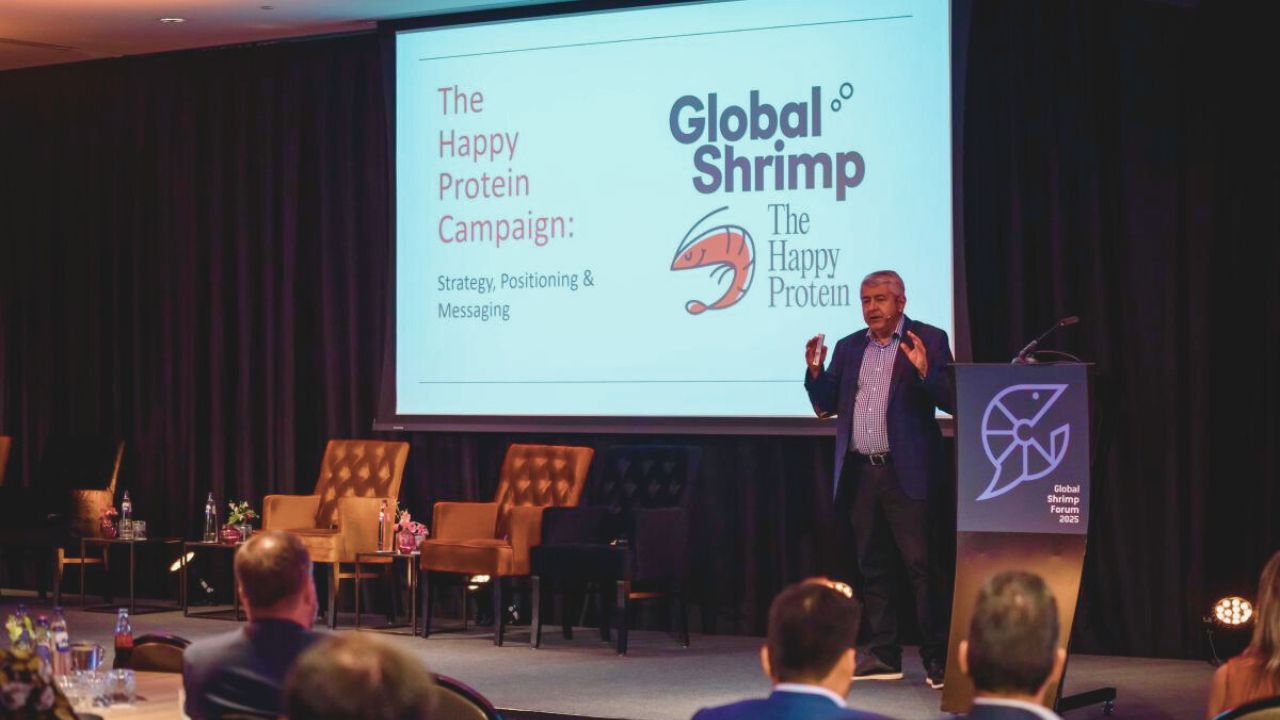

In late 2025, the city of Utrecht in the Netherlands, known for its historic canals and medieval architecture, became the epicenter of a global discussion on the future of sustainable seafood protein. The fourth Global Shrimp Forum (GSF), held from September 2 to 4, witnessed a fundamental turning point in the history of modern aquaculture: the introduction of a strategic farming guide entitled 'Carbon Footprint of Farmed Shrimp: An Industry Guide'. Amid mounting ecological pressures—from rising sea surface temperatures that trigger disease outbreaks to changing rainfall patterns that scramble pond salinity—the global shrimp industry finds itself at a paradoxical crossroads. Shrimp is, on the one hand, the world’s most-traded seafood commodity, underpinning developing economies and satisfying ever-increasing global consumer demand. On the other hand, its farming is linked to rising greenhouse gas emissions and deforestation of coastal ecosystems. In the guide’s introduction, Roxanne Nanninga underscores this tension with the words “Time is not on our side.” This statement reflects global climate data calling for radical decarbonization across the entire food chain. Yet behind this urgency there is strong optimism: Nanninga and co-author Anton Immink do not present a “doomsday” report but a roadmap designed to provide “information and solutions” that allow industry players to take concrete steps. The guide was financed by the Global Shrimp Forum Foundation (GSFF), a nonprofit established to reinvest the forum’s profits into pre-competitive industry improvement projects. It was prepared by two authoritative figures in sustainable aquaculture, Roxanne Nanninga and Anton Immink, who bring a science-based yet commercially pragmatic approach.
The GSF guide aims to fill an information gap that has long puzzled industry participants. Shrimp farmers and buyers have often been trapped by myths or outdated data about the environmental impacts of shrimp farming. The guide systematically dissects the anatomy of carbon emissions in shrimp aquaculture, addressing sensitive issues like mangrove deforestation, highlighting methane emissions from ponds, and exposing the hidden carbon footprint of shrimp feed.
For Indonesia’s shrimp industry, the introduction of the new GSF guide has strong resonance. As the world’s fourth-largest producer battling price volatility and U.S. trade tariffs, Indonesia stands at a crossroads: will it continue to compete solely on volume and low prices – a strategy that is increasingly hard to sustain against Ecuador’s efficiency – or seize this moment to rebrand itself as a data-driven sustainable shrimp producer?
Emission source I: feed dilemma and the upstream supply chain
In the carbon balance of shrimp farming, feed often has its largest footprint thousands of kilometers (miles) away from the farm, embedded in a complex global supply chain. The GSF report identifies feed as one of the two largest contributors to greenhouse gas emissions over the life cycle of farmed shrimp. The core issue lies in two strategic ingredients in shrimp feed: soybean meal and fishmeal.
Without deforestation-free certification for soybean, farmers may unknowingly “import” deforestation emissions into their shrimp products. Tracking the origin of soybean in tangled global supply chains is a major challenge. On the other hand, fishmeal and fish oil—while essential to shrimp nutrition—present a different sustainability dilemma. In addition to the overfishing of small pelagic stocks, the fishing process itself, with fleets of fuel-hungry trawl boats, adds significant carbon emissions to each kilogram of feed. The industry’s reliance on these limited marine resources also creates ecological vulnerabilities and price volatility.
Beyond technical fixes, the guide stresses that the era of ignorance is over. Feed companies are now expected to provide granular carbon data on their products to farmers. Retailers and investors are demanding full transparency to meet Scope 3 (indirect) emissions targets – those generated across the entire global value chain rather than just by a company’s direct operations. Shrimp farmers who can offer verified, low-carbon feed data will find themselves with much stronger bargaining power in the global market.

Fish waste flour production business at one of the Small and Medium Industry Centers (SIKIM) in the city of Sorong, Southwest Papua: Luhkan Kota Sorong/Tarsono
Feed efficiency as the key to decarbonization
One of the guide’s most critical insights is the direct mathematical relationship between the Feed Conversion Ratio (FCR) and the carbon footprint. FCR is not merely an economic efficiency metric; it is a fundamental climate metric. Every decimal drop in the FCR saves feed and reduces both upstream emissions (from land-use change and feed processing energy) and downstream emissions (from organic waste in the pond that can generate methane). The guide emphasizes that the single most effective emissions-reduction strategy for shrimp farmers is to optimize feed management. It recommends adopting automated feeding technologies (auto-feeders) equipped with acoustic or visual sensors as a top priority. These systems ensure that feed is delivered only when shrimp are hungry, thereby drastically reducing wasted feed that sinks to the pond bottom. Case studies from ponds supplying Whole Foods Market show that automation not only improves the FCR but also boosts shrimp health consistency, increasing the survival rate (SR). A higher SR means the emissions embedded in juvenile shrimp and early feed are not wasted on shrimp that die before harvest.
Emission source II: energy intensity in farm operations
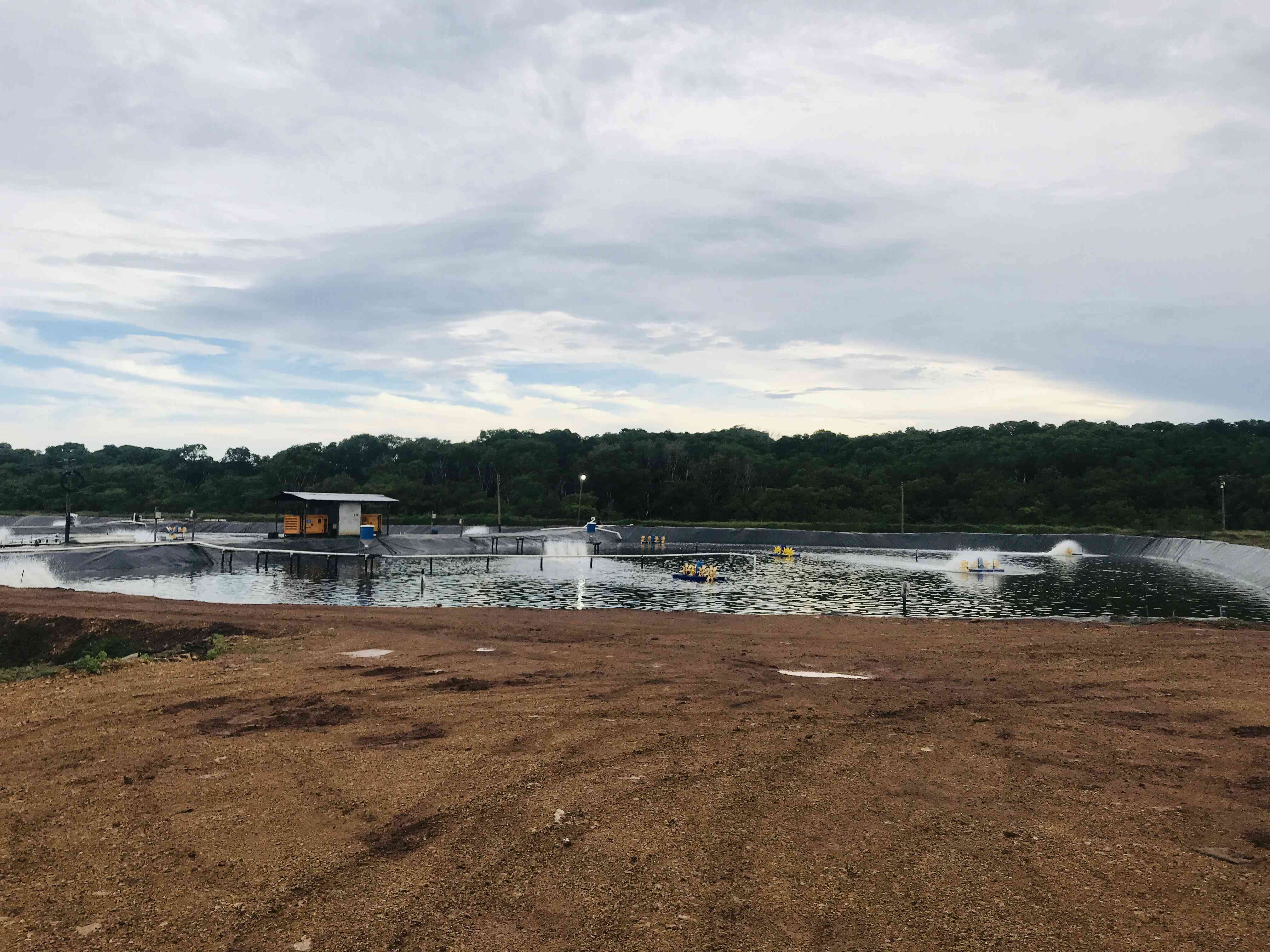
If feed is the “embodied” emission, then energy is the daily operational emission occurring at the farm site. The GSF guide highlights that as shrimp farming intensifies – shifting from extensive systems to intensive and super-intensive farming – the energy consumption per unit of production changes drastically. Modern shrimp farms are energy-hungry: life-support systems in ponds, especially aerators and water pumps, can raise energy use from about 61.2 gigajoules (GJ) per ton (tonne) of shrimp in semi-intensive systems to about 161.3 GJ per ton (tonne) in super-intensive or indoor systems. In fact, intensively managed ponds may run aerators and other life-support equipment almost 24 hours a day to maintain water quality.
These figures raise a climate warning because of the energy sources. In many shrimp-producing countries such as Indonesia, India, and Vietnam, the national electricity grid is still dominated by coal. Even worse, many ponds are located in remote off-grid areas that rely heavily on diesel generators. Burning diesel fuel on-site is a significant source of direct emissions and also one of the largest operational costs eroding farmers’ profit margins.
Beyond hardware upgrades, the guide stresses that operational management is equally important. Regular “energy audits” should become standard practice on shrimp farms. Often, paddlewheel aerators are run excessively without regard for the shrimp’s actual oxygen needs at any given moment. By integrating real-time water-quality sensors with automatic control systems, aerators can be switched on and off precisely when needed, avoiding unnecessary energy waste.
Solutions for the energy problem are relatively mature. The GSF guide calls for an aggressive transition to farm electrification and for integrating on-site renewable power generation, such as solar or wind installations, at shrimp farming facilities.
Emission source III: the unseen threat of methane
Among all the findings at Utrecht, the discussion of biogenic emissions—especially methane—may be the most critical and least understood. The GSF guide explicitly elevates this issue from the realm of speculation to an urgent research priority. Methane is a greenhouse gas with a 100-year global warming potential 28 to 34 times that of carbon dioxide (CO2). In shrimp pond ecosystems, methane is produced through anaerobic (no-oxygen) decomposition. When organic waste settles into a thick layer with little oxygen penetration, conditions can become highly anoxic. This is where methane-producing bacteria proliferate, breaking down organic matter and releasing methane. The gas then rises to the surface as bubbles or diffuses through the water column and eventually escapes to the atmosphere.
The GSF guide highlights a large “data gap” regarding the scale of these emissions. Previous carbon footprint models often ignored or underestimated this factor because direct field measurements are so difficult. However, the forum became a platform for breakthrough research addressing this uncertainty. Laurence Massaut of the aquaculture feed company BioMar presented preliminary results from a collaborative study with the nonprofit Think Aqua and the Sustainable Trade Initiative (IDH). This research, conducted in Ecuador (one of the world’s largest shrimp-producing countries), used inverted floating chambers specifically designed to trap gases rising from the pond surface. This equipment enables direct flux measurements of methane (and nitrous oxide) or other greenhouse gases from various pond types under different management regimes.
Early findings have opened farmers’ eyes: methane emissions are not an unavoidable consequence of shrimp farming, but an indicator of management inefficiency. Ponds managed with optimal water circulation, sufficient bottom aeration, and routine sludge removal (siphoning) show far lower methane emissions. In other words, interventions to reduce methane go hand in hand with actions that improve shrimp health. The anaerobic conditions that generate methane are the same conditions that stress shrimp and promote pathogenic disease. Therefore, the GSF guide recommends using waste-degrading probiotics (bioremediation) and strict pond-bottom management as a dual strategy: to increase productivity while simultaneously cutting methane emissions.
Mangroves and the carbon footprint of shrimp farming
One of the GSF guide’s most significant contributions is its bold challenge to the conventional narrative about shrimp and mangroves. In the 1980s and 1990s, shrimp pond expansion was indeed a primary cause of mangrove loss in many tropical countries, and this image has been used in campaigns to boycott tropical shrimp. But the current reality is different. Satellite and geospatial data up to 2025 show that most farmed shrimp production today does not come from new mangrove conversion. In leading exporting nations like Ecuador and Thailand, the rate of conversion of mangroves to new ponds is now near zero. The industry has learned that ponds built on mangrove land often suffer from poor acid sulfate soils that undermine long-term productivity. The GSF guide highlights a surprising finding: “the mud in mangrove forests stores the most carbon,” far more than the trees themselves. This confirms that mangroves can be viewed as giant carbon sinks rather than merely coastal erosion buffers.

The silvofishery method is implemented in the USAID APIK-assisted area in Segoro Tambak Village, Sidoarjo Regency: USAID APIK
The concept of silvofisheries – integrating mangroves with shrimp ponds – is being revived with a modern approach. Shrimp ponds need not be completely dismantled; instead, restoring green belts of mangroves around ponds and waterways can improve intake water quality and create ecosystems that boost shrimp health. Studies cited in the guide indicate that shrimp farming was the main cause of past mangrove loss (accounting for 90.16 percent of cases in some literature reviews), but this trend is now reversing. Blue carbon (coastal carbon) restoration initiatives are starting to see shrimp farmers as key partners. By protecting remaining mangrove stands and replanting trees on unproductive pond lands, the shrimp industry can transform itself from a carbon emitter into a carbon sink.