The Nile tilapia (Oreochromis niloticus) is a freshwater fish species with significant economic value that has experienced rapid growth across various regions of Indonesia. Since its introduction to Indonesia from Taiwan in 1969, the popularity of this species has steadily increased. Initially, the dominant variety in Indonesia was the Mozambique tilapia, commonly known as "mujair." However, due to its relatively small size, it was gradually replaced by black and red Nile tilapia, which exhibit faster growth rates and are more desirable in the market.
Originally native to Africa, Nile tilapia is now cultivated in many countries and is considered one of the most important commodities in global aquaculture. It is often referred to as the "chicken of freshwater" due to its rapid growth and ease of cultivation. Intensive tilapia farming is practiced in several reservoirs across Indonesia, including Saguling, Cirata, and Jatiluhur (West Java); Kedung Ombo and Gajah Mungkur (Central Java); and other reservoirs in East Java and Sumatra. According to the Indonesian Ministry of Marine Affairs and Fisheries (KKP) data from 2024, Nile tilapia production in Indonesia reached 1.38 million tons, an increase from 1.36 million tons the previous year. West Java remains the largest producing region, utilizing pond systems and floating net cages (KJA).

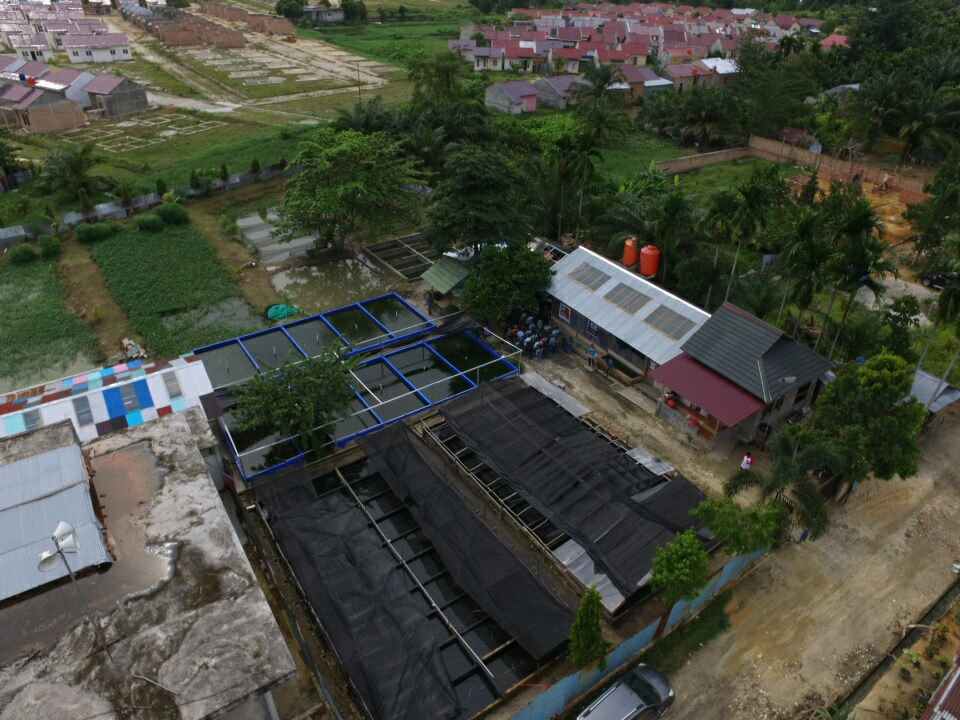
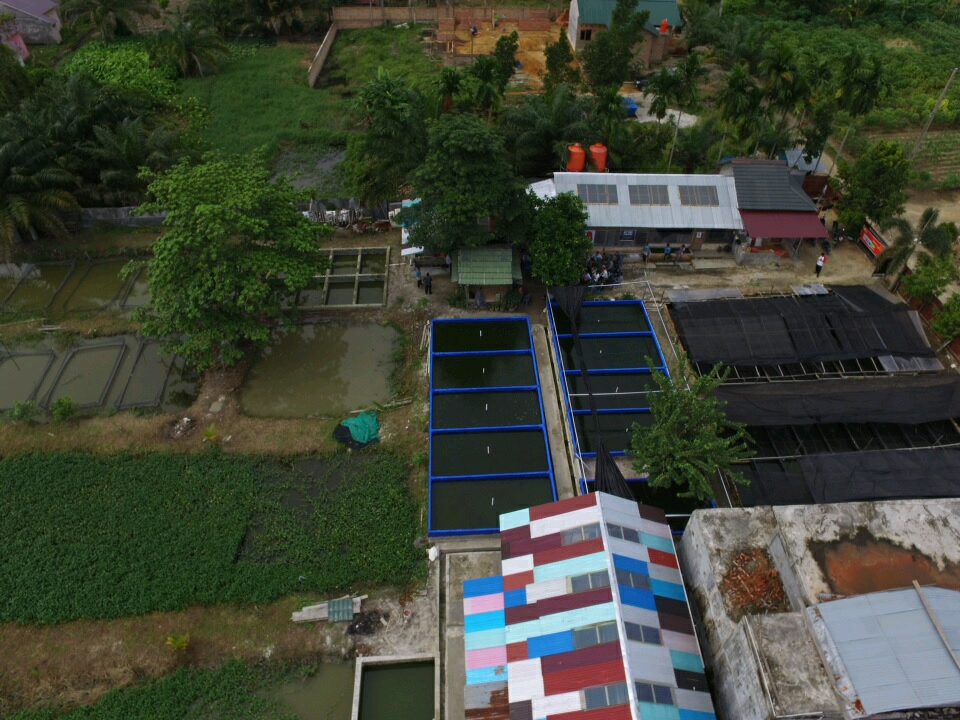
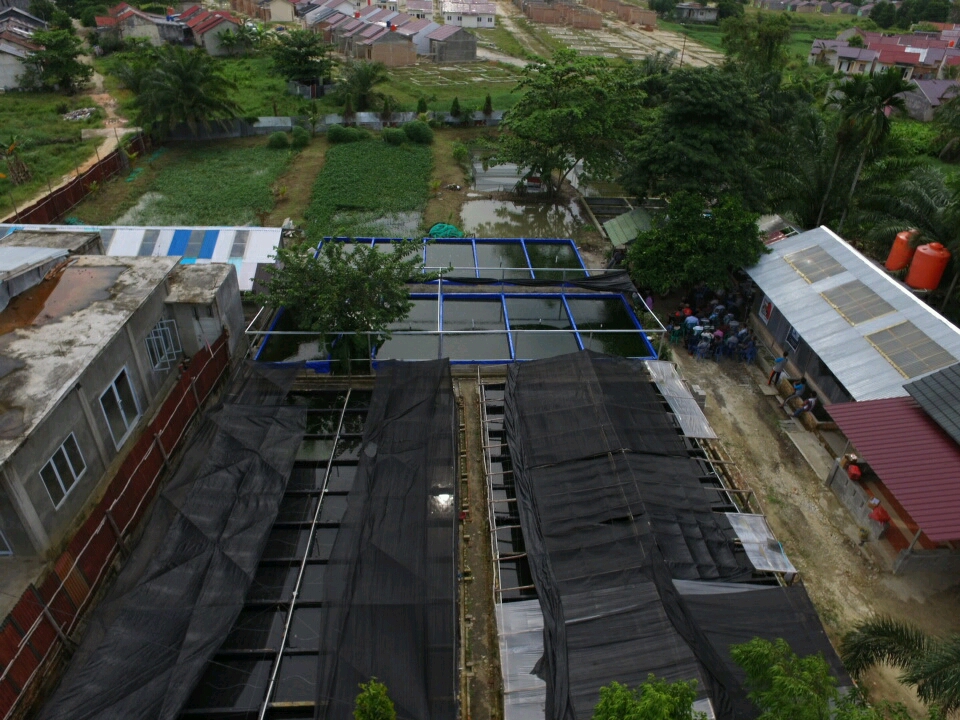
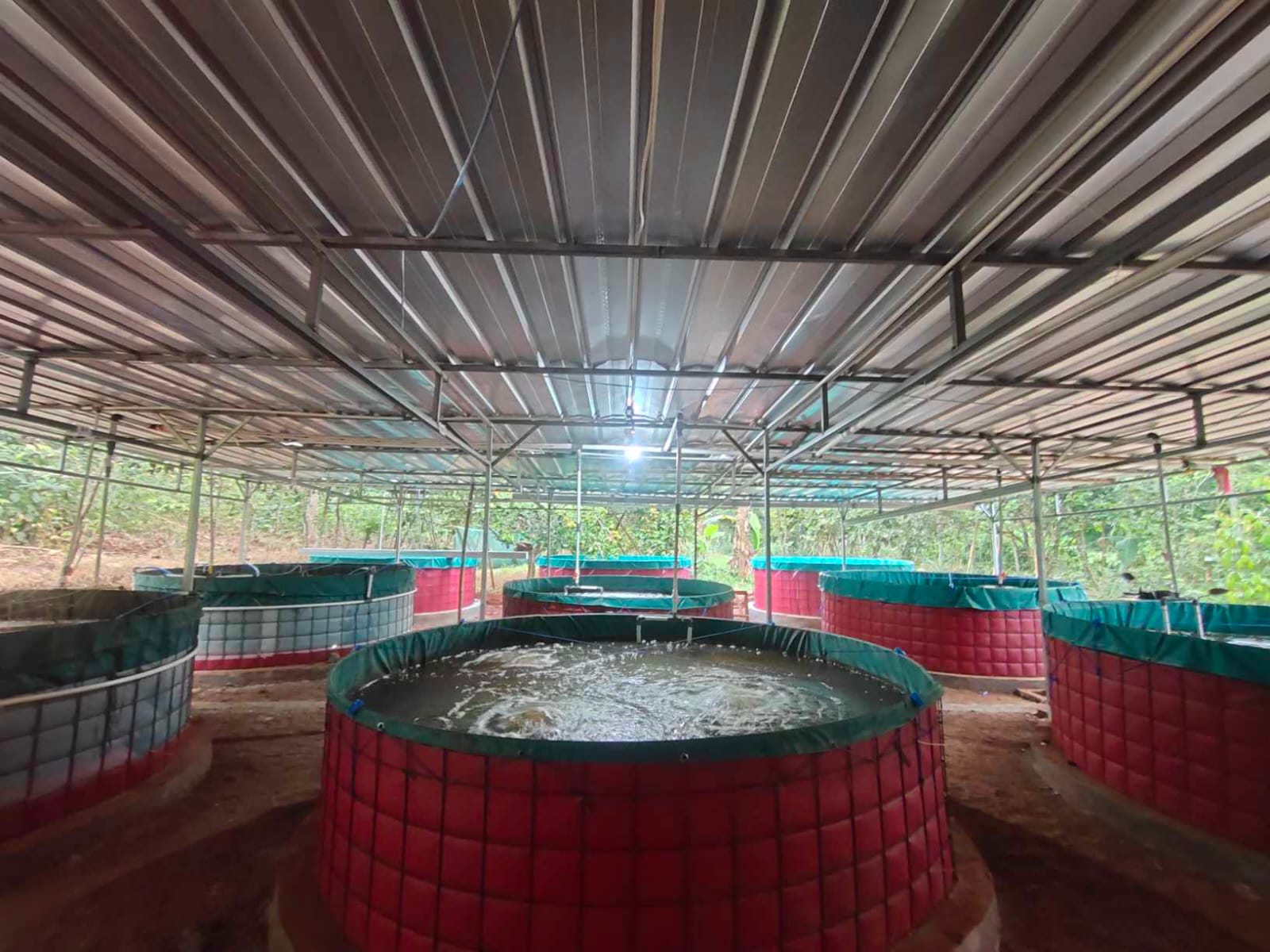
Tilapia fish farming pond : BPPBAT Tatelu
Several advantages make Nile tilapia cultivation one of the most favored sectors within Indonesia's aquaculture industry:
1. Rapid production
Tilapia is widely recognized as one of the most prolific freshwater fish species, capable of reproducing quickly and efficiently. Under optimal conditions, tilapia can reach maturity within 4 to 5 months and begin reproducing at the age of 1 to 2 years. The spawning process occurs naturally in aquaculture environments, particularly in ponds or reservoirs with stable water conditions. In a single spawning cycle, a female tilapia can produce approximately 1,200 to 1,500 larvae, which eventually develop into juvenile fish ready for further cultivation. This high reproductive rate makes tilapia a preferred choice in the aquaculture industry, serving both local consumption and export markets.
The spawning process begins when a male tilapia constructs a nest on the pond floor by using its tail to excavate the substrate. This nest serves as a site for larval development once the eggs are fertilized. Male tilapia exhibit territorial and aggressive behavior, defending their nests from other fish to enhance the survival chances of newly hatched larvae. This natural spawning behavior is a key factor in sustaining tilapia production without requiring advanced technological interventions. However, in large-scale operations, controlled spawning techniques are often implemented to improve production efficiency.
2. Rapid growth rate
One of the primary advantages of tilapia in aquaculture lies in its rapid growth rate and ability to adapt to various aquatic environments. Under optimal conditions, such as ponds with good water quality and sufficient feed, tilapia can achieve an average growth rate of 500 to 1,000 grams (1 kg) per fish within the first year. This impressive growth rate makes tilapia one of the most sought-after aquaculture species in Indonesia.
However, environmental factors such as water temperature and pH levels significantly influence the growth of tilapia. The optimal temperature range for tilapia growth is between 20°C and 30°C, with a pH level of 7 to 8. If the water temperature falls below this range, the fish's metabolism slows down, leading to reduced growth rates and an increased risk of mortality.
In addition to environmental conditions, the quality of feed plays a crucial role in enhancing tilapia growth. Although tilapia are omnivorous and can consume a wide variety of food sources, providing high-quality feed remains essential. At the juvenile stage, tilapia primarily feed on algae and plankton as natural protein sources. As they mature, they can be fed pellets containing approximately 25% protein. This protein requirement is lower than that of other commonly farmed fish species such as catfish or carp, which typically require feed with 30% to 45% protein content. This feed efficiency is a key reason why tilapia are more cost-effective to farm on a large scale.
3. Stable fecundity in nile tilapia
Fecundity, or the number of eggs produced by Nile tilapia during spawning, is a crucial factor in determining reproductive success in aquaculture. Research indicates that Nile tilapia produce between 817 and 5,078 eggs per individual, with an average of 2,634 eggs in females that have reached gonadal maturity stages III-IV. This high fecundity makes Nile tilapia one of the most reproductively promising freshwater fish species, supporting intensive hatchery practices.
Internal factors such as age, body size, and the physiological condition of broodstock play a significant role in determining fecundity. Larger females tend to produce more eggs compared to smaller ones. Additionally, the gonadal maturity level of both male and female fish significantly influences spawning success. Broodstock at gonadal maturity stages III-IV exhibit fully developed gonads, indicating readiness for spawning.
In intensive aquaculture systems, several techniques can be employed to enhance fecundity and spawning success in Nile tilapia. One common method is controlled spawning, where broodstock are placed in specially maintained ponds or tanks under regulated environmental conditions. Providing high-nutrient feed, particularly with a protein content of at least 30 percent, can promote gonadal development and egg production. Furthermore, the use of spawning-inducing hormones, such as gonadotropins or pituitary gland extracts, can also be applied to increase fecundity and accelerate the spawning process.
4. Disease resistance in nile tilapia

Tilapia seed : BPPBAT Tatelu
Nile tilapia (Oreochromis niloticus) is widely recognized as a freshwater fish species with strong resistance to various diseases. This characteristic makes it a preferred choice in aquaculture, particularly for farmers seeking to minimize the risk of mass mortality caused by disease outbreaks. To date, there have been no reports of large-scale epidemics affecting Nile tilapia, in contrast to other species such as common carp, which are susceptible to illnesses like koi herpesvirus (KHV) and aeromoniasis. Nevertheless, despite their resilience, Nile tilapia remain vulnerable to a range of diseases that can hinder growth and reduce aquaculture productivity if not properly managed.
Diseases affecting Nile tilapia are generally classified into two main categories: infectious and non-infectious diseases. Infectious diseases are caused by pathogenic agents such as bacteria, fungi, and parasites. These pathogens typically spread through water, direct contact with infected fish, or contaminated feed.
Non-infectious diseases, on the other hand, usually stem from environmental factors and poor aquaculture management practices. These conditions are often linked to suboptimal water quality, improper feeding practices, and genetic factors.
Preventive measures are prioritized over treatment in managing diseases in Nile tilapia. Key strategies for maintaining fish health include ensuring good water quality, providing high-quality feed, and selecting superior broodstock. Additionally, the use of probiotics and immunostimulants, such as β-glucans and herbal extracts, has been shown to enhance the immune response of tilapia against infections. In cases where infections do occur, treatments such as antibiotics (e.g., oxytetracycline for bacterial infections) and chemical agents like saline solutions or formalin for parasitic infestations can be applied under strict supervision and at appropriate dosages to prevent the development of pathogen resistance.
5. Tolerance to poor water quality
Tilapia is widely recognized as a resilient freshwater fish capable of withstanding suboptimal environmental conditions. This adaptability makes it a preferred choice for aquaculture, whether in ponds, reservoirs, or brackish-water farms. One of the key factors contributing to tilapia's resilience is its tolerance to low dissolved oxygen levels, ranging between 4-9 mg/L. Within this range, tilapia can survive even in waters experiencing oxygen depletion, which may result from high population density or declining water quality. However, despite their high tolerance, oxygen levels below 3 mg/L can cause stress, slow growth, and increase susceptibility to disease.
In addition to its oxygen tolerance, tilapia exhibits a remarkable ability to adapt to varying salinity levels. Research indicates that tilapia can survive in waters with salinity ranging from 0 to 35 parts per thousand, allowing it to thrive in both freshwater and moderately saline environments. This capability enables the cultivation of tilapia not only in freshwater ponds but also in brackish-water farms typically used for shrimp or milkfish production. Furthermore, specific tilapia strains, such as saline-tolerant varieties, have been developed to enhance growth and productivity in high-salinity environments.
Tilapia's ability to endure high salinity is closely linked to its osmoregulatory mechanisms, which allow the fish to maintain the balance of salts and water within its body. In freshwater environments, tilapia expels excess water through dilute urine. Conversely, in brackish or marine environments, the fish reduces water excretion and increases ion absorption to preserve internal balance. This physiological adaptation enables tilapia to remain active, grow efficiently, and reproduce across diverse aquatic conditions.
Beyond oxygen and salinity tolerance, tilapia can also endure a broad temperature range, from 14°C to 38°C, with optimal growth occurring between 25°C and 30°C. At lower temperatures, the fish's metabolism slows, resulting in reduced growth rates. In contrast, higher temperatures increase oxygen consumption, which can induce stress and potentially compromise the fish's health.
The combination of these physiological adaptations underscores tilapia's suitability for aquaculture in varied and challenging environments, making it a crucial species for sustainable fish farming worldwide.