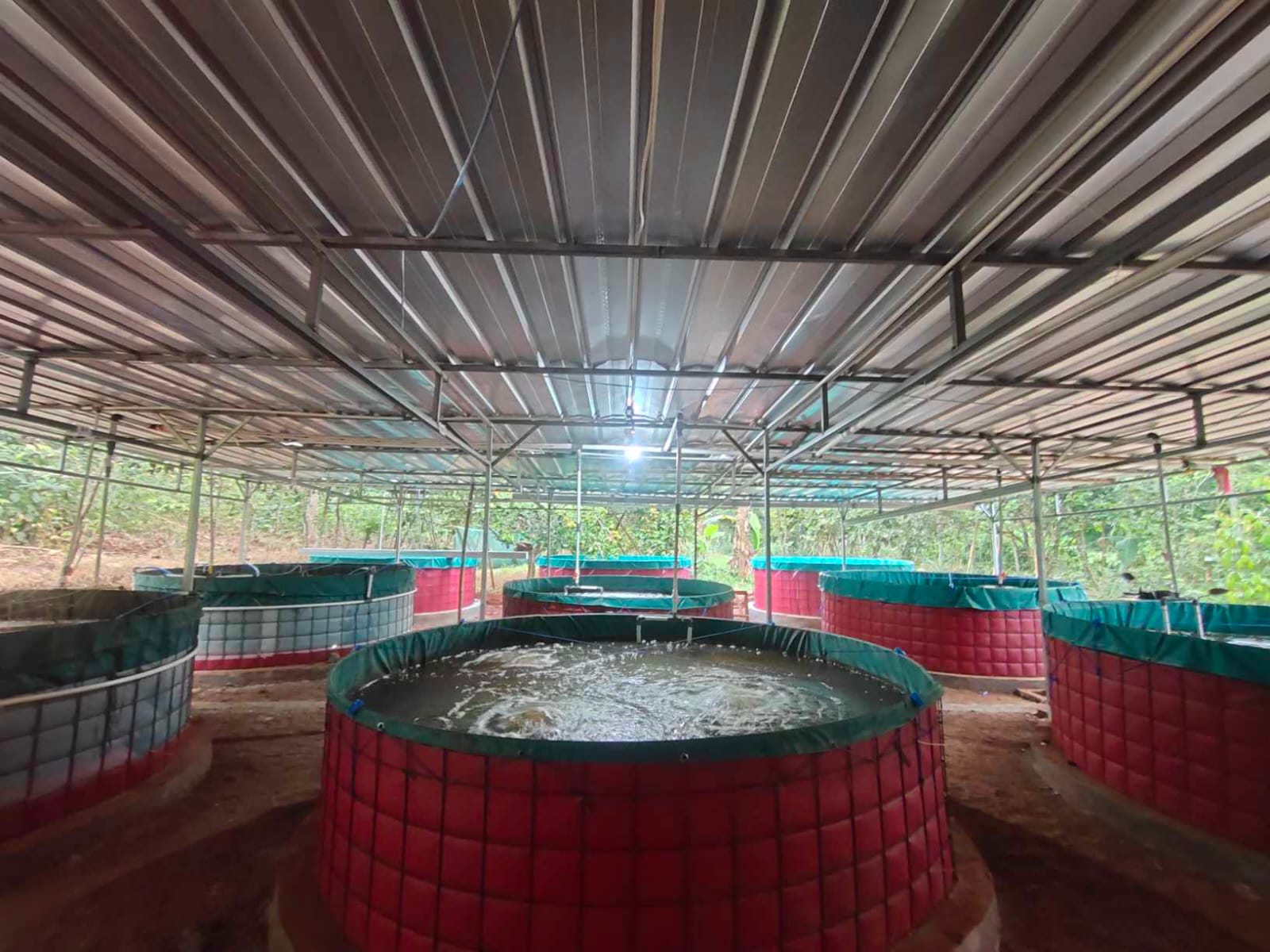
Fish farming in cages is the practice of keeping fish in containers that are covered on the sides and bottom with mesh material to protect the fish while allowing free flow of water to provide oxygen to the fish contained within. Typically, these cages are floated on rafts, either tied to the bottom of the reservoir or connected to the shore with wooden pegs. Therefore, the system of cultivating fish in cages is technologically, socially, financially and biologically complex and requires critical expertise, research and good understanding. This is a type of aquaculture that has high levels of productivity in many countries, from subsistence to commercial operations.
In Tanzania, freshwater aquaculture production began in 1949. Despite its promising prospects and long history, many are still unaware of commercial production and the importance of this sector for food security. Commercial aquaculture in Tanzania is a new sector dominated by production Oncorhynchus mykiss (rainbow trout), Clarias gariepinus (African flight), Oreochromis niloticus (Nile tilapia), Eucheuma cottonii, E. spinosum (seaweed), and Chanos chanos (milkfish). In general, this industry is a subsistence activity practiced by local communities along the coast and inland areas. This industry contributes to meeting people's nutritional needs, provides employment opportunities, and generates income.
In recent years, according to some study, the fish farming sector in Tanzania has been well received, as shown by the rapid increase in the number of fish farms from 14,000 fish ponds in 2004 to 26,000 in 2019, with annual production bias reaching around 18,000 tonnes. However, the number of skilled professionals and the quality of seeds and feed limit the development of this sector.
For example, there are currently twelve tilapia farming sites operating in Tanzania, three of which are owned by the government and nine are owned by private companies. This tilapia cultivation site produces low quality seeds due to a mixture of species, lack of support from the government, and a lack of experts in feed formulas and breeding.
Tilapia cultivation in Tanzania
Amran Nuruduni, Production Manager of Tala Fisheries in Lake Victoria, Tanzania, explained that the decision to choose tilapia cultivation at his location was based on the community's strong preference for tilapia and catfish as the most preferred freshwater species. In Tanzania, tilapia is in high demand in local markets due to its delicious taste and diversity of cooking methods, making it a top choice for local consumers. Consistent demand and high selling prices make tilapia farming a strategic choice for fish farmers in Tanzania, including Tala Fisheries in Lake Victoria.
Apart from that, tilapia fish is also known as a species of freshwater fish that has good adaptability to various environmental conditions, including varying water temperatures and different water qualities. This makes it suitable for cultivation in various waters in Tanzania, including Lake Victoria which is the cultivation location of Tala Fisheries. With its ability to grow well in diverse environmental conditions, tilapia provides additional benefits for fish farmers in managing their cultivation.
Challenges in tilapia cultivation
Despite the promise of tilapia farming, the challenges faced by fish farmers in Tanzania cannot be ignored. First of all, high feed costs are one of the main obstacles to the success of tilapia farming. These high costs are an obstacle, especially for cultivators with small business scales, who find it difficult to obtain significant profits from their cultivation businesses.
In addition, changes in water parameters, especially in large lakes such as Lake Victoria, pose a serious challenge for farmers. These changes can affect the fish's response to feeding, increase mortality rates, and result in slow growth. Therefore, careful monitoring and effective management of the farming environment is necessary to ensure optimal health and growth of tilapia.
No less important, negative perceptions towards farmed fish are also a challenge in marketing tilapia fish products. Some Tanzanians still prefer wild fish as their consumption choice, thus creating obstacles in the marketing and sale of tilapia farmed products. Encouraging this change in perception and increasing understanding of the benefits and quality of farmed tilapia is key to overcoming this challenge.

Cage farming at Lake Victoria, the largest lake on the African island
Challenges for the aquaculture sector in Tanzania
The aquaculture sector in Tanzania is faced with a number of challenges that require immediate addressing to not only improve the performance of the aquaculture sub-sector, but also provide ample opportunities for further development. One of the main challenges is low investment capital, which is a major obstacle to the development of the aquaculture industry in Tanzania. Lack of access to investment capital hinders the ability of fish farmers to expand their businesses, limiting growth and innovation in the sector.
Another challenge is the limited knowledge and skills among cultivators. Lack of adequate knowledge and skills in commercial fish farming practices is a barrier to increasing productivity and production quality. Increased investment in training and education for fish farmers will be key to overcoming these challenges and encouraging the adoption of more efficient aquaculture practices.
In addition, low capacity to adopt technology is another challenge in developing the aquaculture sector in Tanzania. The lack of ability of farmers to adopt and adapt to appropriate aquaculture technologies is hampering the progress of this sector and increasing production efficiency.
Opportunities for the aquaculture sector in Tanzania
Amidst the challenges faced, there are a number of interesting opportunities that can be exploited to develop the aquaculture industry in Tanzania. First, the strong local demand for tilapia fish in both whole and fillet form in regional markets provides a great opportunity for fish farmers in Tanzania to expand their market share. By focusing on meeting the needs of a stable and growing local market, cultivators can increase production and increase their income.
Second, Tanzania has a large potential location with fertile land and sufficient water availability to cultivate tilapia fish. By utilizing the abundant natural potential, cultivators can develop their cultivation operations in various strategic locations, increasing production and efficiency on a larger scale.
Furthermore, cage farming in large lakes such as Lake Nyasa, Lake Victoria and Lake Tanganyika offers great potential to significantly increase tilapia production. By utilizing an efficient and sustainable cage cultivation system, farmers can maximize the potential of existing water resources and produce larger quantities of tilapia.
Development of processing businesses is also a promising opportunity. Development of a processing plant for drying seaweed and the production process of its products, such as agar, can be a significant source of income for fish farmers in Tanzania. By adding value from product processing, farmers can increase their income and reduce dependence on direct sales of fresh fish.

Seaweed harvest in the coastal region of Tanzania
Lastly, the potential for shrimp cultivation in the coastal areas of Tanzania also provides new opportunities for fisheries business actors to diversify their businesses. With proper research and development, shrimp farming can become a promising industry and contribute to local economic growth.
Government Support for the Tilapia Fish Cultivation Industry
The Tanzanian government has taken significant steps to support the development of the tilapia farming industry. One of the steps taken is to provide appropriate credit for aquaculture graduates to form groups and businesses in cage fish cultivation. In this way, graduates and industry players can obtain the capital necessary to start and expand their cultivation operations.
Apart from that, the government is also active in providing locations for cage fish cultivation. They have carried out surveys to determine suitable areas in Lake Victoria in Tanzania, which are then made available to fish farmers. This step provides easier access for industry players to start their cultivation businesses without having to think about location issues, thereby accelerating the development of the aquaculture industry in the country.