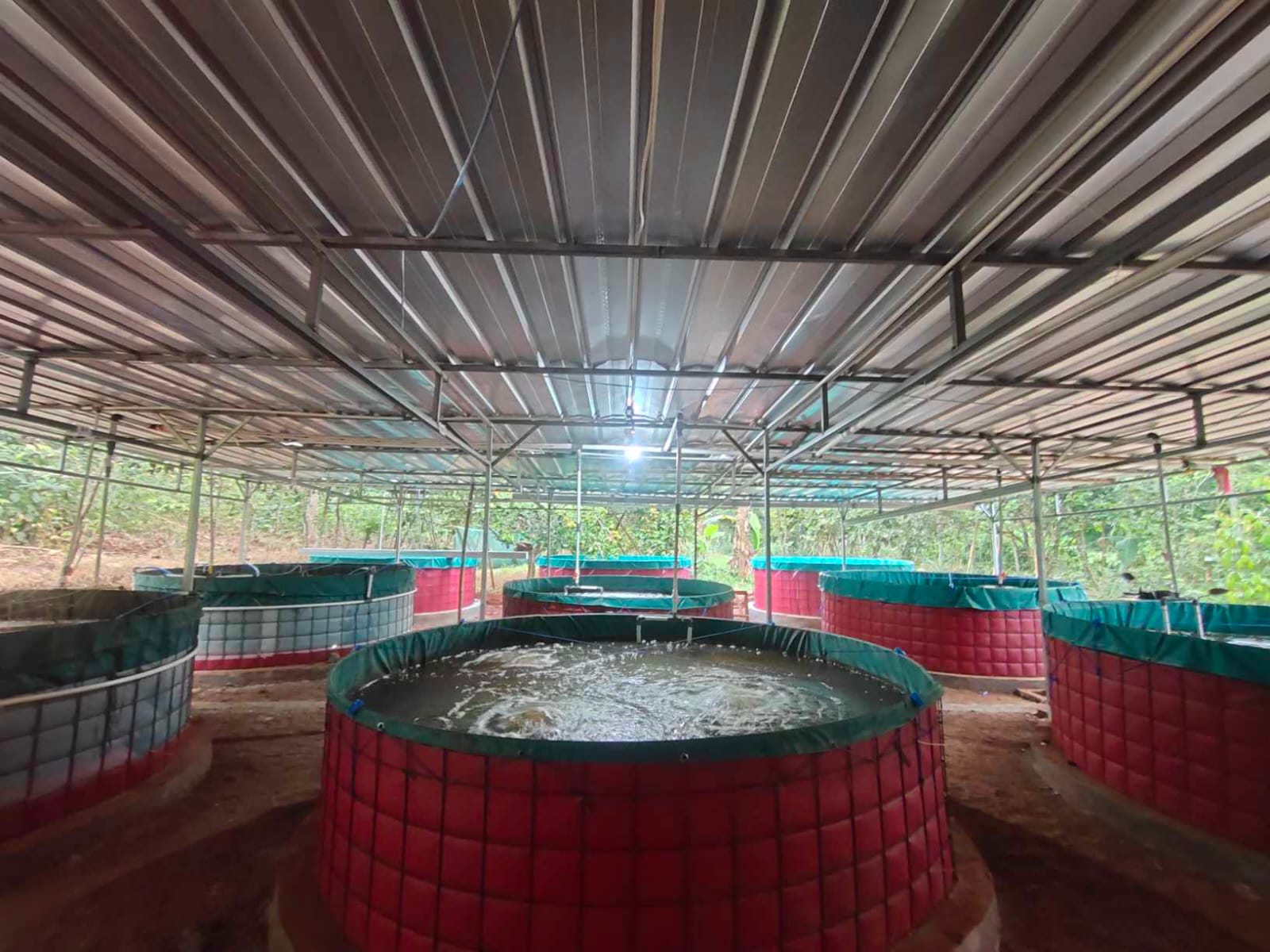
The sustainability of Indonesia's freshwater fishery industry currently stands at a crucial precipice. On one side, market demand for freshwater commodities is surging; on the other, farmers are besieged by increasingly complex disease challenges and rigorous global mandates for chemical-free produce. Central to this industrial transformation is the iridescent shark-catfish (Pangasius sp.), a national strategic asset that has elevated the economic standing of thousands of farming families across the archipelago.
Yet, behind the production figures that continue to climb, there lies a fragile link in the supply chain: the hatchery phase. High mortality rates at the larval and seedling stages frequently loom as a specter capable of crippling operations before the grow-out cycle even commences. Attacks by pathogenic bacteria, specifically Aeromonas hydrophila, often decimate larval populations within days. For years, antibiotics were wielded as the sole shield, though it is now evident that this armor is fracturing under the pressure of bacterial resistance and food safety concerns. Recent research suggests that simple biosecurity measures, specifically the disinfection of natural feed using formalin may hold the key to suppressing mortality without reliance on antibiotics.
The threat of disease in the larval phase
In the realm of freshwater fisheries, Aeromonas hydrophila is notoriously recognized as the agent behind Motile Aeromonas Septicemia (MAS). This Gram-negative, rod-shaped opportunistic bacterium is ubiquitous in aquatic environments but strikes only when fish are compromised or when bacterial populations explode beyond environmental tolerance. The pathogen is particularly aggressive in tropical waters like Indonesia’s, where warm temperatures fuel its rapid replication.
The clinical symptoms manifested by larvae or fish infected with MAS are harrowing. Fish often suffer severe subcutaneous hemorrhaging, ulcers or open lesions, and abdominal swelling caused by fluid accumulation. At the cellular level, the bacteria release a cocktail of exotoxins, such as hemolysins and cytotoxins, which devastate host tissues and cause necrosis in vital organs like the liver and kidneys.
The economic and biological toll of MAS outbreaks is severe. In many hatchery scenarios, larval mortality rates can spike to between 80 and 100 percent in a brief window, typically within one to two weeks of the first symptoms. Patin larvae are at their physiological nadir of vulnerability between 7 and 14 days post-hatching. During this period, the larvae transition from endogenous yolk reserves to exogenous feed; this shift is often accompanied by a temporary dip in immunity, which Aeromonas exploits with lethal efficiency.

Aeromonas, a scourge for catfish farmers: BPBAT Tatelu
Silkworms as natural feed
To fuel the rapid growth of patin larvae, farmers rely heavily on natural feed rich in nutritional value. Here, the silkworm (Tubifex sp.) plays an indispensable role. Known as "golden nutrition," silkworms boast a protein content exceeding 50 percent of their dry weight. Their soft texture and active undulation in the water effectively stimulate the hunting instincts of larvae learning to feed, significantly boosting daily growth rates and feed efficiency.
However, the nutritional benefits of silkworms are shadowed by significant health risks inherent to their origins. These worms generally thrive and breed in aquatic substrates rich in organic matter, such as gutters, domestic waste drainage systems, or polluted riverbeds. Such unsanitary habitats serve as natural reservoirs for a spectrum of pathogenic bacteria, including Aeromonas hydrophila. Because they absorb nutrients directly from mud substrates, silkworms inadvertently bioaccumulate these bacteria on their body surfaces and within their digestive tracts.
In the context of aquaculture, the silkworm acts as a potential vector for disease. When farmers introduce wild-caught silkworms directly into culture systems without a controlled cleaning process, they are effectively introducing millions of pathogens into the larval environment. These bacteria rapidly transfer from the vector to the host upon ingestion, potentially triggering a MAS outbreak. This paradox balancing nutritional necessity against disease risk underscores the urgent need for innovation in natural feed management.
Biosecurity as the key to modern disease prevention
Biosecurity in fish farming, particularly within hatchery units, entails a suite of preventive measures designed to bar disease agents from entering the production system. Historically, many farmers adopted a reactive stance, seeking medication only after disease struck. This approach has proven both ineffective and costly. Moreover, the use of antibiotics as a remedy now faces fierce opposition from global health experts due to the risk of Antimicrobial Resistance (AMR), a phenomenon where bacteria evolve to withstand standard treatments.
Implementing biosecurity through the disinfection of natural feed represents one of the most effective strategies to break the chain of transmission at its source. By sterilizing silkworms prior to feeding, farmers ensure that the nutrition provided is devoid of harmful bacteria. This strategy supports the vision of a sustainable aquaculture industry free from hazardous chemical residues. Disinfection of natural feed serves as the frontline defense, preserving larval health without disrupting the microbial balance of the pond with antibiotics that indiscriminately eliminate beneficial and harmful bacteria alike.

The silkworm harvest: BPBAT Tatelu
Recent research findings: formalin as an effective disinfection agent
A study conducted by researchers from IPB University has offered a fresh perspective on the efficacy of formalin as a disinfectant for natural feed. Formalin, a solution of formaldehyde, is widely known for its industrial and preservation applications; however, in low, controlled doses, it exhibits potent broad-spectrum antimicrobial properties against fish pathogens.
The research was executed in two primary phases to ensure data rigor: in vitro (laboratory-based media testing) and in vivo (direct testing on living organisms). The results provide a promising outlook for fishery practitioners. In laboratory trials, researchers evaluated the capacity of various formalin concentrations to suppress Aeromonas hydrophila populations.
One of the most significant findings was the effectiveness of formalin at a concentration of 400 parts per million (ppm). Using the Total Plate Count (TPC) method, the study documented a drastic reduction in bacterial density. Prior to treatment, bacterial populations on the media were recorded at 5 × 10⁸ CFU/mL a figure indicative of highly contaminated natural feed. Following a 30-minute immersion in a 400 ppm formalin solution, the bacterial count was suppressed to 0 (zero) CFU/mL.
Beyond the numerical data, visual indicators confirmed the treatment's impact. The water used for soaking the silkworms, initially turbid with organic waste and microbial density, became significantly clearer post-disinfection. Laboratory evidence further corroborated this efficacy through the formation of inhibition zones clear areas around the point of formalin application on the media demonstrating that the bacteria were unable to propagate in the presence of the disinfectant.
Understanding the safe limits of formalin use
While formalin is undeniably effective in neutralizing bacteria, it remains a chemical compound with inherent toxicity. The primary challenge in utilizing formalin for feed disinfection lies in preserving the viability and physical integrity of the silkworms while ensuring no hazardous residues are transferred to the fish larvae.
The research highlighted concerning realities regarding careless application. Silkworms proved highly sensitive to prolonged formalin exposure. Toxicity tests revealed that without proper rinsing procedures, immersing silkworms in a 400 ppm solution could result in a mortality rate of up to 90 percent within 24 hours. Dead worms decompose rapidly, further degrading water quality. Additionally, formalin residues retained in the worms can irritate the digestive tracts of larvae, potentially inducing stress or death via chemical toxicity.
Consequently, the most critical innovation emerging from this research is the post-disinfection rinsing protocol. Researchers determined that the optimal balance achieving bacteria-free feed that remains safe for consumption is attained by soaking silkworms in 400 ppm formalin for 30 minutes, followed immediately by two thorough rinses with clean water. In vivo experiments confirmed that this double-rinsing procedure significantly mitigates the toxic effects of residues. Larvae fed silkworms treated with this protocol exhibited no symptoms of poisoning; on the contrary, they demonstrated excellent biological performance.
Strategic implications for the future of aquaculture in Indonesia
The findings regarding formalin's efficacy in controlling bacteria in silkworms carry profound implications for the future of Indonesian aquaculture. This strategy reframes the approach to holistic fish health management. It provides tangible evidence that effective disease control is achievable without recourse to antibiotics. By reducing antibiotic use, the industry contributes directly to mitigating the global health crisis associated with bacterial resistance.
Furthermore, the fish produced under these protocols boast higher food safety standards, facilitating the entry of Indonesian fishery products into international markets with stringent regulations on chemical residues. One of the method's greatest strengths is its simplicity. Formalin is relatively inexpensive and accessible to small and medium-scale farmers. The procedure soaking followed by a double rinse requires no costly laboratory equipment, rendering it highly viable for mass adoption across diverse regions.
The incremental cost of feed disinfection is negligible compared to the financial devastation of losing 80 percent of a seed population or the expenses of often-too-late medical treatments. Silkworms are a universal natural feed utilized for nearly all freshwater fish larvae in Indonesia, from catfish, tilapia, carp, and gourami to various ornamental species. The success of this method with Pangasius opens vast opportunities for its application across other commodities.
If natural feed disinfection were to become standard operating procedure in hatcheries nationwide, Indonesian aquaculture productivity could see a significant and sustainable surge. Research into silkworm disinfection using formalin has unveiled new horizons in biosecurity management. The application of 400 ppm formalin is scientifically proven to sever the transmission chain of Motile Aeromonas Septicemia (MAS) by suppressing Aeromonas hydrophila populations in natural feed to zero.
These findings are invaluable, offering a solution that is effective, economical, and antibiotic-free. The crux of the method's success lies in disciplined adherence to the procedure, particularly the double-rinsing step, which guarantees the removal of toxic residues. While environmental factors such as temperature continue to influence larval immunity, the sterilization of natural feed remains a critical intervention in safeguarding seed populations from mass mortality.