Vannamei shrimp farming represents a highly promising aquaculture activity that supports both food security and economic development across various countries, including Indonesia. The success of this industry begins with a fundamental understanding of optimal broodstock management. Effective broodstock management not only ensures the production of high-quality seeds but also contributes to the long-term sustainability of shrimp farming.
A critical early phase in broodstock management is the spawning process. Spawning occurs when female shrimp exhibit gonadal maturity, often indicated by a bright orange coloration on their dorsal region. This process involves complex biological interactions, where pheromones released by the mature female trigger mating behavior in the male. Scientific studies highlight that this process is driven by intricate hormonal mechanisms, including the action of Gonad Stimulating Hormone (GSH), which is produced by the Y-organ in female shrimp.
The culmination of mating is the attachment of sperm to the female's thelycum, marking the initial stage of fertilization. Approximately 4–5 hours after mating, the female releases eggs in a spawning process, producing thousands to millions of eggs ready for fertilization. Research indicates that well-maintained broodstock in optimal environmental conditions can achieve a fertilization rate exceeding 90%.
1. Pond preparation
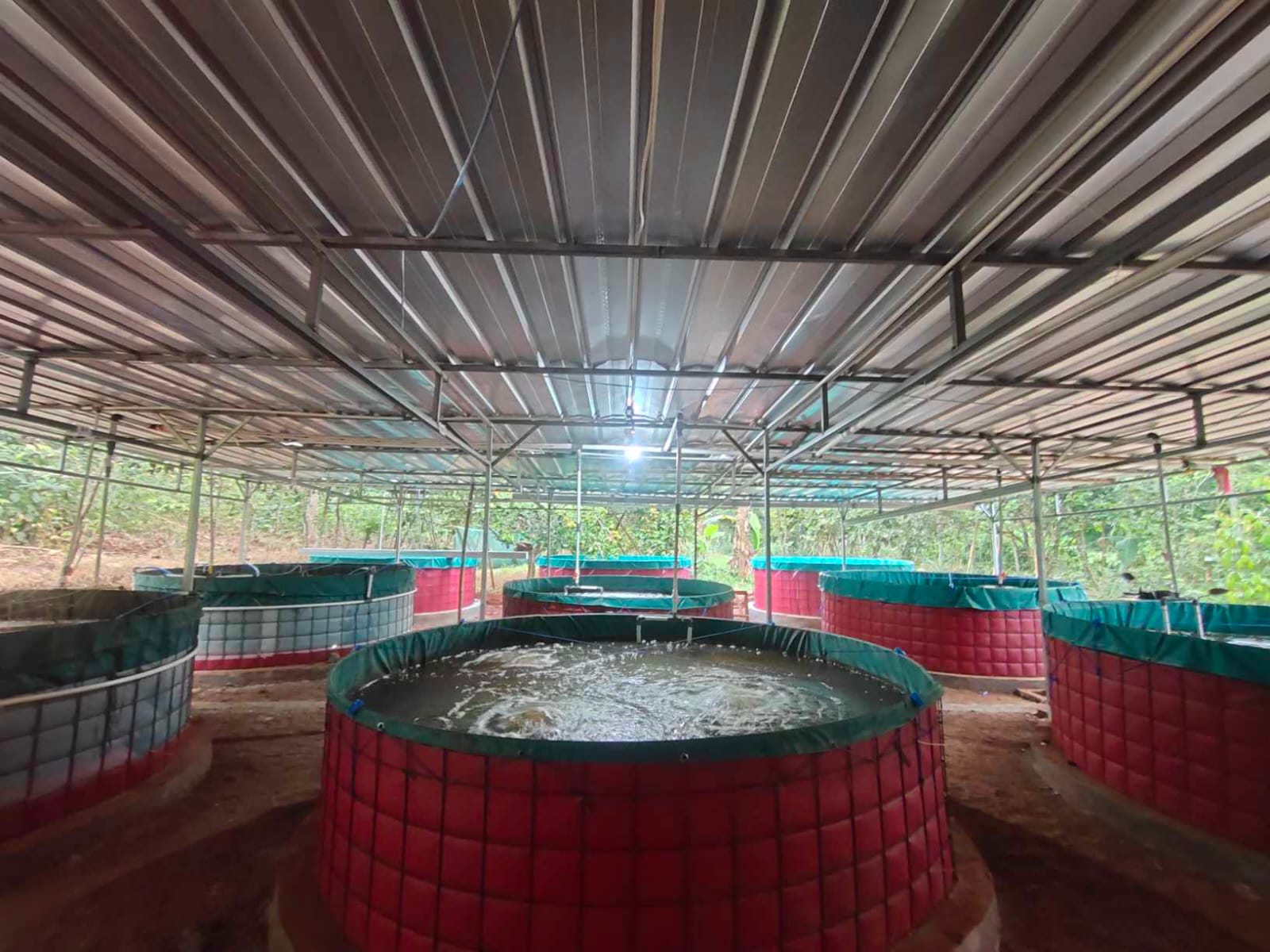
The first step in the shrimp spawning process involves preparing the containers, which is a critical aspect in ensuring the successful incubation of vannamei shrimp eggs. This process begins with cleaning the containers using calcium hypochlorite (Ca(ClO)₂) at a concentration of 500 mg/L to eliminate bacteria and pathogens that could interfere with egg development. Subsequently, the containers are washed with detergent at a concentration of 10 g/L to remove any remaining organic matter. Research has shown that this cleaning method can reduce microbial contamination levels by up to 90%. After washing, the containers are thoroughly rinsed with clean water to ensure no chemical residues remain, and they are then dried for 24 hours to achieve optimal sterilization.
Once the containers are dry, the next steps involve installing aeration systems and filling the containers with water. Aeration is set up to ensure an adequate oxygen supply, which is crucial for egg development during the hatching process. The water used to fill the containers can be sourced from either seawater or well water, provided it has undergone proper filtration and storage in a main reservoir. Studies indicate that water that has been appropriately filtered and stored exhibits more stable quality, with salinity levels ideal for vannamei shrimp, ranging between 28 and 35 ppt.
2. Selection and distribution of broodstock
The next critical stage in vannamei shrimp aquaculture is the selection and stocking of broodstock, a pivotal step to ensure successful spawning. The selection process focuses on identifying broodstock that are physically healthy and free from pathogens, particularly the White Spot Syndrome Virus (WSSV), which is recognized as one of the most detrimental diseases in shrimp farming. It is equally essential that broodstock show no signs of stress, as stress significantly impairs reproductive capacity. According to research by Great Lakes Research, pathogen-free broodstock achieve a spawning success rate of up to 95%.

Healthy vannamei shrimp broodstock
The stocking process involves acclimatizing the broodstock to ensure a smooth transition between the transport container and the rearing environment. Acclimatization typically lasts 30 to 35 minutes, during which acetic acid (CH₃COOH) is added to the transport bag to balance the pH levels between the bag water and the rearing tank. This procedure is critical to prevent osmotic stress in the broodstock. A study published in the Unhas Journal revealed that temperature differences greater than 2°C or pH deviations exceeding 0.5 can reduce shrimp vitality by up to 30%.
Once the temperature and pH levels are properly adjusted, the transport bag is opened, and the broodstock are gradually released into the rearing tank. To mitigate the risk of pest and disease transmission, the water in the transport bag and any residual waste from transportation are treated with chlorine at a concentration of 8 L/L-1. This method has been proven effective in eliminating up to 99% of pathogenic microorganisms, according to multiple studies conducted on vannamei shrimp broodstock.
3. Broodstock maintenance management
The maintenance of vannamei shrimp (Litopenaeus vannamei) broodstock requires meticulous care, particularly in feed management. Natural feed options, such as marine worms like Nereis or Dendronereis pinnaticirris, are highly recommended due to their rich content of unsaturated fatty acids, particularly Highly Unsaturated Fatty Acids (HUFA). These fatty acids play a vital role in gonadal maturation. Research indicates that HUFA-rich diets can increase the number of mature oocytes in female broodstock by up to 35% compared to diets with lower HUFA content. Additionally, marine worms are an excellent source of protein, containing up to 50–60% protein by dry weight.
Fresh feed, including squid (Loligo spp.) slices, chicken liver, and oysters, can also be provided to complement the natural diet. These feed options supply essential proteins and minerals that support the development of reproductive organs. Feed is typically administered twice daily, in the morning and afternoon, at a rate of approximately 40% of the broodstock's total biomass. This feeding strategy aligns with recommendations from the Food and Agriculture Organization (FAO), which emphasizes that precise feeding not only enhances reproductive efficiency but also minimizes the risk of water contamination caused by leftover feed.
Maintaining water quality is a critical aspect of vannamei broodstock management. Regular water changes are essential to stabilize environmental parameters such as temperature, salinity, pH, and dissolved oxygen levels. Water replacement is carried out every 2–3 days, with 20–30% of the total water volume being exchanged. Maintaining stable water parameters can improve broodstock survival rates, with reported rates reaching up to 95%.
In addition to water changes, siphoning is conducted every morning and afternoon to remove uneaten feed and waste deposits from the tank bottom. This practice prevents the accumulation of organic matter, which can elevate ammonia levels. Excessive free ammonia (NH3) concentrations above 0.05 mg/L have been shown to cause chronic stress in vannamei shrimp, negatively affecting their health and reproductive performance.
Biosecurity measures are integral to preventing pathogen entry into the rearing system. Common practices include using dedicated footwear, foot baths with chlorine solutions, and regular handwashing with soap or 70% alcohol-based sanitizers. These measures are effective in reducing the risk of contamination by bacteria and viruses, such as the White Spot Syndrome Virus (WSSV) and Vibrio spp., which are known to pose significant threats to vannamei shrimp.
Every two weeks, the broodstock rearing tanks should be sterilized using a potassium permanganate (KMnO4) solution at a concentration of 1.5–2 mg/L. Research has demonstrated that potassium permanganate can suppress pathogenic bacterial growth by up to 85% without adversely affecting the health of the broodstock.
4. The spawning process of vannamei shrimp broodstock
The spawning process in female vannamei shrimp is carried out using the eyestalk ablation method. This procedure is performed after the female broodstock undergoes a quarantine period, typically three days after being transferred to a maturation tank or once the shrimp have fully recovered from transport stress. The primary objective of eyestalk ablation is to accelerate gonadal maturation in female shrimp. Scientific studies highlight that the removal of the X organ, which produces Gonad Inhibiting Hormone (GIH), located in the eyestalk, enhances the activity of the Y organ responsible for producing Gonad Stimulating Hormone (GSH). Consequently, this procedure promotes ovarian development, enabling the broodstock to reach spawning readiness more quickly.

Ablation process of female vannamei shrimp broodstock, KKP
Following eyestalk ablation, the female broodstock is carefully transferred to a tank containing male broodstock. This transfer is conducted using a fine-mesh scoop net to minimize stress. The spawning process takes approximately 4-5 hours and is managed to ensure that each female spawns with only one male. The interaction between the broodstock is influenced by environmental factors such as water temperature, salinity, and dissolved oxygen levels. Research indicates that optimal spawning conditions include water temperatures of 28–30°C and salinity levels ranging from 30 to 35 parts per thousand (ppt).
Successful spawning can be identified by the presence of sperm attached to the female's thelycum. The eggs produced are released through ovulation and subsequently fertilized. After the spawning process is complete, the broodstock is carefully removed from the spawning tank to minimize physical damage and ensure the tank environment remains sterile and uncontaminated.
This spawning process typically yields thousands to millions of eggs with exceptionally high fertilization rates. Recent studies report fertilization rates exceeding 90% when optimal environmental conditions are maintained. These findings underscore the importance of precise environmental management during spawning to maximize reproductive success in vannamei shrimp aquaculture.