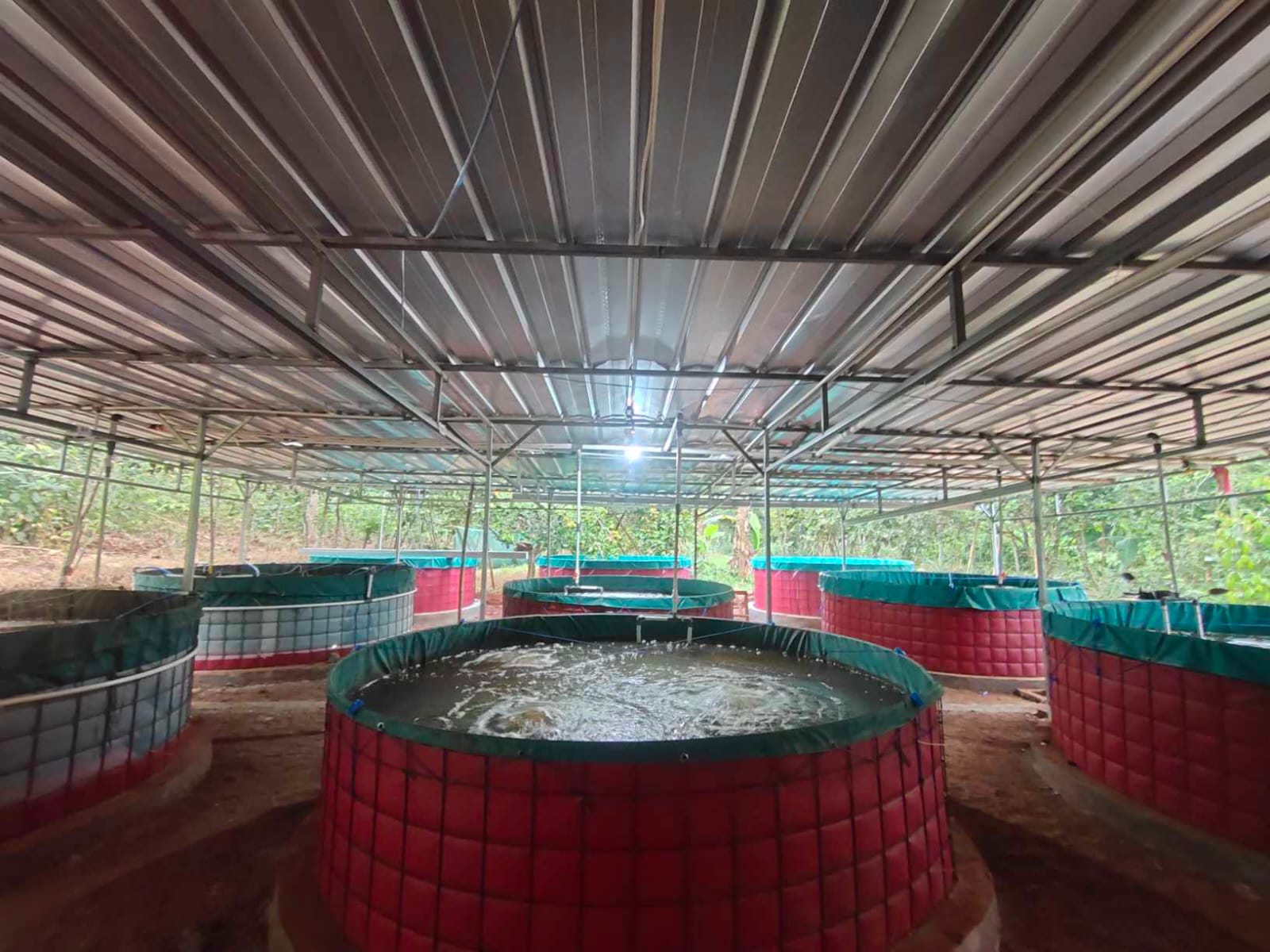
In the world of entrepreneurship, conducting a detailed business analysis is a crucial first step, even in the field of aquaculture. Business analysis involves gathering all relevant information about a venture to ensure it operates smoothly and meets expectations. Through careful analysis, entrepreneurs can minimize the risk of loss and maximize potential profits. Aquaculture is one of the most promising sectors for such an analytical approach, given its bright outlook driven by growing demand for high-value edible fish. Among the freshwater species available, tilapia has become a preferred choice for both fish farmers and consumers.
Why choose tilapia farming?
Tilapia is known for its many advantages that make it stand out among freshwater fish species. Official data from Indonesia’s Ministry of Fisheries and Marine Affairs reports that national tilapia production reached over 1.38 million metric tons in 2024, making tilapia one of the country’s largest aquaculture commodities (after catfish). This trend of increasing production is driven by growing demand for animal protein, particularly from fish. The market for tilapia has shown remarkable stability: average retail prices range from about IDR 28,000 to IDR 38,000 per kilogram (roughly USD 1.8–2.4 per kg), depending on quality and size at harvest. This price stability gives farmers confidence because market fluctuations are relatively low compared to other freshwater species. In fact, some major tilapia production regions in Indonesia, such as West Java, Central Java, and North Sumatra, have even begun exporting tilapia to international markets like the United States and the Middle East, with volumes reaching thousands of tons annually.
Another advantage of tilapia is its hardy nature. These fish tolerate a wide range of environmental conditions – water temperatures between 20–30 °C (68–86 °F) and varying levels of dissolved oxygen – making them more adaptable to changes in weather and less prone to disease than many other freshwater species. According to research from the Sukamandi Fish Breeding Research Center, survival rates for intensively farmed tilapia can exceed 90% with good pond management. It is no surprise that with these strengths, tilapia farming has become a primary source of income for many and a profitable side venture for others.
Scope of tilapia farming business
Tilapia farming activities generally fall into two main areas: growth control (rearing) and broodstock breeding. In practice, most community-operated tilapia ventures focus on growth control, meaning farmers rear tilapia from fingerling size up to marketable harvest size. The primary goal of any tilapia farming venture is to achieve maximum profit with minimal capital investment. Therefore, careful planning and calculations are essential before starting such a venture. This includes estimating the total capital required, operational costs, and potential profits before the venture begins.
Assumptions used
The following assumptions illustrate a basic tilapia farming scenario for analysis:
- A circular pond with a diameter of three meters (about 9.8 feet), fully equipped.
- A stock of 1,000 tilapia fish per production cycle.
- A rearing period of four months per cycle, allowing for about three harvests per year.
- An average harvest weight of 1 kilogram (about 2.2 pounds), equivalent to roughly three fish per kilogram.
- A market selling price of approximately IDR 38,000 per kilogram (about USD 2.3 per kg).
Capital requirements for tilapia farming
Capital is a crucial aspect that must be carefully considered before starting a tilapia farming venture. Without proper capital planning, a fish farming operation can stall midway due to insufficient funds. The capital needed for tilapia farming typically consists of two main components: fixed investment (upfront costs) and operational expenses (recurring costs).
For example, with the assumption of 1,000 fish per cycle, an entrepreneur would need to budget for several key items. These include the construction or preparation of the pond and related equipment, purchase of juvenile tilapia (fingerlings), high-quality feed, labor wages, and ongoing utilities such as electricity and water. Planning for these expenses is important so that farmers have a clear projection of both the initial capital needed and the operational costs throughout the farming period until harvest.
Table 1. Investment costs

The initial capital outlay for this small-scale tilapia farm is about IDR 28.08 million (approximately USD 1,900). Roughly 80% of this – about IDR 22.5 million – is the cost of the land (15 m² at IDR 1.5 million/m², USD 1,500), with the remaining 20% covering equipment and structures (3 tarpaulin ponds, scale, nets, buckets, etc.). These fixed assets have long useful lives and provide multi-year benefits. In particular, the durable tarpaulin ponds, guard post, and utilities installation spread their value over several years. Thus, while the upfront capital burden is significant (in the thousands of dollars), each item represents an investment in the farm’s productive infrastructure.
Asset depreciation calculation
Each long-lived asset loses value over time and usage. Depreciation spreads the initial cost of a fixed asset over its useful economic life. In practical terms, the farm allocates a portion of each item’s cost to annual expenses. For example, a 3 m pond set costing IDR 3.75 million with a useful life of 5 years yields an annual depreciation expense of IDR 750,000 (IDR 3,750,000 ÷ 5). This straight-line approach assumes the asset generates benefit evenly over its life. In our case, the calculated annual depreciation charges (sum of all items) are relatively modest (about IDR 1.21 million per year) compared to the total investment, but they are still an important part of the farm’s cost structure. Including depreciation as an expense recognizes that the capital equipment wears out and must eventually be replaced or repaired.
Table 2. Asset depreciation

This table shows each asset’s book cost, assumed useful life, and the resulting straight-line depreciation per year. Land is not depreciated (denoted “–”) since land is a permanent asset in this scenario. The largest annual charges are the pond (IDR 750,000/year) and guard post (IDR 300,000/year). Together, all assets amount to about IDR 1.21 million/year in depreciation (only a fraction of the total initial investment), reflecting the gradual wearing out of equipment over time.
Operating costs (cariable costs)
Daily operational costs cover inputs and services consumed each production cycle. The key variable expenses per 4-month cycle include: high-quality fingerlings (seed fish), feed, labor for maintenance, and miscellaneous supplies and utilities. In many fish farms, feed alone accounts for the majority of variable expenses. In this case, however, labor wages are the single largest item (IDR 4.00 million, ~48% of variable cost), because two assistants are hired for four months. Fingerlings (1,000 juvenile tilapia >7 cm) cost IDR 700 each (~IDR 700,000 total), and formulated feed (203 kg) is roughly IDR 1,624,000. Additional costs (supplements, water, electricity, etc.) are estimated at IDR 2,000,000 per cycle. Altogether, the variable costs per 4-month cycle sum to about IDR 8.324 million (USD 550), which must be paid each cycle before harvest. This excludes fixed costs and depreciation, which are incurred regardless of output.
Table 3. Operating costs

BRPBAPPP Maros
Each 4-month production cycle requires roughly IDR 8.324 million in variable inputs. Fingerlings and feed must be purchased at stocking; labor wages are paid throughout the cycle; and utilities and supplements cover farm operations.
Estimated profitability of tilapia farming
To assess annual performance, consider three production cycles per year (12 months). We assume each cycle yields 200 kg of marketable tilapia from the 1,000 stocked fish, based on a harvest weight of roughly 0.2 kg per fish. Over three cycles, the total harvest would be 600 kg of tilapia per year. At a conservative farmgate price of about IDR 35,000 per kg (~USD 2.3/kg), annual revenue is approximately:
- Total harvest: 600 kg (3 cycles × 200 kg)
- Price: IDR 35,000/kg
- Annual revenue: 600 kg × IDR 35,000 = IDR 21,000,000.
Now compare to costs:
1. Annual variable costs: 3 cycles × IDR 8,324,000/cycle = IDR 24,972,000.
2. Annual depreciation (fixed assets): IDR 1,207,500 (from Table 2).
3. Total annual expenses = 24,972,000 + 1,207,500 ≈ IDR 26,179,500.
Subtracting expenses from revenue yields the net result:
- Net annual profit (or loss) = IDR 21,000,000 – IDR 26,179,500 ≈ –IDR 5,179,500.
In this simplified estimate, the farm would incur an annual loss of about IDR 5.18 million (roughly –USD 350). The deficit arises because the relatively high costs (especially labor) and modest scale (only 600 kg production) do not cover the revenue.
This back-of-the-envelope calculation suggests that under the given assumptions, the operation is not yet profitable. Achieving a positive net income would require higher yields, lower costs, or higher fish prices. For example, increasing stock size or fish growth (higher harvest weight), reducing labor needs, or selling at higher market prices could improve the outcome. In reality, breakeven may come after several years if the initial investment is fully utilized over time. The key takeaway is that, even for a small-scale pond system, thorough cost accounting (as shown here) is essential to determine feasibility and guide farm management decisions.