Catfish are among the most popular freshwater fish worldwide, with various species inhabiting different regions. Indonesia is home to an endemic species known as the "local catfish" (Clarias batrachus), highly regarded for its delicious, savory flesh. Historically, local catfish was a staple in Indonesian aquaculture due to its high productivity and adaptability. Advanced cultivation techniques have been developed over time to optimize its yield.
However, the local catfish has gradually been overshadowed by the introduction of Clarias gariepinus, commonly known as the African catfish or "dumbo catfish," which was brought to Indonesia from Taiwan. This shift is largely due to the faster growth rate of C. gariepinus. While the local catfish takes 6-8 months to reach harvest size, the African catfish matures in just 3-4 months. Moreover, local catfish has more complex breeding requirements, making it less favorable for large-scale farming compared to the easier-to-cultivate C. gariepinus.
This article delves into the unique features of the local catfish, including its classification, morphology, anatomy, natural habitat, and practical tips for cultivation.
Scientific classification
- Phylum: Chordata
- Class: Pisces
- Subclass: Teleostei
- Order: Ostarophysi
- Suborder: Siluroidae
- Family: Clariidae
- Genus: Clarias
- Species: Clarias batrachus
Morphological features
The general morphology of catfish species is similar, with notable differences in color and size. The local catfish has a flat head and an elongated, tapering body. It features four pairs of barbels (whiskers) around its mouth. Villiform teeth—small, fine teeth resembling bristles—are found on its upper jaw and palate. Its small eyes and long dorsal fin, which extends over two-thirds of its body, are distinguishing traits.
The upper body of the local catfish is dark brown or greenish-purple, while its underside is pale, often white. Its skin is smooth, coated with mucus, and varies in color from whitish to gray-brown. The body cross-section transitions from a flattened head to a more rounded midsection, and finally to a laterally compressed tail region.
The head is protected by bony plates, which form a cavity above the gills. Within this cavity lies an accessory breathing organ known as the arborescent organ, connected to the second and fourth gill arches. The fish's terminal mouth is equipped with four pairs of barbels. It has two types of nostrils: short tubular ones located behind the upper lip and round ones situated behind the nasal barbels.
Its small eyes have orbital margins, and its caudal fin is rounded, separate from both the dorsal and anal fins. The pelvic fins are rounded and extend to the anal fin. Pectoral fins contain a pair of sharp spines, or patils, which can grow up to 5 cm and are venomous, particularly in juveniles. In adults, the venom potency diminishes.

A close-up of a catfish with small eyes and orbital-shaped edges: Wikimedia Commons/Wibowo Djatmiko (Wie146)
The fish's skin contains black pigment, which fades under sunlight. Lacking scales, its body is covered in a protective mucus layer. Additionally, it has two olfactory openings behind its upper lip. The dorsal and anal fins extend near the base of the caudal fin but remain distinct from it. The local catfish can reach a maximum length of 50 cm.
Anatomy of the local catfish
The anatomy of the local catfish is remarkable, particularly due to its specialized respiratory system. One of its most distinctive features is the arborescent organ, located near its gill cavity. This unique respiratory structure allows the catfish to extract oxygen directly from the air, enabling it to thrive in environments with low dissolved oxygen levels. The organ is notable for its striking reddish color and intricate, tree-like structure, densely packed with blood vessels that facilitate efficient gas exchange.
This adaptation allows the local catfish to survive in stagnant or oxygen-poor waters, such as swamps and floodplains, where other fish species might struggle. The arborescent organ exemplifies a fascinating evolutionary solution, contributing to the species’ resilience across diverse freshwater habitats.
In addition to its respiratory adaptations, the local catfish is equipped with a range of fins that aid in swimming and maneuvering. It has three unpaired fins—dorsal, caudal, and anal—used for propulsion and direction control. Complementing these are paired pectoral and pelvic fins, which provide stability and assist in making precise movements.
A distinctive feature of the pectoral fins is the presence of sharp, hardened spines called patils. These spines serve a dual purpose: aiding in movement and acting as a defense mechanism, especially in juvenile fish. The venomous patils deter predators, enhancing the catfish's chances of survival.
Habitat and behavioral patterns of local catfish
The local catfish thrives in various freshwater habitats, including rivers with gentle currents, as well as calm water bodies like lakes, reservoirs, and swamps. It is also found in man-made environments such as ponds and irrigation ditches. In river ecosystems, the species tends to inhabit areas with slower-moving water, often seeking refuge in quieter sections or river bends with minimal turbulence.
Interestingly, local catfish shows a preference for open water over densely vegetated areas. This behavior may be linked to its unique ability to breathe air, which provides a competitive edge in environments with low dissolved oxygen. This respiratory adaptation allows the fish to survive and reproduce in a wide range of freshwater habitats across Indonesia.
Optimal water conditions for the species include temperatures between 20-30°C, with an ideal temperature of 27°C. Dissolved oxygen levels should exceed 3 ppm, and the water’s pH should range from 6.5 to 8, with ammonia (NH₃) levels around 0.05 ppm. Key factors influencing its survival include stocking density, feed quality, disease management, and water quality. Although local catfish can tolerate high stocking densities, maintaining optimal growth and health requires careful environmental management.

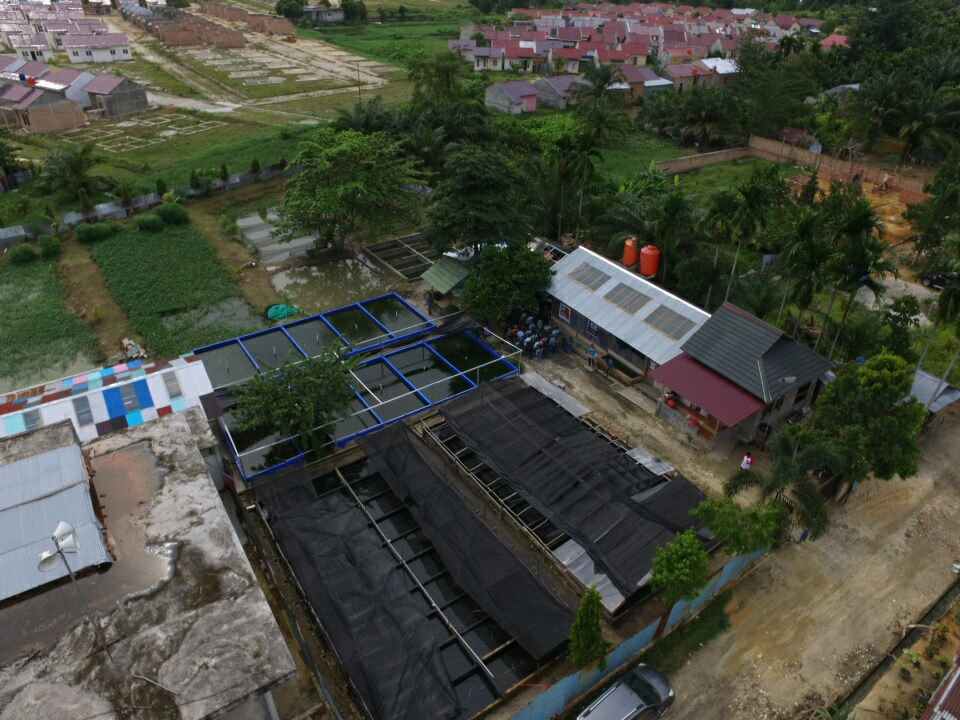
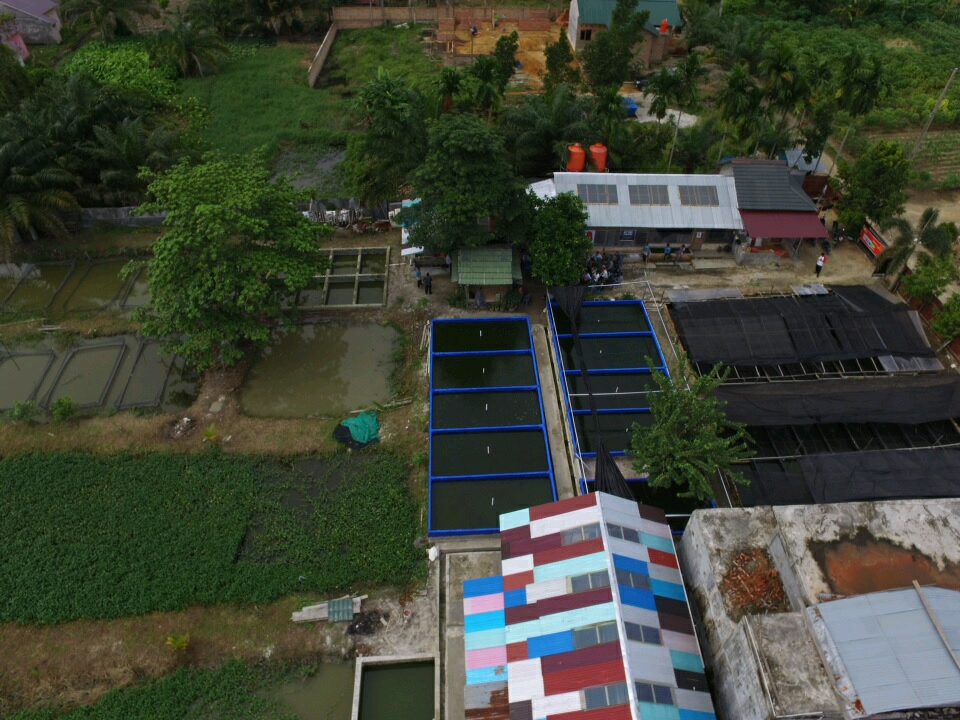
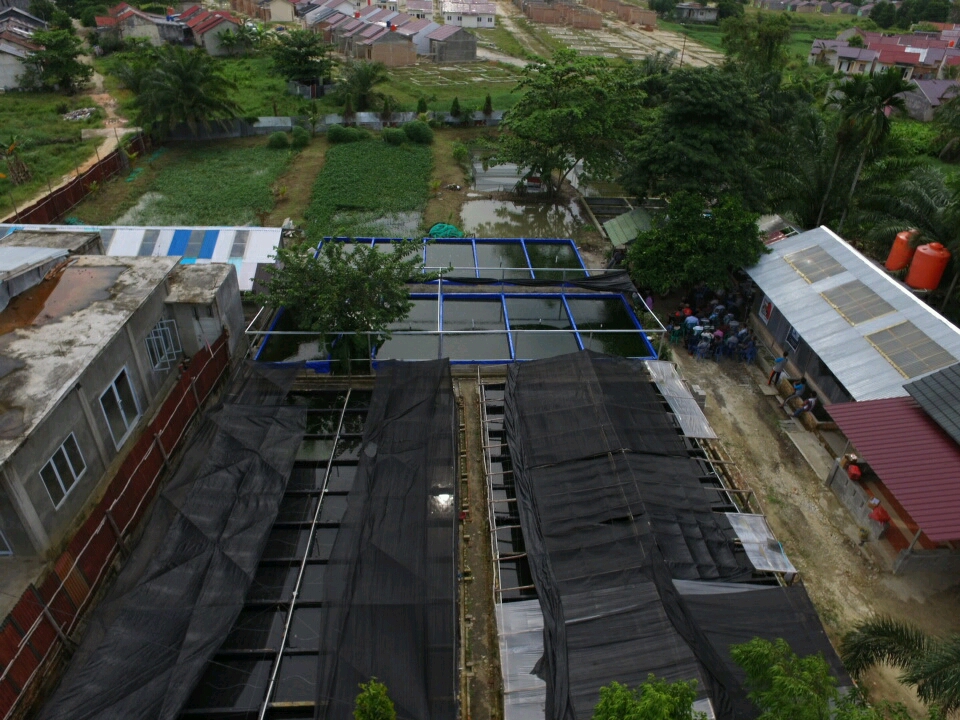
A fish farming pond utilizing biofloc technology: BBPBAT Sukabumi
Cultivation of local catfish
Despite its slower growth rate compared to the African catfish (Clarias gariepinus), the cultivation of local catfish in Indonesia has advanced considerably. A major factor contributing to its successful farming is the adoption of innovative aquaculture technologies. Farmers have implemented various strategies to improve productivity, including selecting suitable pond locations, optimizing pond preparation, and using high-quality fingerlings for stocking.
Effective feeding practices, regular monitoring of water quality, and proactive fish health management are also critical components of a successful local catfish farming operation.
To enhance productivity, ongoing research focuses on accelerating growth rates, improving feed efficiency, and reducing fish mortality. In parallel, sustainable farming practices are increasingly prioritized. These approaches consider environmental and social impacts, ensuring that aquaculture development aligns with ecological and community well-being.
With a combination of technological advancements, innovative farming practices, and a commitment to sustainability, the cultivation of local catfish continues to make significant contributions to Indonesia’s aquaculture industry, supporting both food security and economic development.
Here, we outline the key steps and processes involved in cultivating local catfish:
1. Pond site selection
Selecting the right pond location is a critical step in local catfish farming. The chosen site should align with the natural habitat requirements of the fish. A stable water environment is essential, so calm and tranquil waters are preferable. Water temperature is another crucial factor, with the optimal range for local catfish growth being approximately 27°C.
Additionally, the site should have a reliable supply of clean, high-quality water and efficient drainage to maintain an optimal pond environment. Proper site selection helps ensure a supportive ecosystem for the healthy growth and development of local catfish.
2. Pond preparation
Ponds must be thoroughly cleaned of debris and unwanted aquatic plants to maintain a clean environment. Monitoring water quality is equally important, with parameters such as water temperature, pH levels, and dissolved oxygen concentration requiring regular checks.
A clean pond with optimal water conditions provides an excellent environment for local catfish to thrive and develop throughout the farming process.
3. Breeding
Breeding involves stimulating male and female catfish to spawn by creating favorable environmental conditions, such as adjusting water temperature and flow.
Once spawning is successful, the newly hatched larvae are transferred to nursery ponds specifically prepared for this stage. Here, the larvae are fed and closely monitored to ensure healthy early development before they are moved to larger grow-out ponds for subsequent growth phases.

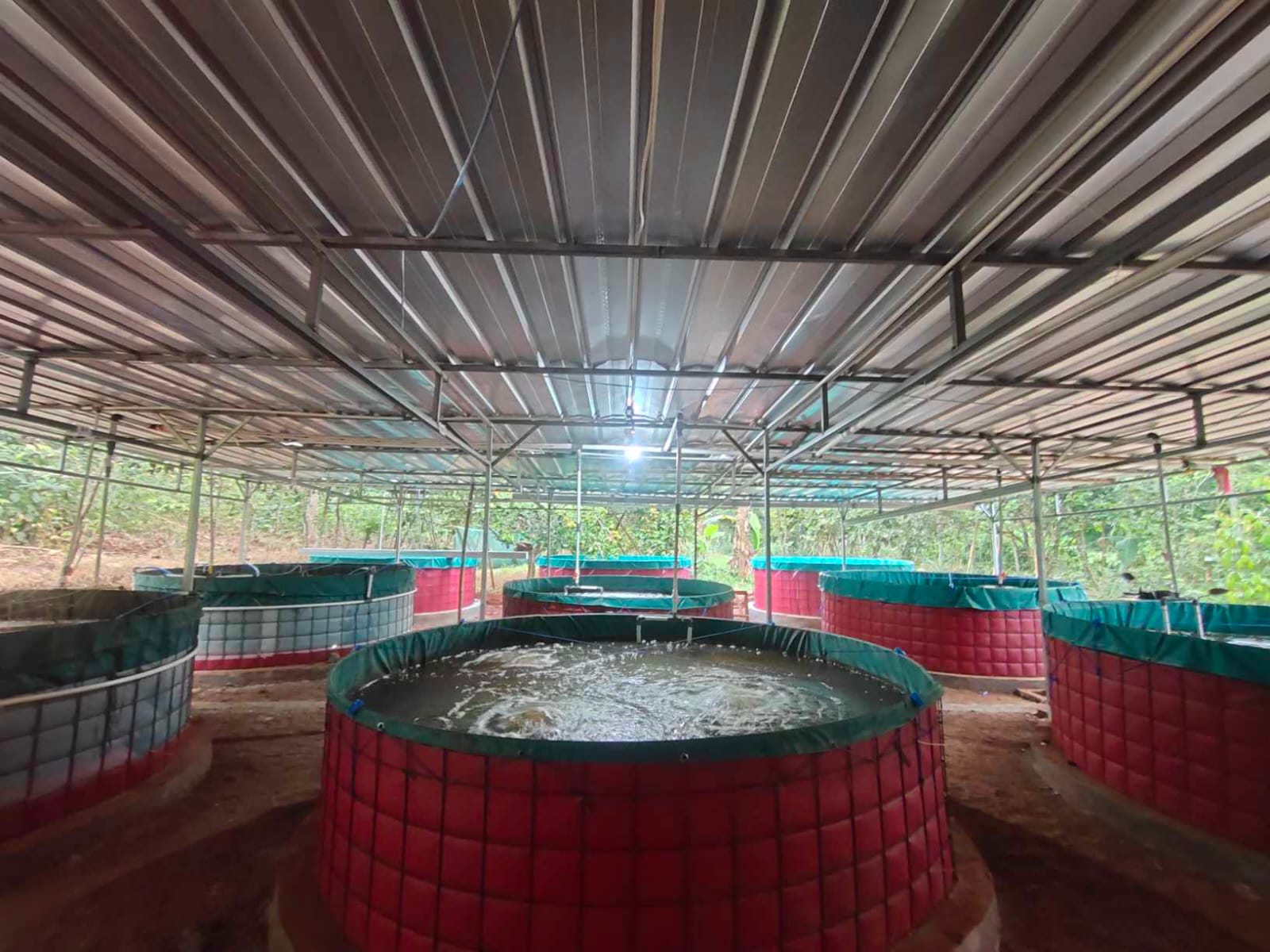
The stocking of catfish seeds into biofloc tanks for grow-out activities using the biofloc system: BPBAT Tatelu
4. Feedding
Feeding practices should be tailored to the developmental stage of the fish, starting with very fine feed for larvae and transitioning to larger feed types as the fish grow. High-protein feed, such as fish pellets, worms, or insects, is commonly used for larger catfish.
Providing the appropriate type and quantity of feed ensures the fish receive sufficient nutrition for healthy growth and the attainment of the desired harvest size.
5. Health management
Regular health monitoring is essential for early detection of diseases or other health issues. Signs of illness, such as behavioral changes, unusual skin coloration, or physical abnormalities, should prompt immediate action.
Interventions may include isolating affected fish, administering appropriate medications, or improving pond conditions. Effective health management minimizes disease risks and keeps local catfish healthy and productive.
6. Harvesting
Local catfish are typically ready for harvest once they reach the desired size, usually after 6–8 months of rearing. At this stage, they are suitable for commercial or personal consumption.
The harvesting process should be carried out carefully to ensure the fish maintain optimal quality for the market.